
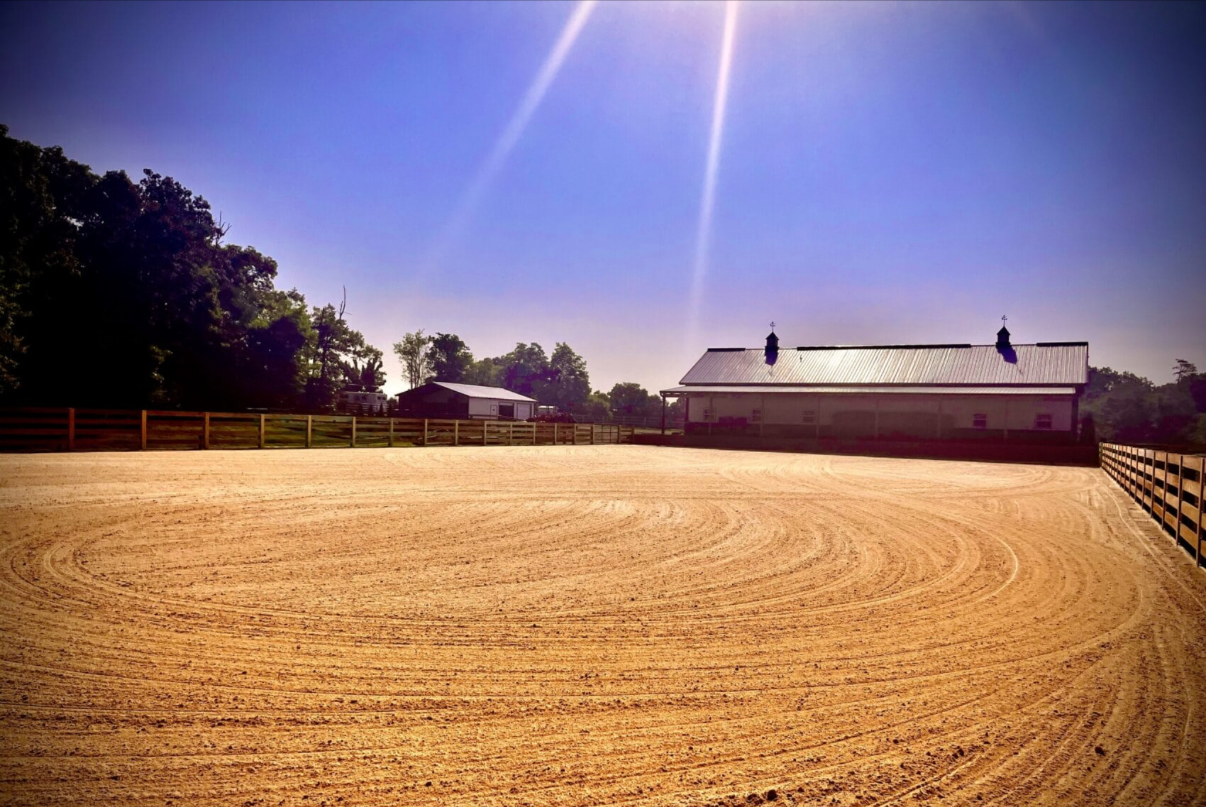
One of the biggest misconceptions in the equestrian industry is that the riding surface alone determines the quality of an arena. While footing is certainly important, the truth is that every successful dressage arena begins with something riders rarely see—the base beneath it.
A premium footing placed over a poorly constructed base will never perform consistently. It may ride well for a short period of time, but over the years it will develop soft spots, hold water, become uneven, and require constant maintenance. The best footing in the world cannot overcome a poor foundation.
At Precision Equestrian Arenas, we view the base as a structural system. Its job is to provide uniform support, maintain grade, manage surface water, and preserve the stability of the riding surface for decades.
Construction begins with proper site selection. No amount of engineering or expensive materials can completely overcome a poor location. Water must have somewhere to go before construction ever begins. Once the site is selected, the subgrade is shaped, proof rolled, and compacted to create a stable foundation. Every soft area must be identified and corrected before additional materials are placed.
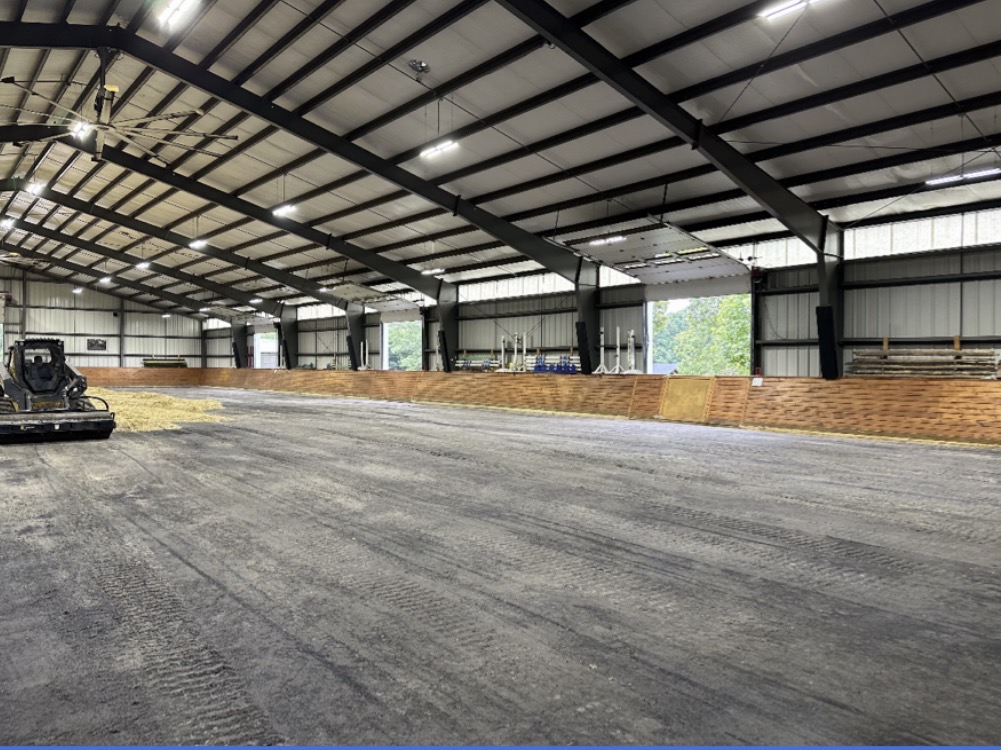
The arena is then laser graded to establish a consistent slope. Contrary to what many people believe, dressage arenas should never be graded from one end to the other. Water should travel across the width of the arena using lateral sheet drainage. This minimizes the distance water must travel, reduces erosion, and allows the arena to drain quickly and uniformly after rainfall. Water management is achieved through proper grading and drainage design—not by trying to force water through the structural base.
At Precision, we construct a two-layer base. The lower layer consists of a dense-graded aggregate containing a carefully balanced range of particle sizes, including fines. Those fines are essential because they allow the material to compact into a dense, stable structural layer with exceptional load-bearing capacity. Its purpose is not to function as a drainage layer. Its purpose is to create a strong, uniform foundation that resists movement, maintains grade, and supports the riding surface for decades.
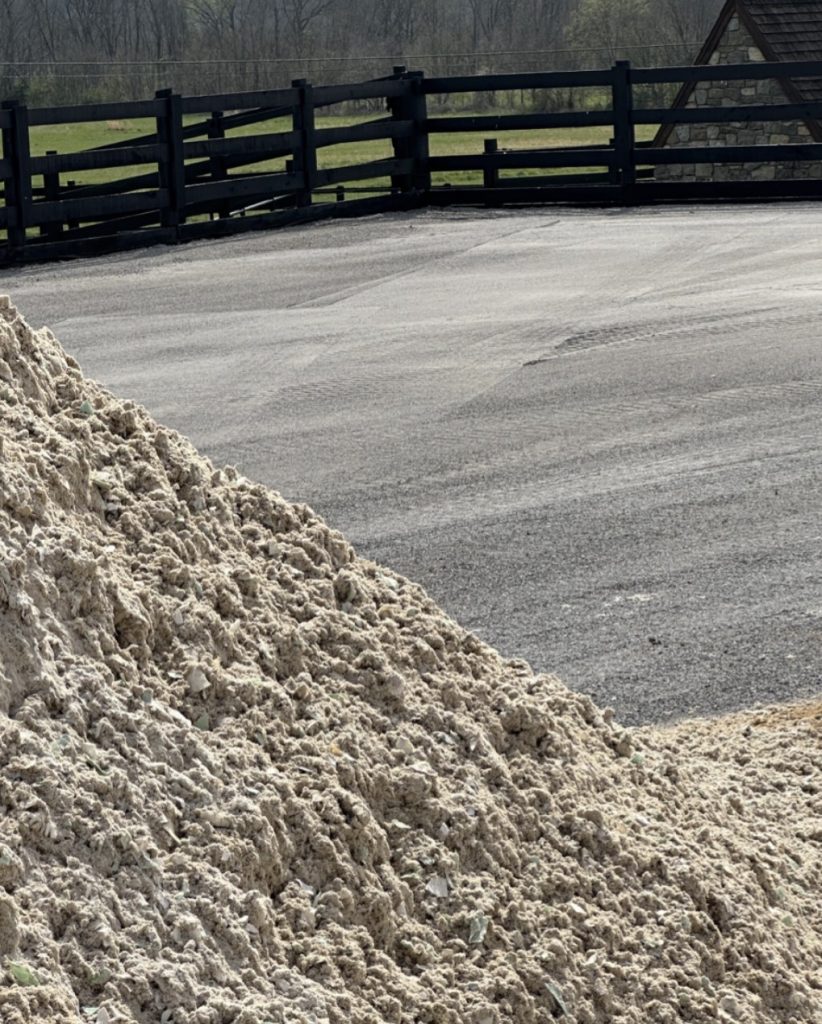
The upper layer consists of a finer aggregate that locks together to create an exceptionally smooth, stable platform for the footing. Each layer is placed in controlled lifts, compacted individually, proof rolled, and laser graded to tight tolerances before the next layer is installed. The result is a base that distributes loads evenly, resists deformation, and provides consistent support beneath every hoof.
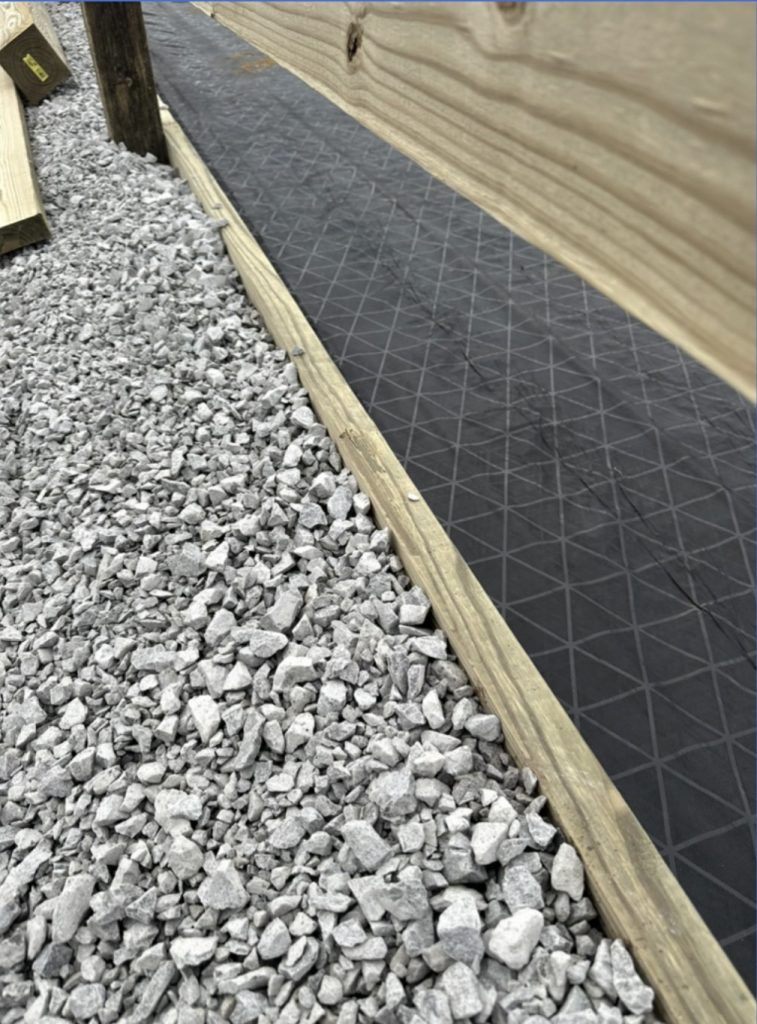
One of the most overlooked aspects of arena construction is edge stability. The perimeter must retain the footing while allowing water to exit the arena without eroding the base. Proper kickboard design, drainage openings, filter fabric placement, and exterior drainage stone all work together to protect the arena while maintaining consistent footing depth from rail to rail.
The completed base should be so precise that elevation changes are measured in fractions of an inch, not inches. Every low spot in the base becomes a low spot in the finished footing. Every high spot changes footing depth and ultimately affects how the horse feels beneath the rider.
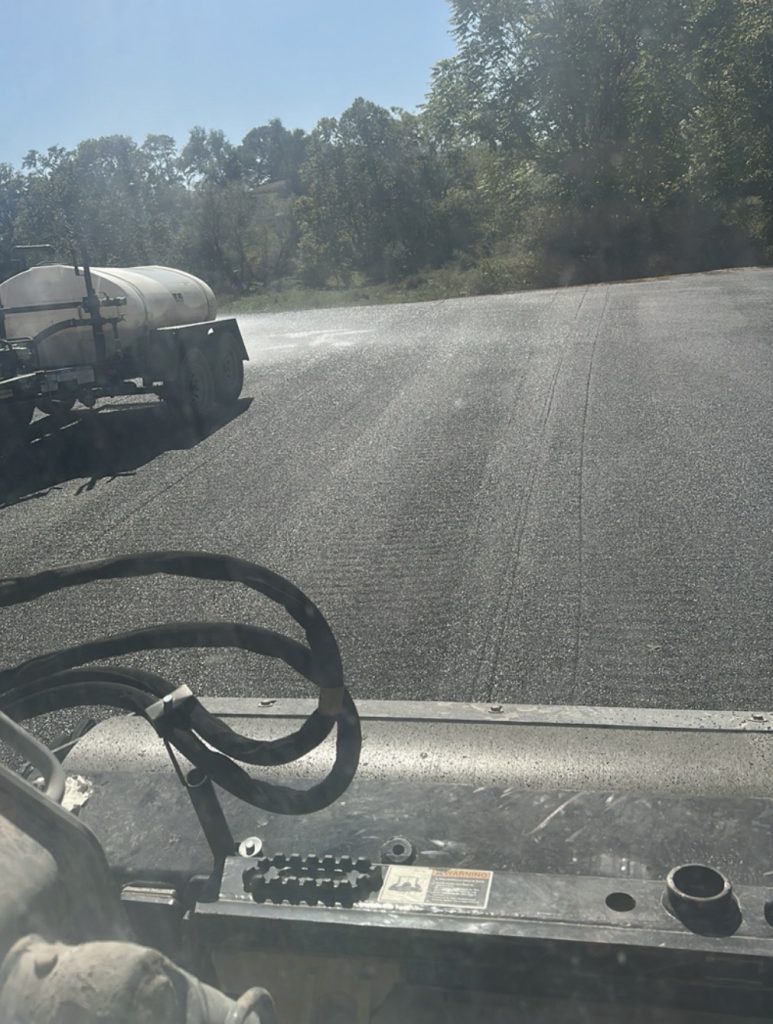
A properly constructed base also dramatically reduces maintenance. Because the structure beneath the footing remains stable, grooming becomes more consistent, footing depths remain uniform, and the arena requires fewer corrections over its lifetime.
Many arena failures blamed on “bad footing” are actually base failures. Water trapped on the surface, poor grading, inadequate site drainage, uneven compaction, unstable edges, and improper construction all create problems that no fiber, additive, or premium sand can solve.
In recent years, base mats have become increasingly popular, often adding tens of thousands of dollars to the cost of an arena. Much like geotextile fabrics and other heavily marketed products, they are frequently promoted as a cure-all for performance, stability, and horse safety. The reality is much different.
Base mats can provide additional cushioning and may have a place in certain footing systems, particularly those built around high-fiber surfaces where additional resiliency is desired. However, they should never be viewed as a substitute for proper arena design or quality base construction.
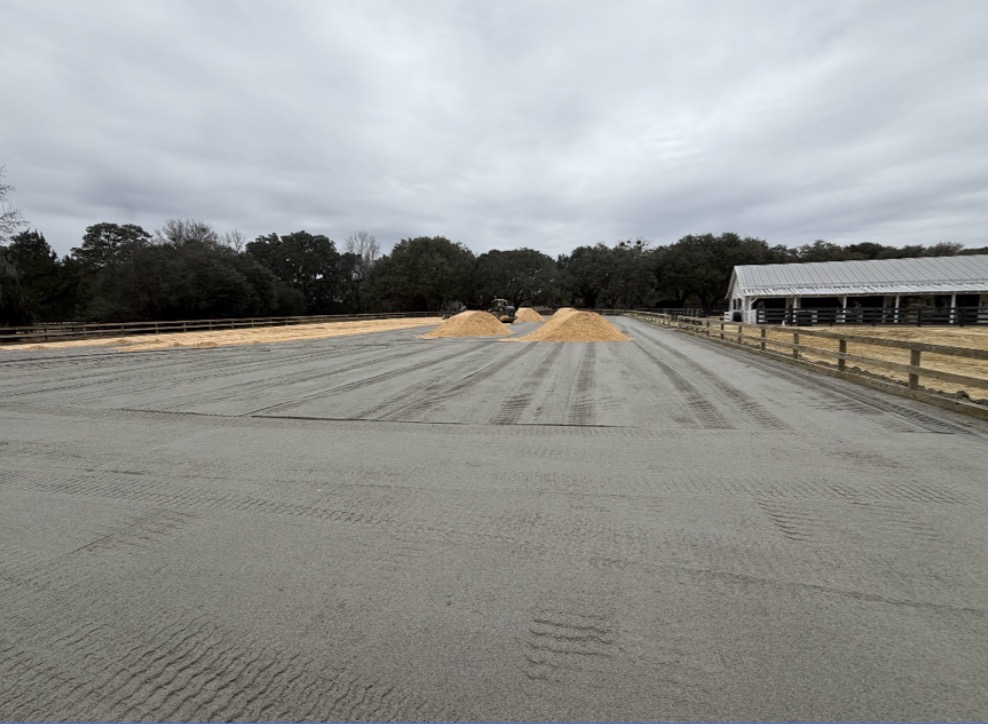
A properly constructed base combined with a stable, discipline-specific sand profile provides the support horses need. When paired with a moderate amount of quality geotextile fiber—rather than the excessive quantities often promoted throughout the industry—it produces a footing with excellent traction, resiliency, and energy return without the tremendous added expense of base mats.
It is also important to understand that more cushion is not always better. Horses require a footing system that supports the hoof while allowing controlled deformation under load. When a surface becomes excessively resilient, it can create what is known as out-of-phase rebound. In this situation, the surface continues returning energy after the horse has already entered the next phase of its stride. Instead of efficiently absorbing impact, excessive rebound may increase stress on joints, tendons, and ligaments while reducing the consistency and predictability of the footing.
At Precision Equestrian Arenas, we believe exceptional performance begins with fundamentals rather than expensive accessories. Proper site selection, intelligent drainage, a raised and stable sub-base, a precisely laser-graded two-layer structural base, and a carefully designed stable sand profile form the foundation of every successful arena. When those elements are executed correctly, costly products intended to compensate for poor construction often become unnecessary.
The base is the permanent investment in an arena. Footing materials may evolve over time as disciplines, technology, and rider preferences change, but a properly constructed foundation should continue performing for decades.
Every arena should be evaluated as a complete system. There are no miracle products that can replace sound design and quality construction. Investing in superior site preparation, drainage, structural base construction, and a stable footing profile will almost always deliver greater performance, lower maintenance, and a longer service life than relying on expensive products to overcome deficiencies elsewhere.
A truly great dressage arena begins long before the first load of footing is delivered. It begins with a stable, precisely constructed foundation that quietly performs beneath every stride, every ride, and every horse for decades to come.
Leave a Question or Comment on This Article in the Forum Below
SOCIAL MEDIA:
DICKIE OSBORNE🇺🇸PRECISION ARENAS | Photos ©️ Contributed from Precision Equine Arenas.
Click Here to Join our Equestrian Footing Design and Planning Facebook Group
TO ASK QUESTIONS OR COMMENT, PLEASE DO SO IN THE FORUM BELOW
SOCIAL MEDIA:
📞: 1-844-EQ-ARENA
🌐: http//www.precisionequestrianarenas.com