
In this part of this series, I’ll explain the basics of what to look for when photographing the horse in motion at the basic gaits.
PART THREE: MOVEMENT
TIMING
When I ask what they’d really like to learn about photographing horses, timing and how to get the right moment in the horse’s stride seem to be the most common issues for people.
Timing is going to be a little different with each horse, depending on the biomechanical details and cadence the horse has—the magnitude of the movement, and the quality of the movement. If a horse has really nice gaits, there is a very good separation of the legs and the horse has the impression of covering ground in a graceful way. Horses with big, expressive gaits give us the most options for photographic timing, just as they do when they’re under saddle.
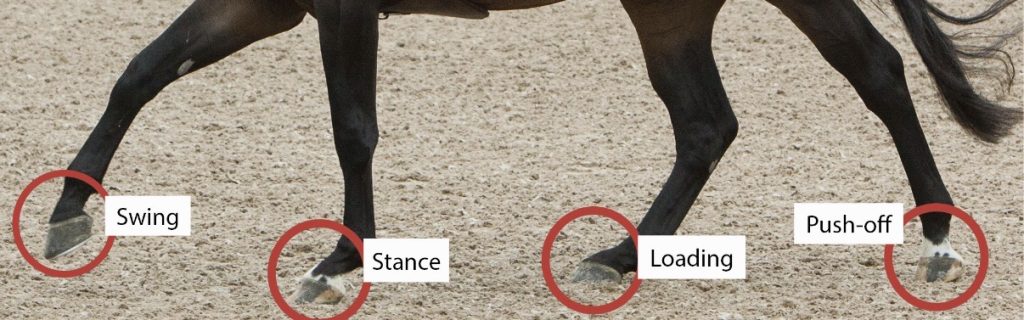
In order to know which moment to pick, it’s helpful to know what’s happening at the various parts of a horse’s stride. For our purposes, we’ll breakdown the phases of a horse’s footfalls into four parts to help us find the right timing:
- The loading phase happens as the horse’s hoof touches the ground and is decelerating the forward movement. This lasts for about 40% of the duration of time the hoof is on the ground.
- The stance phase happens after the loading phase, when the leg is vertical to the ground, and is neither decelerating nor pushing off the ground.
- The push-off phase happens after the stance phase, when the horse is either pushing the body weight forward, as in the case of the hind leg, or propelling it upward, as happens with the front leg.
- The swing phase happens when the horse’s leg is in motion but not touching the ground.
As we can see, the horse’s legs can each be in a different phase at the same time, depending on the gait. There are also similar phases to the gaits themselves, along with moments of suspension (swing) of all the legs in trot, canter, and gallop.
Different muscle groups are going to be used, and therefore emphasized, at different times during the stride. This will change the overall impression of the horse’s movement, and we can choose the moment that best displays the horse’s quality of movement based on the usage of these muscle groups.
For example, starting at the end of the push-off phase and going through the swing phase of the front leg, the horse is propelling the body upward into the air via the use of the elastic energy stored in the tendons and ligaments of the leg. If the horse is really efficient, there is a large upward thrust, and the horse shows a greater magnitude of suspension once the hoof leaves the ground. At the same time, the brachiocephalicus muscle, which runs from the point of the shoulder to the poll, is used to pull the leg up and forward. This can emphasize the “underneck” area of the horse, and make it look like the horse is putting out a lot of effort to get that leg off the ground, especially if the muscles of the thoracic sling aren’t well-employed and the horse is “down in the withers.”
Conversely, in the comparable moment in the hind leg, the horse is being propelled forward by the hoof pushing backward against the ground. This contracts the large gluteus medius muscle that runs from the lumbar vertebrae to the femur, as well as the biceps femoris group that connects the area of the stifle joint to the croup near the tail. This can have the visual effect of a strong hind end, and at best, uphill movement, especially toward the end of the sequence where the horse has exerted the maximum amount of thrust before gravity starts to pull the body down again.
THE WALK
Since it has no suspension, the walk is not a visually dynamic gait, but how we show the walk can tell us a lot about how supple and “through” a horse is by how far underneath the hind leg lands, how far forward and up the front leg comes before it unfolds to touch the ground, and how much the scapula rotates when the front leg comes forward.
One of the telltale ways of evaluating a horse’s walk is by looking for the “W” in the middle of the stride (when seen from the side). This is not my favorite moment because the near shoulder is dropped, and the head can be raised in that part of the stride.
If you choose the opposite moment, when the near front leg has the curve, you can show off a very free shoulder as well as a hind leg that steps well underneath the horse.
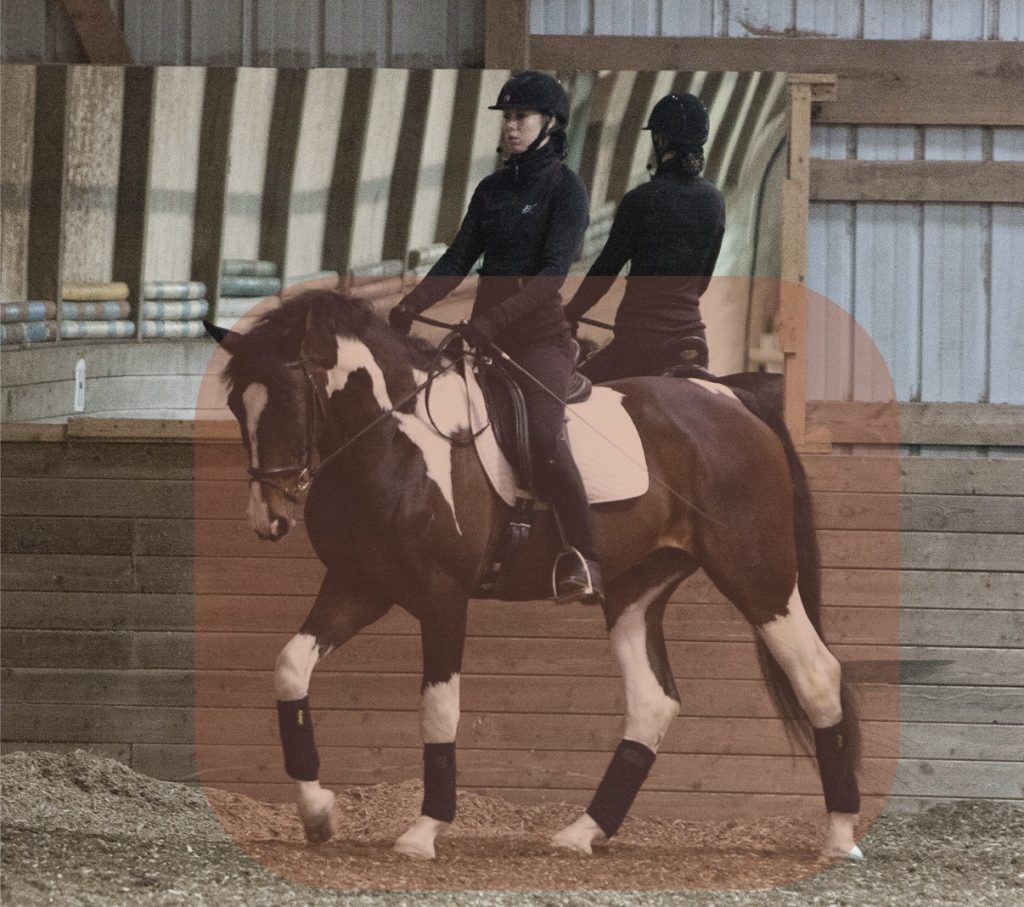
Walk (stance/push-off phase). I like to choose the moment when the horse’s near front leg is perpendicular to the ground, the far hind leg is stepping underneath the horse, and the far front leg has an open curve before it’s completely unfolded forward to touch the ground. In this moment, the walk is round in the legs, and generally square overall in the frame, giving it a “rounded square” appearance. The near shoulder looks strong, and we can see how all the angles of the front leg are stacked, similar to a conformation shot. This is pleasing from a three-quarter frontal angle as well as a side view. Watch for the knee of the far front leg to be at its highest point to get this moment.
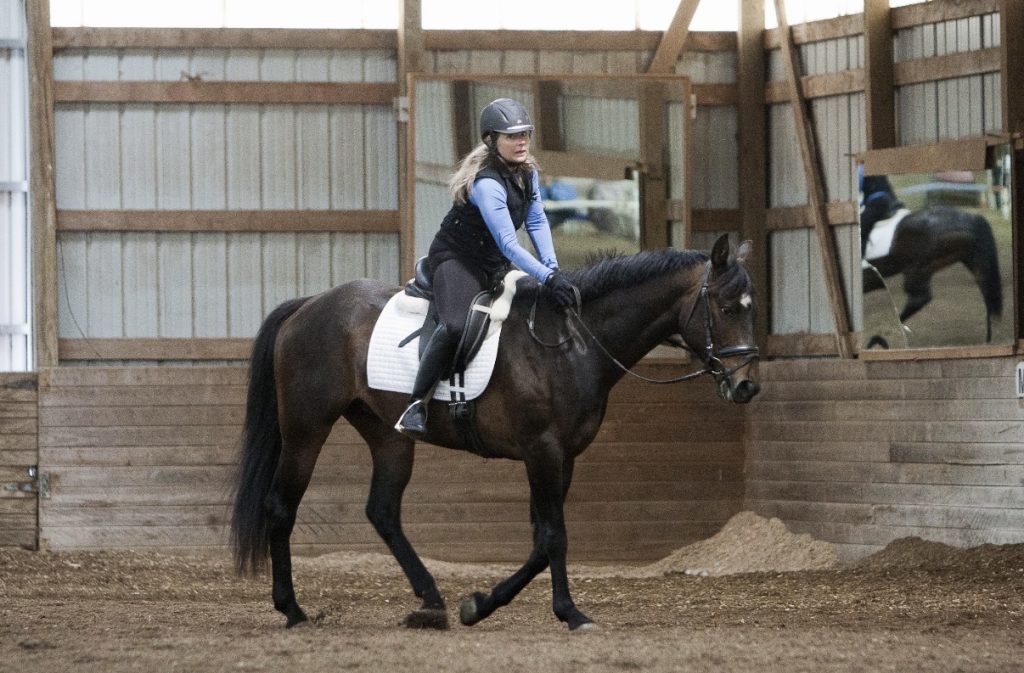
Walk (the “W”). As discussed earlier, the movement appears to originate at the base of the neck, rather than from the forward swinging scapula at the withers.
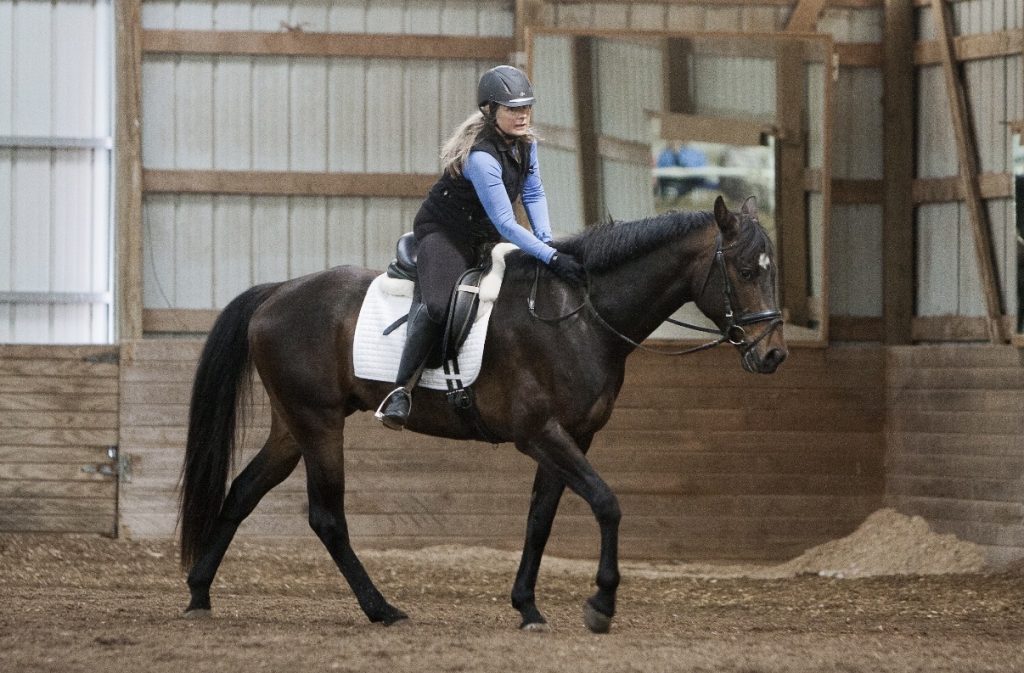
Walk (stance/push-off phase, opposite the moment above).
The upper-level horse has developed the ability to increase the flexion of the joints and the reach of the legs, which increases the separation of the legs. Because of this, there is the option of the last moment of the stance phase, just before the horse is pushing against the ground and using their strength to resist gravity. This can work especially well in the passage.
The other option, that can be used for either the upper-level horse or the lower-level horse with good, cadenced movement, is the suspension phase: during flight and before the legs have started to straighten and descend in preparation for the loading phase.
The loading phase can make a horse look limited in their gaits, since they’re reaching the end of the dynamic part of the gait and we see neither the extension of the stride nor the elevation of the joints.
THE TROT
Because the trot is more dynamic than the walk, there are a few more opportunities for good moments. For the lower-level horse, the moment I typically choose is the push-off phase, when the horse has the most forward/upward thrust before leaving the ground, but before the front leg has fully extended. In general, the stance phase can make a lower-level horse look “earth-bound,” since this is the moment when the effect of gravity is most evident, and when the horse appears to output the most effort to counteract the effect of gravity, especially in the withers and thoracic sling area.
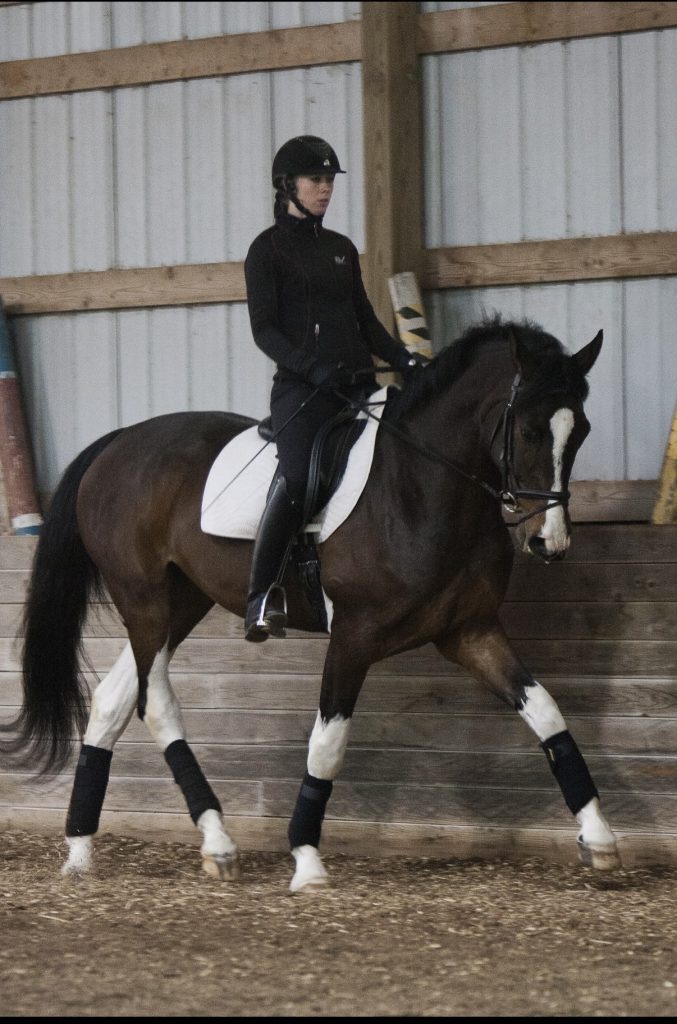
Trot (push-off phase), seen from a 3/4 angle. Choosing the moment when the outside front leg is forward shows good separation of the legs in front. If the horse is not as engaged as this one is and the hind legs look more like one piece rather than two separate legs, you can help this by standing more perpendicular to the horse, so you see more of the side of the horse. Watch for the front hoof to be near the end of the stride to get this moment.

Trot (loading phase). This horse does have nice gaits, but it’s quite difficult to tell at this moment, as it shows neither the horse’s ability to flex his joints nor his ability to extend them.
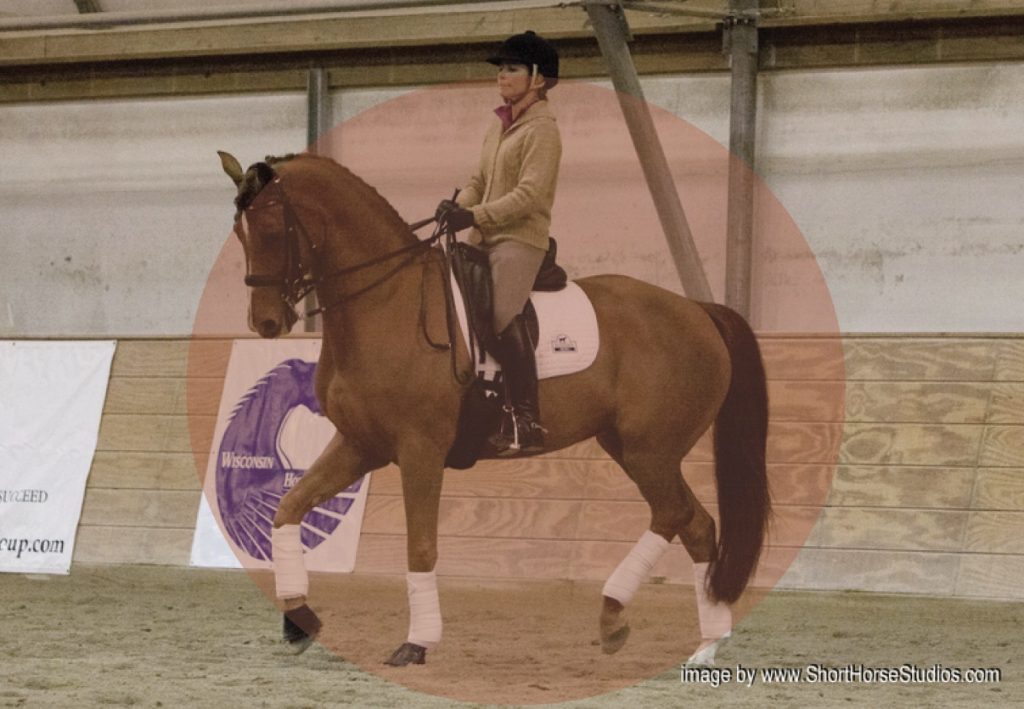
Passage (stance/push-off phase), showing round legs and round frame overall. In this moment, the horse is in transition between the end of the stance phase and the beginning of the push-off phase. This is a good moment to show the higher degree of joint flexion the upper-level horse is capable of, and it can also demonstrate the horse’s ability to engage both the pushing hind end and, somewhat more subtly, the lifting front end. Watch for the knee to be near it’s highest point to get this moment.
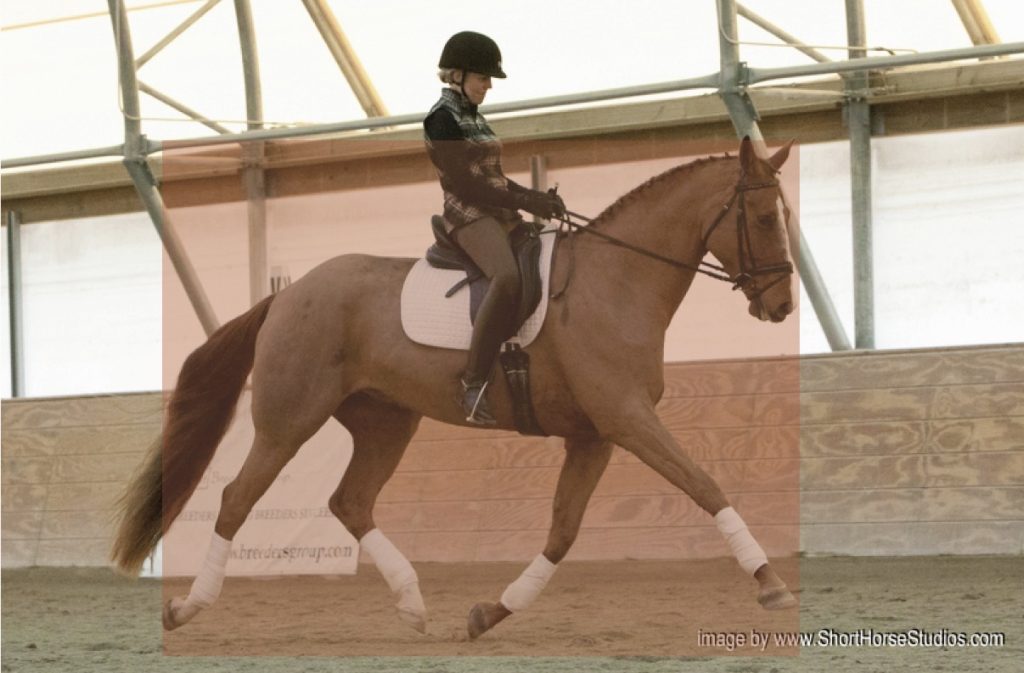
Lengthened trot (suspension phase), showing a more rectangular frame overall. Watch for the near front hoof to be nearly at the end of the swing phase extension, before the leg is totally straight, to get this moment.
THE CANTER
The canter is generally a round shape by default, however near the middle phase of the stride, especially in the lengthened canter, the frame tends to be somewhat more rectangular.
Depending on the horse’s talent and what aspect of the canter you wish to emphasize, choosing different phases will produce different effects. For example, the horse appears to cover the most ground but may also look the least “through” or “connected” during the stance and push-off phases of the middle beat (although the rider tends to sit straightest then, especially on a horse with a stiffer back).
The horse looks generally roundest and most uphill during the loading phase of the first beat, or just prior to that in suspension. Biomechanically, this is the moment when the energy from the hind leg is stored in the muscles and connective tissues, ready to be released through the back to the front legs. The iliopsoas flexes the hip, the stifle is flexed by the biceps femoris, and the rest of the hind leg flexes by way of an elegant system of tendons designed to flex the joints all at once.
The last beat, where the horse’s weight is entirely on the leading foreleg in the loading phase, is almost always the least flattering moment, making the horse look “earthbound” and heavy on the forehand.
The lengthened canter tends to look best in the middle beat, when the horse is balanced on the diagonal pair of legs. The exception to this is if the horse has really spectacular movement with extreme, but balanced, separation of the legs. In this case, either the first beat or the middle beat will work, since each will show both the extension and elevation of the legs.
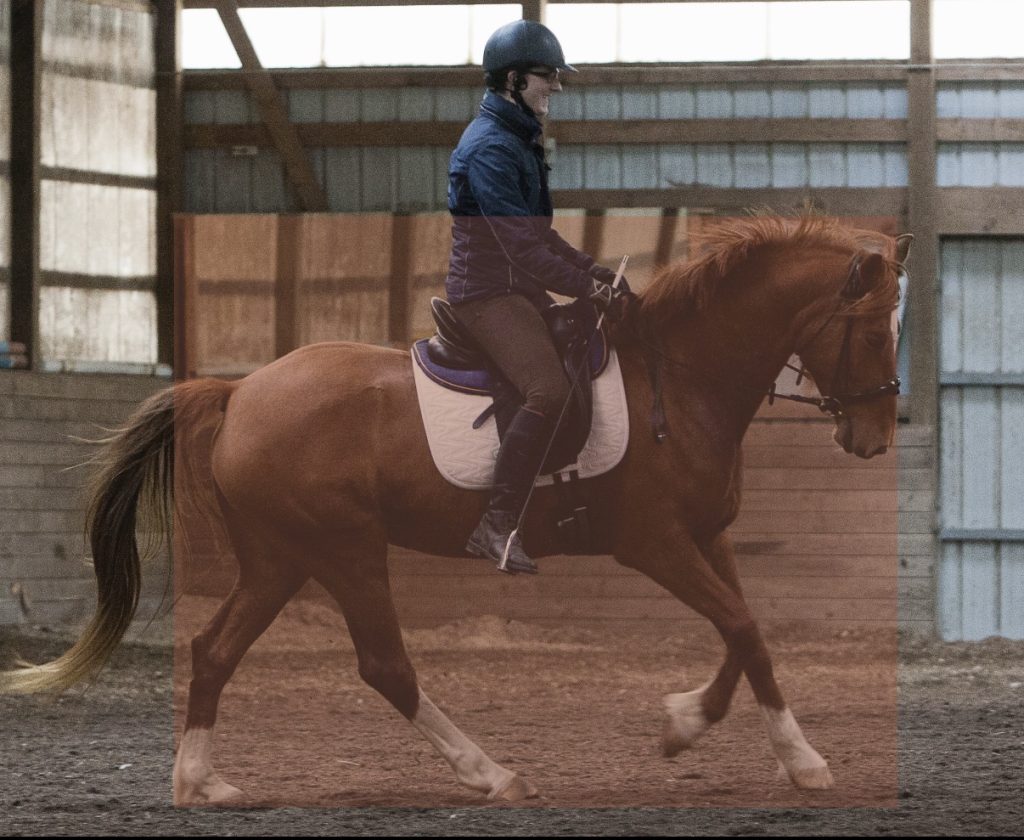
Canter (stance/push-off phase), showing a more square/rectangular frame overall. This is probably the most common moment I choose as it’s the typical silhouette of the canter, and it’s when many riders seem to appear most balanced. Watch for the near hind leg to approach and nearly touch the ground to get this moment.

The canter (loading phase of the left hind leg). This is the moment when the other three legs have a round shape, and the horse is showing a more ovular frame overall. Watch for the far hind hoof to approach the ground to get this moment.
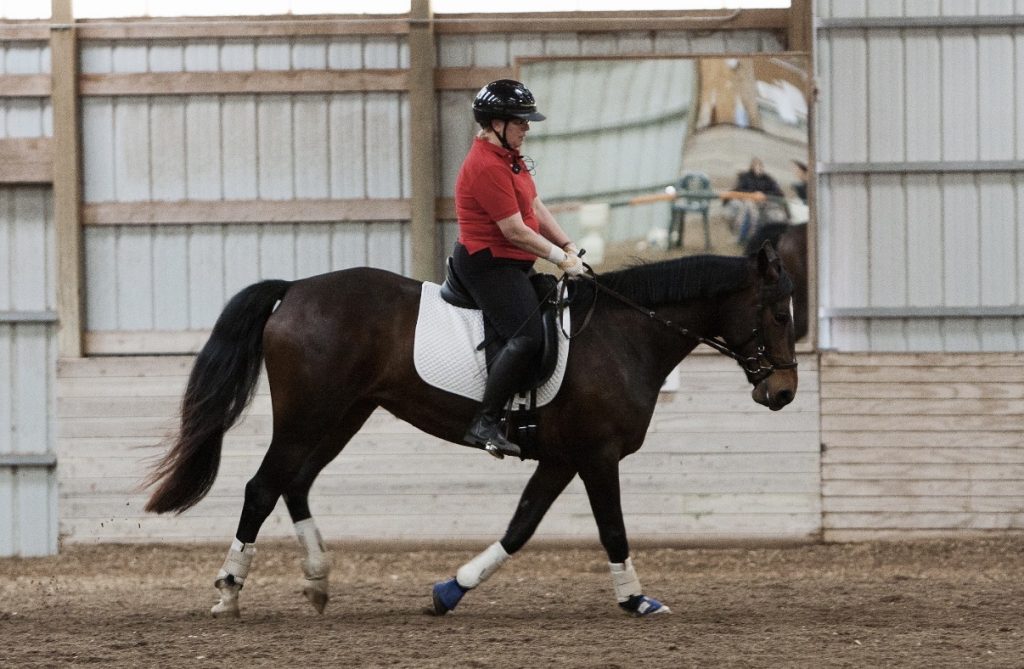
The Canter (push-off/loading phase). Just as with the trot in the loading phase, this is generally the least informative moment, as it doesn’t clearly show the flexion or extension capabilities of the horse. It’s often an unflattering moment for the rider as well, although this rider has done a good job of staying balanced in this phase of the stride. This moment can happen as a result of being late to hit the shutter when the near hind is starting to touch the ground, or it can be because of shutter lag (you press the shutter and nothing happens immediately).
This article series originally appeared in The eQuester, the newsletter of the WDEA, Wisconsin Dressage and Eventing Association (formerly WDCTA, Wisconsin Dressage and Combined Training Association). Special thanks to all the owners, riders, handlers, and of course the horses for making this possible and allowing me to use your images.
If you have questions, comments, or even complaints, you can reach me at shorthorsestudios.com or find me on Facebook.com/shorthorsestudios.
If you have questions, comments, or even complaints, you can reach me at shorthorsestudios.com or find me on Facebook.com/shorthorsestudios
PLEASE FEEL FREE TO ASK ANY QUESTIONS OR LEAVE COMMENTS FOR DISCUSSION IN THE FORUM BELOW THIS ARTICLE
SOCIAL MEDIA: