
INTRODUCTION: One of the most important—and sometimes misunderstood—subjects in modern farriery is hoof angle.
When we look at a horse standing in the aisle, it is easy to look at the outside of the hoof and think primarily about appearance. Is the hoof symmetrical? Is the toe too long? Are the heels low? Does the shoe fit correctly? Those are important questions, but the farrier also needs to think about what is happening inside the hoof capsule.
The hoof is not simply a hard shell that we trim every few weeks. It surrounds a complex biological and mechanical system involving the distal phalanx or coffin bone, navicular bone, distal interphalangeal joint or coffin joint, deep digital flexor tendon, navicular bursa, collateral ligaments, supporting ligaments, digital cushion, lateral cartilages, laminae, sole, frog and other structures. Every time the horse lands, loads the limb and breaks over, forces move through this system.
For many front feet, I personally like seeing an angle somewhere around 52-54°, provided that angle agrees with the horse’s conformation, hoof-pastern axis and internal structures. This is not a claim that every horse should be trimmed to one exact angle. Breed, conformation, limb alignment, hoof morphology, sole depth, coffin-bone orientation and existing pathology all have to be considered. A number on a hoof gauge should never override the horse standing in front of us.
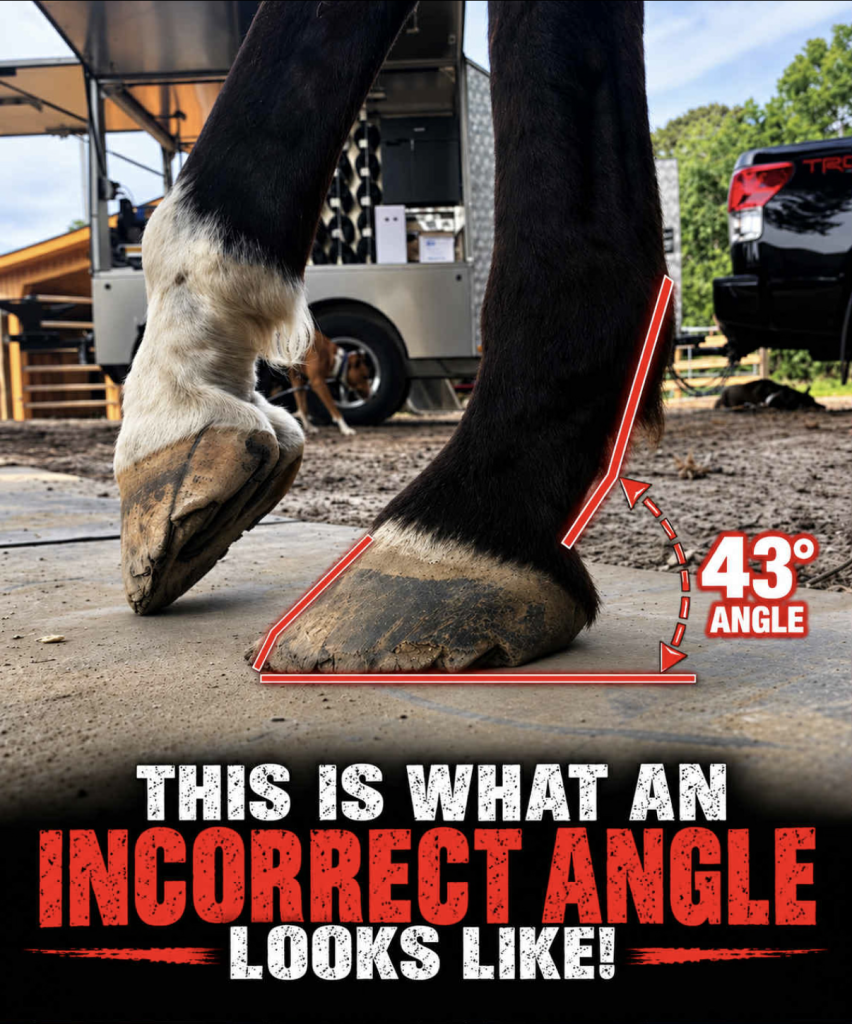
However, when a horse develops a significantly lower hoof angle associated with a long toe, underrun heels and delayed breakover, the mechanical consequences deserve attention. Those consequences go far beyond appearance.
THE HOOF IS PART OF THE ENTIRE LIMB
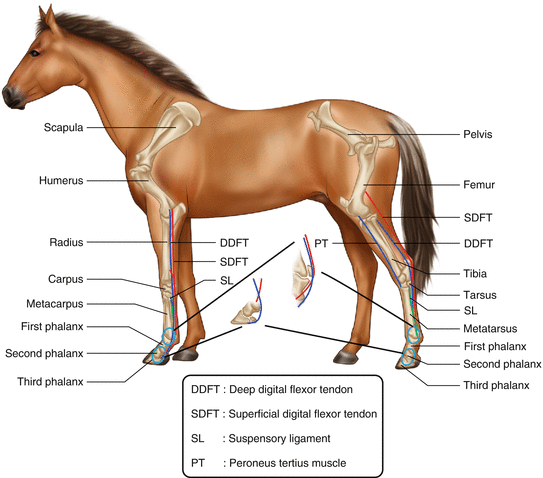
One mistake in farriery is looking at the hoof independently from the rest of the horse. It is not independent.
The hoof is the horse’s interface with the ground. Forces generated when the horse lands have to travel somewhere, and forces created as the horse moves over the foot during breakover also have to be managed by the structures of the foot and limb.
That means when we change toe length, heel height, shoe placement, breakover or hoof angle, we potentially change the mechanical environment of the limb. A few degrees on a hoof gauge might not look dramatic to the human eye, but the accompanying changes in toe length, heel position and breakover can be meaningful.
UNDERSTANDING THE HOOF-PASTERN AXIS
When viewing the horse from the side, we should evaluate the relationship between the dorsal hoof wall and the structures above it. A useful external observation is whether the hoof and pastern appear to form a reasonably harmonious alignment.
When the hoof becomes excessively low in front, we can see what is commonly described as a broken-back hoof-pastern axis. This is often associated with a hoof capsule that has migrated forward.
The toe becomes longer. The heels may become lower and migrate forward. Heel tubules may become increasingly angled. The base of support can shift and breakover may move farther forward.
Instead of having a compact, supportive foot underneath the limb, the hoof can begin to look stretched from front to back. This is the classic long-toe, low-heel configuration. The concern is not simply appearance; it is what that configuration may be doing mechanically.
WHAT HAPPENS WHEN THE TOE GETS TOO LONG
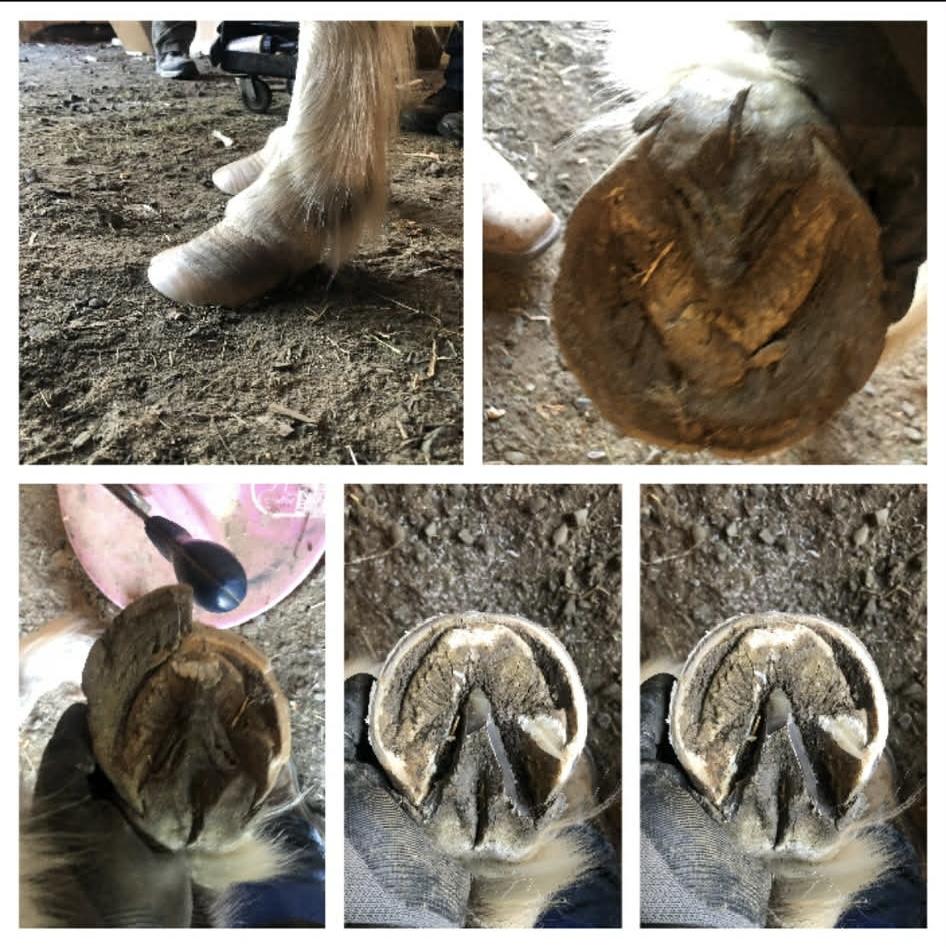
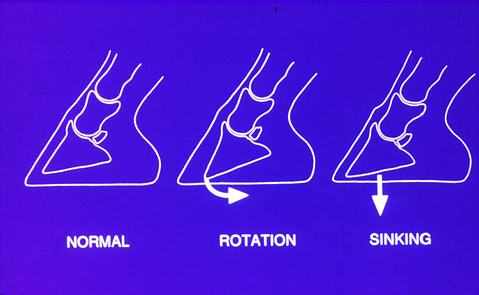
Think of the toe as part of a lever. During breakover, the horse’s center of mass moves forward while the heel begins to leave the ground and the foot rotates over the toe region. If the effective breakover point is positioned excessively far forward, the lever the horse must overcome becomes longer. That can delay breakover.
This is one reason two feet can have similar hoof angles but function very differently. A horse could measure 52° but have a compact toe and appropriate heel support. Another could measure similarly but have hoof-capsule distortion, insufficient sole depth or poor heel structure. Hoof angle therefore cannot be evaluated by itself. Toe length, heel position, sole depth, breakover, coffin-bone position and the relationship among all of them matter.
THE DEEP DIGITAL FLEXOR TENDON
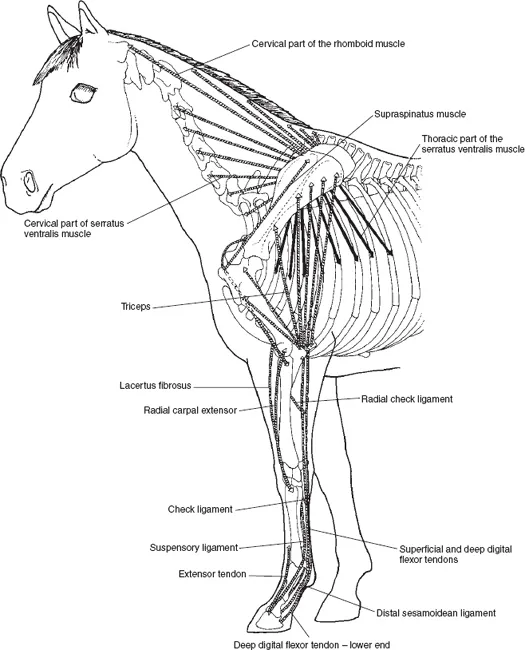
One of the most important structures in a discussion of hoof angle is the deep digital flexor tendon (DDFT). The DDFT travels down the back of the limb, enters the hoof capsule, passes in close association with the navicular region and ultimately attaches to the distal phalanx, or coffin bone.
Its mechanical relationship with the coffin joint and navicular apparatus changes as the foot loads and moves through the stride. Hoof angle and heel elevation can influence forces involving the DDFT and navicular region. This is one reason veterinarians and farriers sometimes intentionally elevate the heel in selected therapeutic cases.
It also explains why a dramatically low hoof angle combined with excessive toe length and poor heel support deserves attention. We should not assume that a distorted external hoof capsule has no effect on the structures inside it.
THE NAVICULAR BONE & NAVICULAR APPARATUS
The navicular bone does not function by itself. It is one component of a larger apparatus involving the navicular bone, deep digital flexor tendon, navicular bursa and supporting ligamentous structures, along with their relationship to the coffin joint and surrounding tissues.
The DDFT passes across the navicular region before attaching to the coffin bone. As hoof conformation changes, forces within this system can change as well. That does not mean that every horse with a 48°, 49°
or 50° hoof automatically develops navicular disease. Navicular syndrome and caudal heel pain can involve multiple structures and contributing factors.
But hoof mechanics matter. When managing a horse that already has pathology involving the navicular region, DDFT or structures within the back of the foot, controlling breakover and providing appropriate heel support can become an important part of a veterinarian-farrier treatment plan.

TENDONS, LIGAMENTS & THE DISTAL LIMB
Tendons tend to receive most of the attention in discussions about hoof angle, but ligaments should not be forgotten. The distal limb contains an interconnected system of joints, tendons and ligaments responsible for stability and controlled movement. Within the hoof, the navicular bone is supported by ligamentous structures, while the coffin joint relies on its own supporting structures.
Changes in hoof mechanics can influence how forces are distributed across this system. This is why hoof balance should never be reduced to a single hoof-gauge reading.
WHY LOW HEELS BECOME A PROBLEM
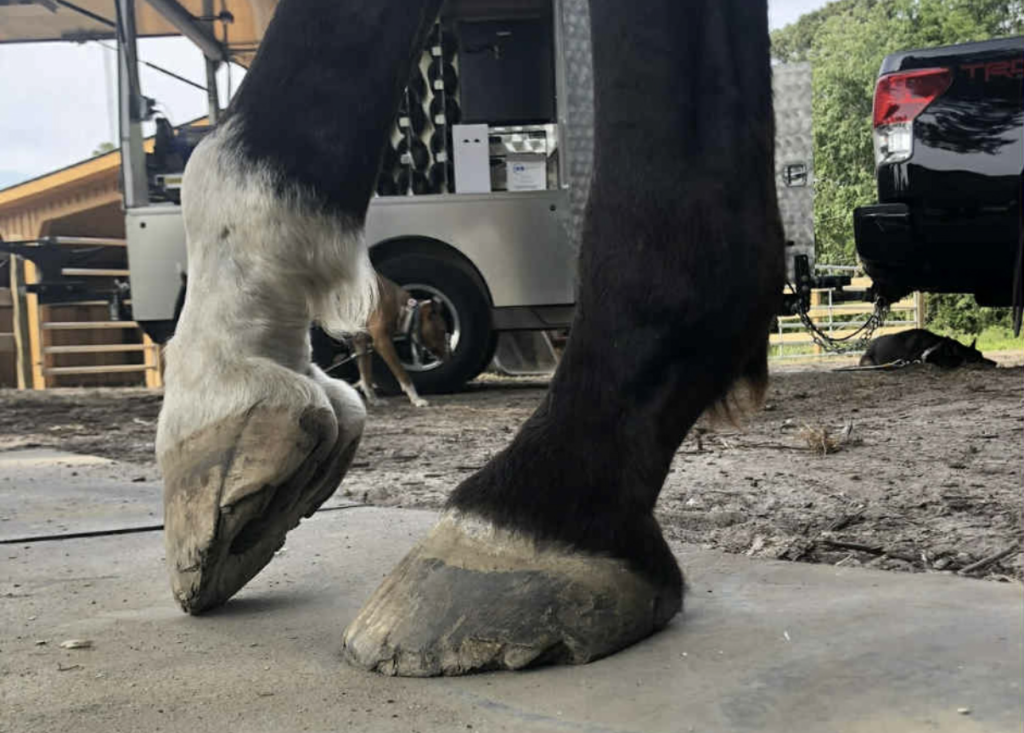
When I see a horse with a long toe and significantly underrun heels, one of the biggest mistakes I believe we can make is continually lowering those heels. The horse may already lack functional heel structure, yet more heel is sometimes removed in an attempt to make the foot appear balanced.
The heels may continue migrating forward, the toe continues migrating forward, and the hoof capsulebecomes increasingly distorted. Several weeks later, we may be looking at essentially the same problem
again. This can become a cycle: long toe—low heel—delayed breakover—continued distortion—long toe—low heel.
At some point, we have to stop chasing the distortion and start asking why the foot continues developing in that configuration.
BRINGING THE TOE BACK
When appropriate, one of the most valuable things we can do for a long-toe, low-heel foot is reduce the excessive toe lever. That does not mean recklessly removing the toe. The farrier must respect live sole, sole depth and the internal position of the coffin bone.
The goal is not to make the hoof visually short. The goal is to position breakover more appropriately relative to the internal structures. Depending on the horse, this may involve trimming, shoe placement, rolled toes, rockered toes, setting the shoe appropriately, or other therapeutic modifications.
When an effective breakover is moved back appropriately, the horse does not have to travel over as much toe before the heel leaves the ground. We have shortened the lever without simply forcing the hoof into an arbitrary angle.
GIVING THE HEELS AN OPPORTUNITY TO RECOVER
At the same time that we address the toe, we need to consider the heels. If the heels are weak, crushed or underrun, constantly removing them may be counterproductive. Sometimes the better strategy is to preserve appropriate heel structure while addressing forward migration of the toe.
Over multiple shoeing cycles, the goal is to encourage a more functional hoof capsule rather than attempting to manufacture the entire correction in one appointment. A hoof that has been distorted for months or years generally will not become normal because it was aggressively trimmed once. The hoof capsule has to grow, the horse has to adapt, and the farrier needs to evaluate the response from one cycle to the next.
WHY I LIKE THE 52-54° RANGE
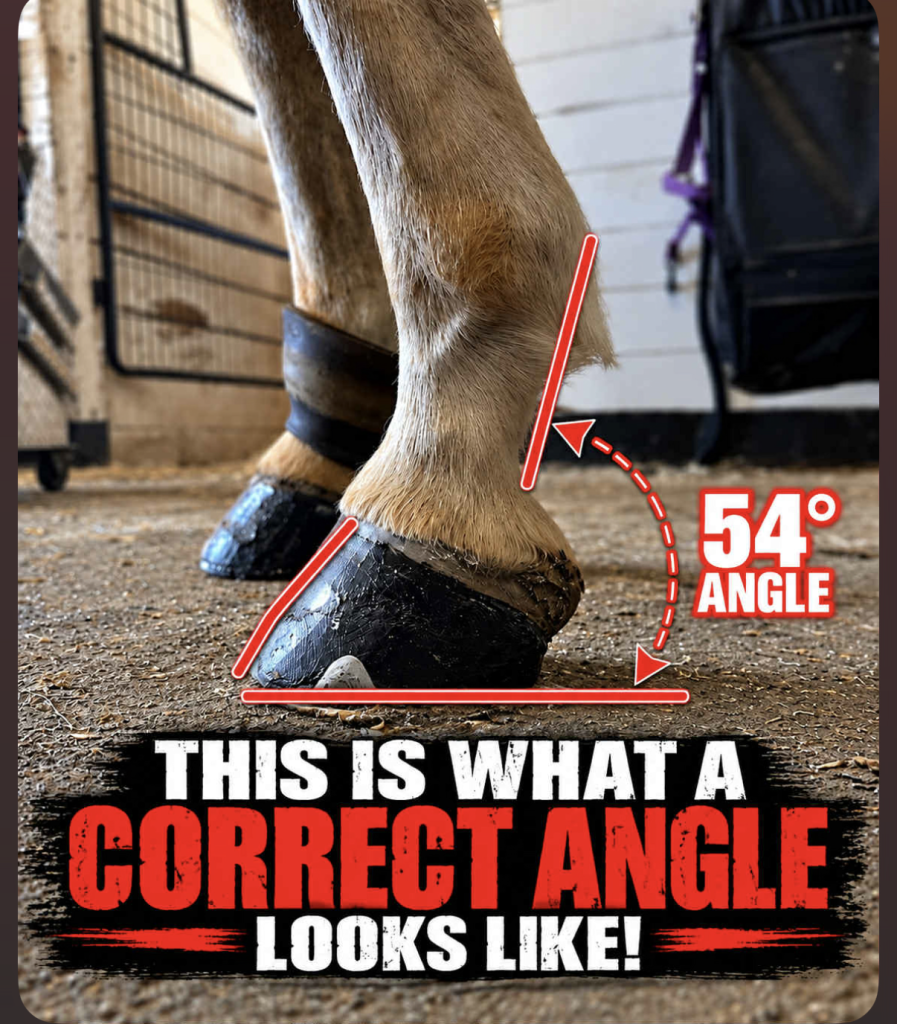
For many horses with normal front-foot conformation, I like seeing the dorsal hoof wall somewhere around
the 52-54°range. In many horses, that range can coincide with a more compact foot, better hoof-pastern alignment and a more favorable breakover position than we see in a severely low, long-toed foot.
But the number itself is not magical. If we artificially create 54° by excessively removing the toe or placing a large wedge under a structurally compromised foot, we have not necessarily created a healthy hoof. We have simply changed the measurement.
A naturally well-aligned 54° foot is not necessarily mechanically equivalent to a distorted low-angle foot that has been artificially elevated to the same external measurement. The hoof gauge may show a similar number while the internal anatomy tells a very different story.
WEDGES: VALUABLE TOOL? OR A BAND-AID?
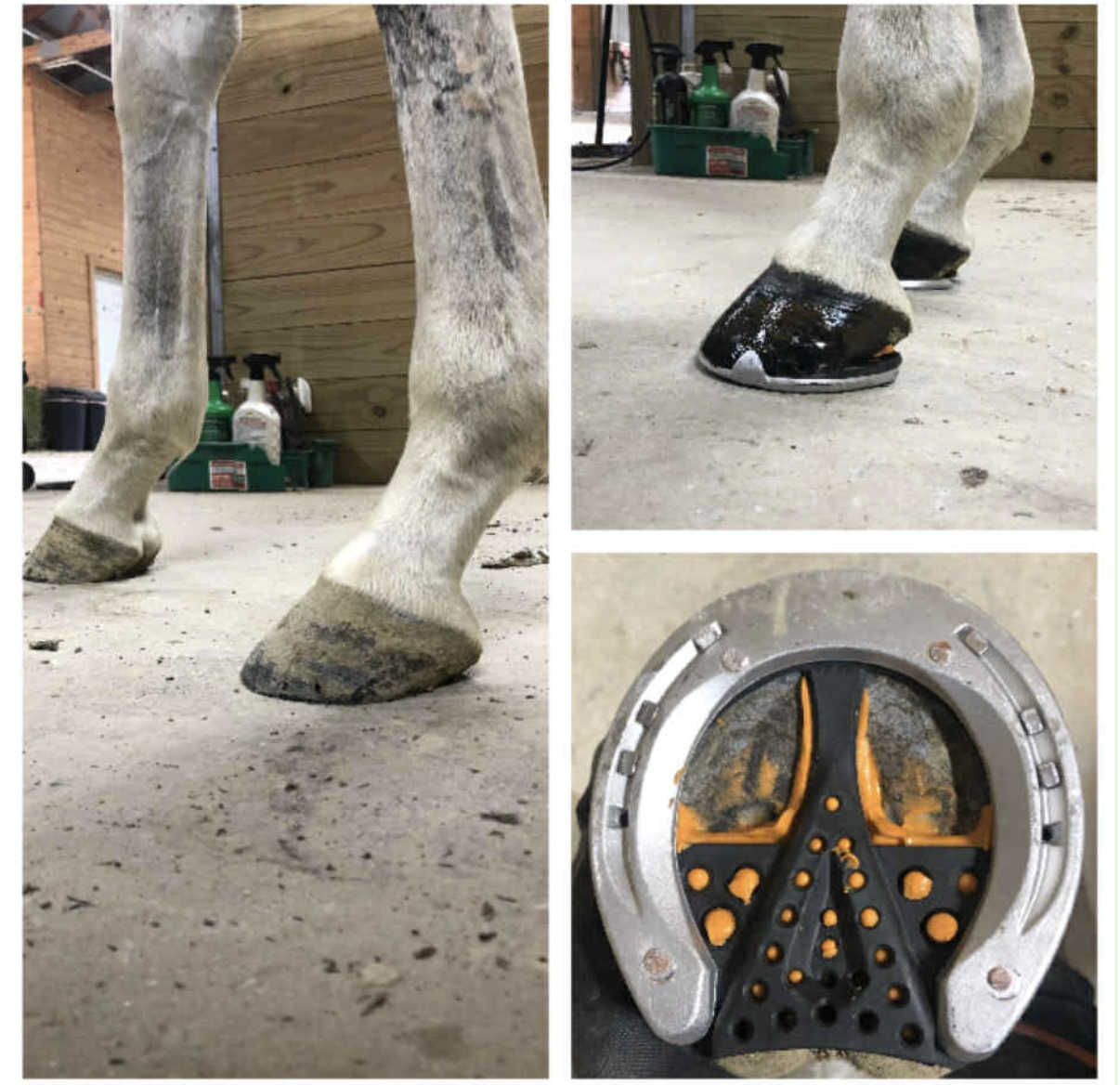
Wedges are among the useful tools available to farriers and veterinarians. In selected cases, elevating the heels can change mechanical demands involving the DDFT and alter relationships within the back of the foot. For a painful horse, that can sometimes be therapeutically valuable.
However, a wedge should not automatically become the permanent answer to every low-angled foot. If we leave an excessive toe exactly where it is, allow the heels to remain migrated forward, and simply install a wedge until the hoof gauge reads 54°,we have not necessarily corrected the underlying distortion.
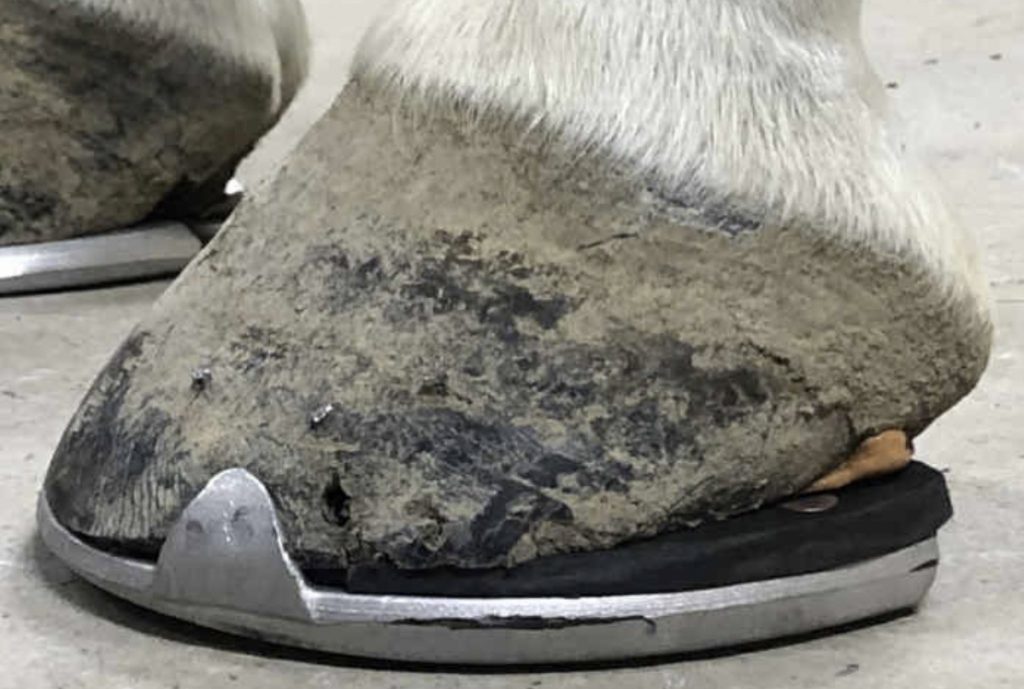
Therapeutic shoeing should have a mechanical objective. Why are we elevating the heel? What structure are we trying to influence? What are we trying to accomplish with breakover? Are the heels improving over subsequent cycles? Is the toe becoming more manageable? Is the horse more comfortable? Those questions matter more than the cosmetic angle alone.
ROLLED TOES & ROCKER TOES
Rolled toes, rocker toes and other breakover modifications can be extremely useful. A properly designed modification can allow the horse to transition over the toe more easily. But simply rolling the shoe’s toe does not automatically correct every problem associated with a long toe.
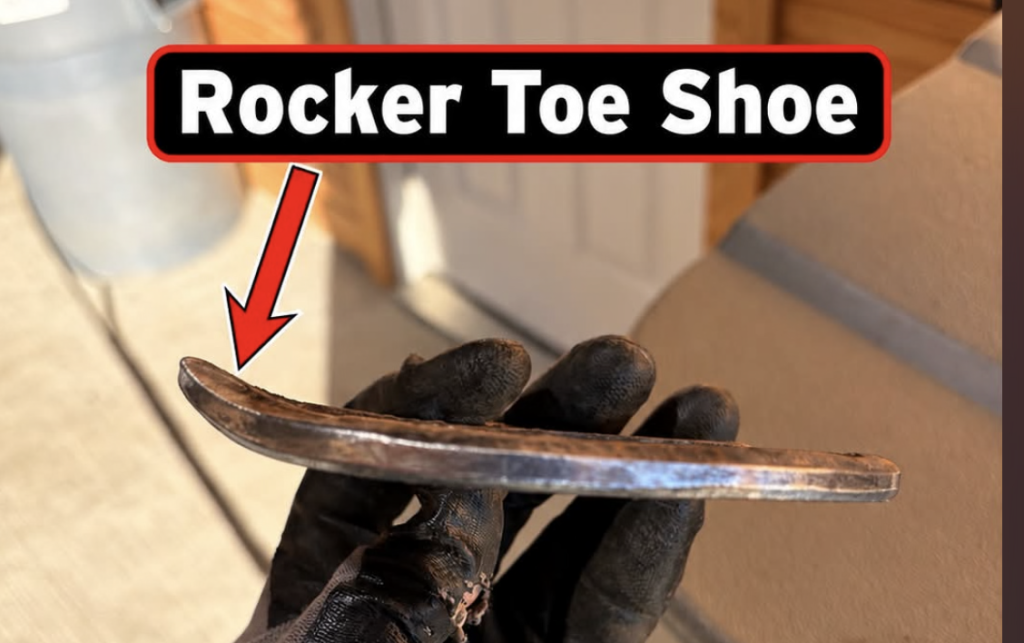
If the hoof capsule continues migrating forward, we may still be chasing the problem. We need to consider both where the hoof is and where the shoe is. The shoe should support the mechanical objective rather than simply follow distortion.
SOLE DEPTH MATTERS
It can be tempting to look at a low-angle foot and immediately decide that the toe needs to come off. Maybe it does —but how much? Where is the coffin bone? How much sole depth does the horse have?
Aggressively removing toe from a horse that already has insufficient sole depth can create a new problem.
Experienced farriery is not simply knowing what should theoretically be removed. It is knowing what the. horse can safely afford to lose. In significant distortion, chronic lameness, laminitis, navicular-region pathology or unusually thin soles, radiographs can provide information that external appearance cannot.
THE COFFIN BONE CHANGES THE CONVERSATION
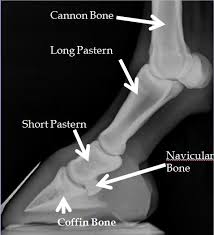
The distal phalanx, or coffin bone, is the internal foundation around which much of the hoof capsule is organized. When evaluating hoof angle, we should think about the orientation of that bone rather than focusing exclusively on the dorsal hoof wall.
A lateral radiograph can help the veterinarian and farrier evaluate sole depth beneath the coffin bone, dorsal hoof-wall relationships, coffin-bone orientation, palmar angle, heel position, breakover location,
hoof-capsule distortion and evidence of pathology. This information can materially change the trimming and shoeing plan.
PALMAR ANGLE VS. EXTERNAL HOOF ANGLE
The external hoof angle and the palmar angle of the coffin bone are not the same measurement. A hoof gauge measures an external feature of the hoof capsule. Palmar angle describes the orientation of the solar margin of the distal phalanx relative to the ground and is typically evaluated radiographically.
A horse can have an external hoof angle that appears acceptable while internal relationships still deserve attention. Conversely, an unusual-looking external hoof can make more sense once radiographs reveal the underlying anatomy. This is why the principle remains: do not treat the number; treat the horse.
VERY LOW OR NEGATIVE PALMAR ANGLES
In some low-heeled horses, radiographs may reveal a very low or even negative palmar angle. That is a more specific issue than simply having a low external hoof angle. These cases deserve careful veterinarian-farrier collaboration because significant hoof-capsule distortion and altered mechanics may be present.
Simply removing large amounts of toe or stacking wedges underneath the heel without understanding the internal anatomy is not a comprehensive plan. The objective should be to understand why the foot has developed that configuration and determine how the mechanical environment can be improved safely.
HOOF ANGLE & BREAKOVER
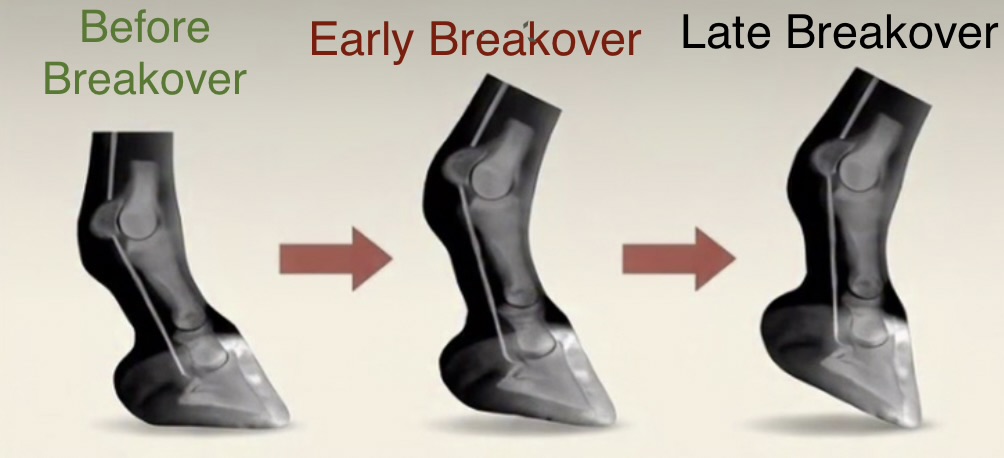
Breakover is one of the mechanical variables farriers can influence considerably. A useful way to think about it is leverage. If the effective breakover point is unnecessarily far forward, the lever arm becomes longer. Bring breakover back appropriately and that lever becomes shorter.
This is why I often focus on the toe when dealing with a low-heeled horse. When someone sees a low heel, the immediate thought may be, ‘We need more heel.’ I also ask, ‘Do we have too much toe?’ Those are different questions, and both deserve consideration.
DO NOT SCARIFICE THE HEEL TO MATCH THE TOE
If a hoof has a stretched toe and weak heels, aggressively lowering the heels simply to make them visually match the toe may lower the entire hoof capsule without addressing the underlying leverage problem.
Instead, we should evaluate whether the toe needs to come back. When the toe is brought into a more appropriate position and the heels are preserved where appropriate, we may be able to establish a more functional hoof over successive cycles. Good farriery is not always about making the hoof look perfect today. Sometimes it is about putting the hoof in a position where it can become healthier months from today.
THE SHOEING CYCLE MATTERS
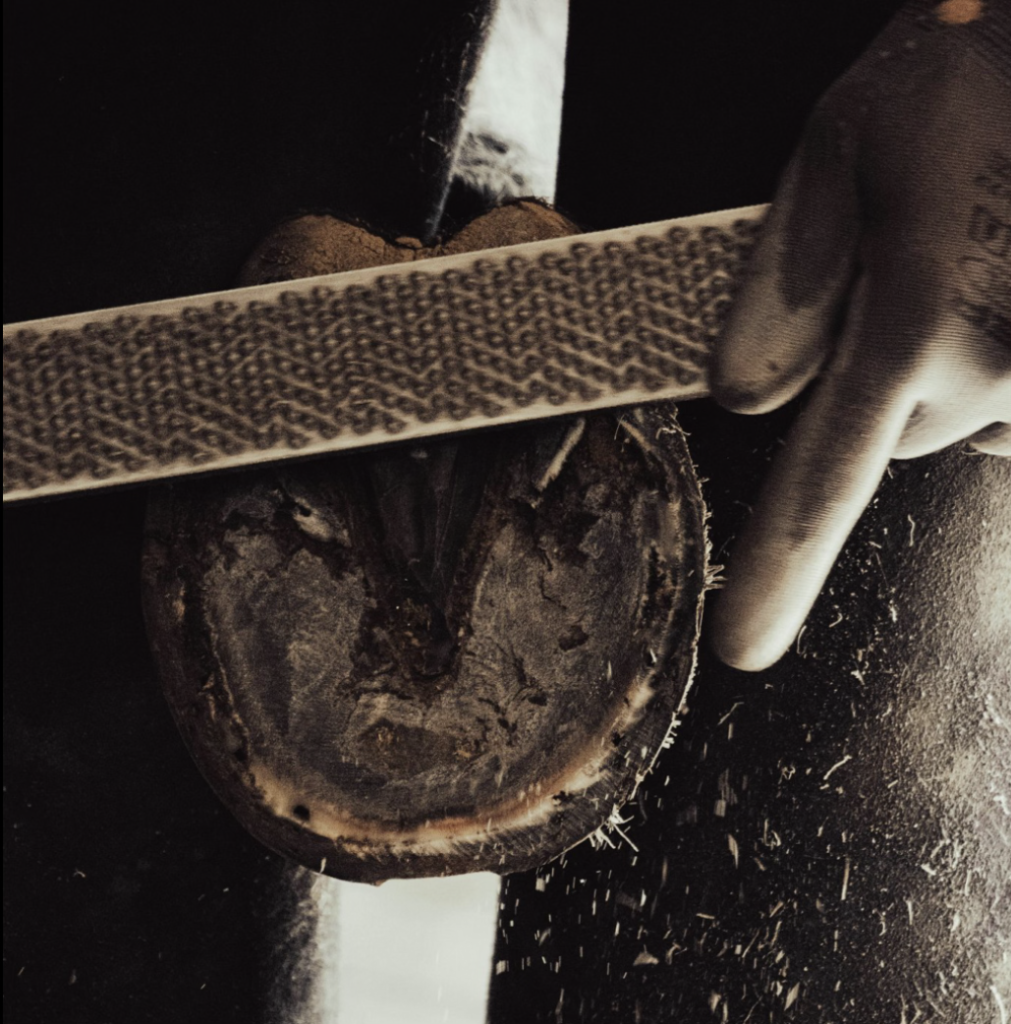
Even an excellent shoeing job can deteriorate mechanically if the horse remains in the same shoes too long. The hoof continues growing. As it grows, the toe can migrate forward, the heels may migrate forward and breakover changes.
The shoe that was correctly positioned early in the cycle may no longer provide the same mechanical relationship several weeks later. For horses predisposed to long-toe, low-heel distortion, shorter cycles can be valuable. In many rehabilitation cases I prefer approximately a four-week cycle, allowing smaller, more frequent corrections rather than allowing substantial distortion to develop before attempting a larger correction.
FRONT FEET & HIND FEET ARE DIFFERENT
Another reason we should not blindly apply 52-54° to every hoof is that front and hind feet are mechanically and anatomically different. Hind feet are generally more upright and often have a different shape because their functional demands differ from those of the front feet.
The discussion of 52-54° in this article primarily concerns the front feet of many horses, especially when comparing a healthier, more upright hoof-pastern relationship with an excessively low, long-toed configuration.
WHAT ABOUT CLUB FEET?
A higher hoof angle does not automatically mean a better hoof. If a horse naturally has a club foot, simply trying to force that foot down to an arbitrary measurement can be harmful. Likewise, taking a normal horse and artificially creating an excessively upright foot is not the objective.
There is a major difference between restoring a distorted low heel toward a more appropriate configuration and forcing every horse into the same template. The farrier must respect the individual horse’s conformation.
CHANGES SHOULD OFTEN BE GRADUAL
If a horse has spent years standing and moving on a severely distorted foot, I generally do not want to chase an arbitrary angle in one shoeing. The hoof capsule, soft tissues and movement patterns may have adapted over time.
Many cases benefit from controlled improvement over several cycles: bring the toe back appropriately, improve breakover, preserve or support the heel, monitor comfort, evaluate growth, and repeat. That is hoof rehabilitation.
FARRIER & VETERINARIAN COLLABORATION
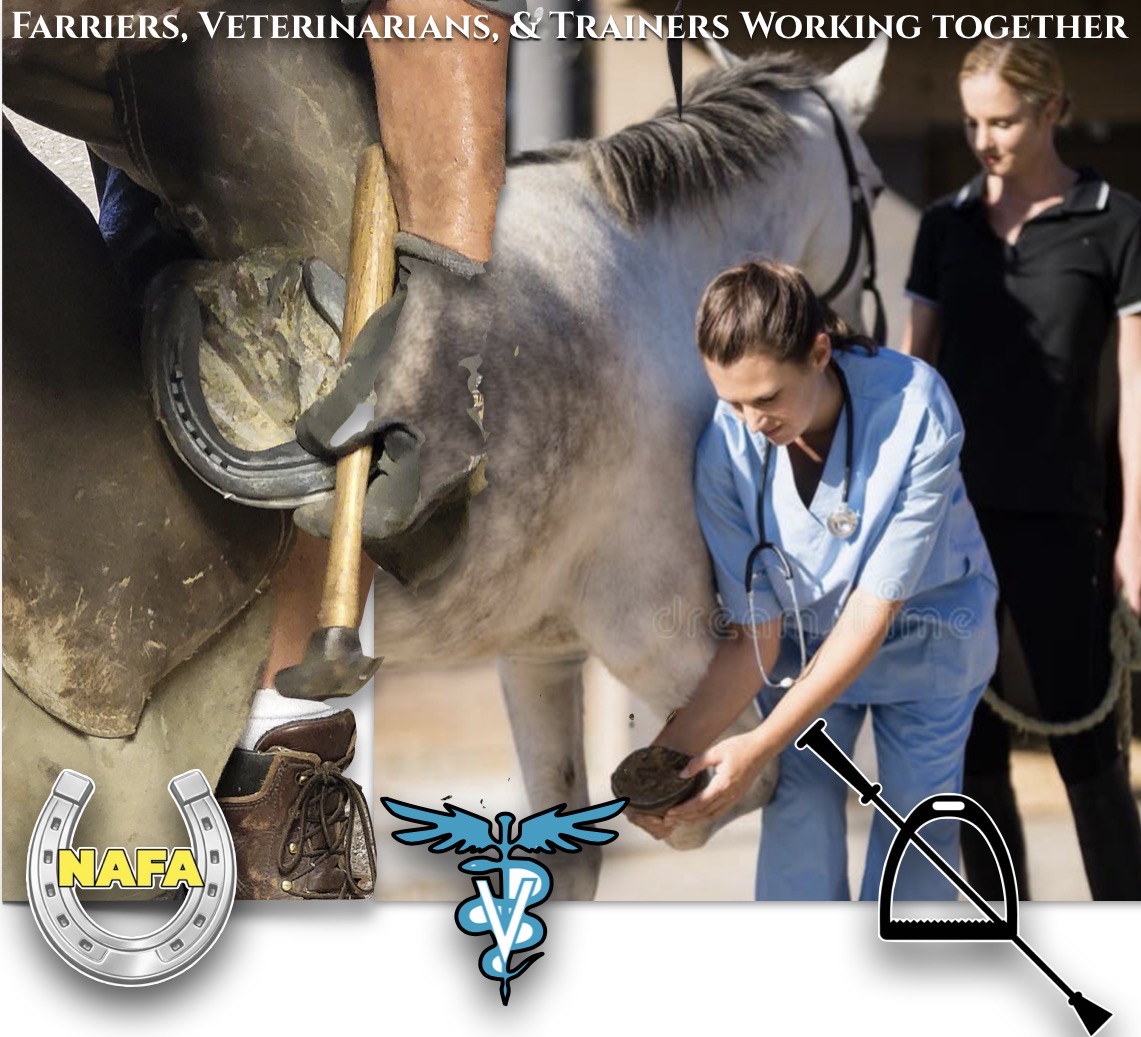
Some feet can be managed routinely without radiographs. Other feet should involve a veterinarian. When a horse has chronic lameness, suspected navicular pathology, laminitis, significant hoof distortion, abnormal coffin-bone orientation or persistent heel pain, collaboration becomes particularly valuable.
The veterinarian can diagnose pathology. The farrier can manipulate the hoof and shoeing mechanics.
When those professions communicate effectively, a treatment plan can be built around what is actually happening inside the horse’s foot rather than around assumptions.
WHAT ARE WE REALLY TRYING TO ACCOMPLISH?
When evaluating a horse with a low hoof angle, the treatment plan should not simply be ‘make it 54°. We need to ask whether the toe is too far forward, where breakover lies, whether the heels are underrun, whether there is enough sole depth, whether the frog and back of the foot are healthy, what the hoof-pastern axis looks like, how the horse moves, whether pathology exists, whether radiographs would help, what can safely change today, and what should change over the next several shoeing cycles.
Those questions tell us far more than a single number ever could.
WHY THE 52-54° CONVERSATION STILL MATTERS
Measurements still have value because they give us reference points. If a horse begins with a very low front foot, an excessively long toe, underrun heels and a broken-back hoof-pastern axis, and over several cycles develops a more compact foot with improved heel structure, improved breakover and an external angle closer to 52°, the measurement helps document part of that change.
But the horse is not improved simply because the gauge says 52°. The horse is improved when the entire mechanical picture improves. The number documents part of that picture; it does not define it.
A HOOF GAUGE IS A TOOL, NOT A DIAGNOSIS
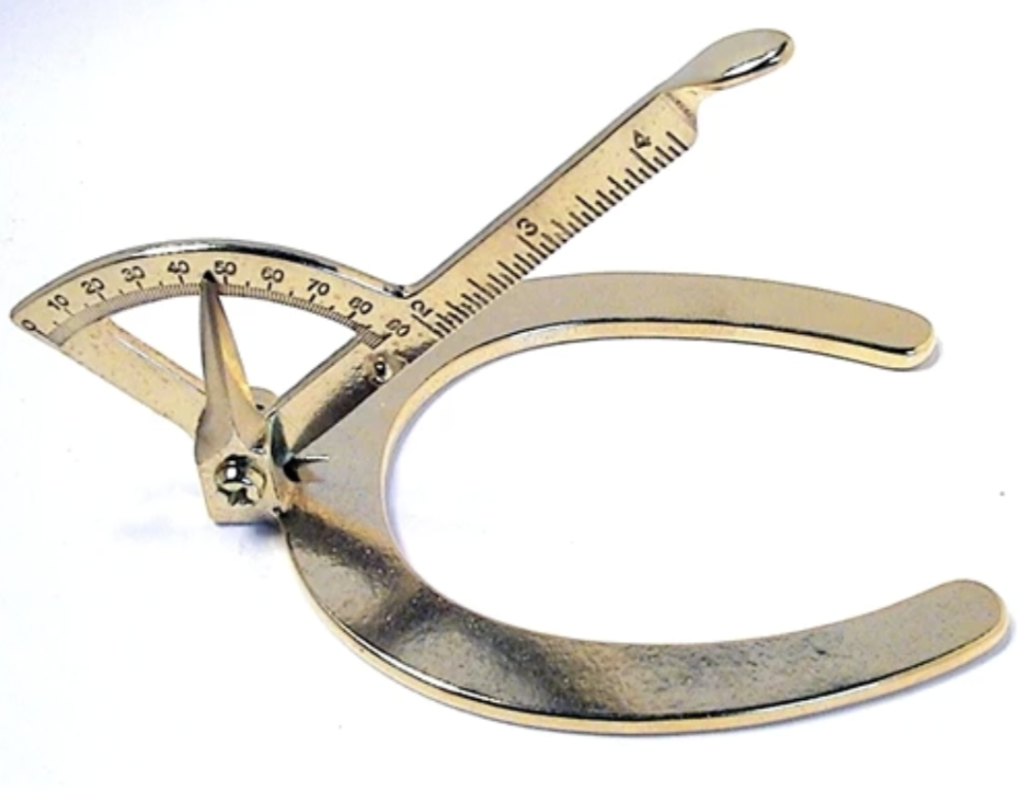
A hoof gauge is valuable, but it is not an X-ray machine. It does not tell us the sole depth. It does not show the exact orientation of the coffin bone. It does not diagnose navicular disease. It does not tell us whether the DDFT is damaged, and it does not tell us whether the horse is experiencing pain.
Experienced farriers combine that measurement with observation, hoof morphology, movement, history, veterinary findings and, when appropriate, radiographs. That is how a measurement becomes useful information.
THE LONG-TERM GOAL 📅
Whether working on a performance horse, pleasure horse or therapeutic case, the goal is not to create the prettiest hoof sitting on a hoof stand. The goal is to create a foot that functions well underneath a moving horse.
For many front feet, somewhere around 52-54° can be a useful functional range. But the larger goals are a manageable toe, appropriate breakover, adequate sole depth, functional heel support, a healthy hoof-pastern relationship, reduced hoof-capsule distortion, appropriate support beneath the limb, and ultimately a comfortable horse.
Farriery is biomechanics. Every millimeter we remove and every millimeter we leave can have a consequence. Every shoe we move forward or backward changes something. Every wedge, pad, bar, rolled toe or rocker toe should have a reason behind it. Every hoof angle should be interpreted in the context of the horse standing above it.
FINAL THOUGHT 💬
The debate should never simply be, ‘Is 54°better than 48 degrees?’
The better questions are:
🧲 Why is this horse at that angle? Is that its natural conformation, or does it have a migrated toe?
🧲 Are the heels underrun? Is the hoof-pastern axis broken back? Where is the coffin bone?
🧲 Where is the breakover?
🧲 What is happening within the back of the foot?
🧲 And what can safely be done to improve those mechanics?
Those are the questions that lead to better farriery.
We should not chase numbers. We should understand what those numbers are telling us.
*This article is intended for educational purposes. Hoof angles and therapeutic shoeing decisions should be evaluated for the individual horse. Horses experiencing lameness or suspected pathology should be evaluated by a veterinarian, with veterinarian-farrier collaboration when appropriate.