
As a new year gets underway, I’m hearing more horse owners pause and ask questions like, “Where does my feed come from?” “Who actually makes this supplement?” and “Is what I’m feeding my horse helping—or hurting—the bigger picture?”
Honestly, I’m glad those questions are being asked.
That said, as consumers, we also need to understand how to process new ideas thoughtfully and avoid being swayed by emotion, marketing language, or expectations that don’t always match reality. Sustainability conversations can quickly become polarized or over-simplified, especially online. My goal is to help bring this discussion back to practical, evidence-based decision making.
At Revolution Equine Nutrition, feeding horses in a way that supports their health and makes sense for the world they live in isn’t a trend or a marketing angle. It’s just common sense. And I want to be very clear right up front: this conversation is for everyone. You don’t need a perfect setup, a big budget, or a “green” barn to be part of it.
Caring about your horse and caring about the environment don’t have to be complicated, expensive, or all-or-nothing.
Every barn is different. Some barns have beautiful hay storage and easy access to local forage. Others are working around tight budgets, limited suppliers, shared feeding systems, or long winters. Maybe you board. Maybe you’re feeding what’s available. Maybe you’re doing the best you can with what you’ve got.
That’s real life.
My job isn’t to tell you there’s one “right” way to feed sustainably. My job is to help you make better choices within your own reality—choices that support your horse first, and often reduce waste and inefficiency at the same time.
Even small changes matter. And most of the time, good nutrition and sustainability overlap far more than people realize.

FORAGE FIRST: THE BIGGEST WIN AMONGST PEOPLE ALREADY HAVE
Let’s start with the simplest, most powerful tool we have: hay and grass. Long-stem forage is the base of nearly every healthy horse diet. When I say long-stem forage, I mean grass and hay in their natural form. Pellets, cubes, and hay stretchers are sources of fiber—and they can provide useful nutrition and microbiome support—but they are not forage.
Horses are built to eat roughage. Long-stem forage keeps the gut moving, supports microbial balance, encourages chewing and saliva production, helps manage behavior, and may play a role in reducing ulcer risk. From a nutrition standpoint, forage is non-negotiable. From a sustainability standpoint, it’s also a win.
WHEN HORSES ARE ESTING ENOUGH GOOD-QUALITY HAY, THEY OFTEN NEED LESS OF EVERYTHING ELSE
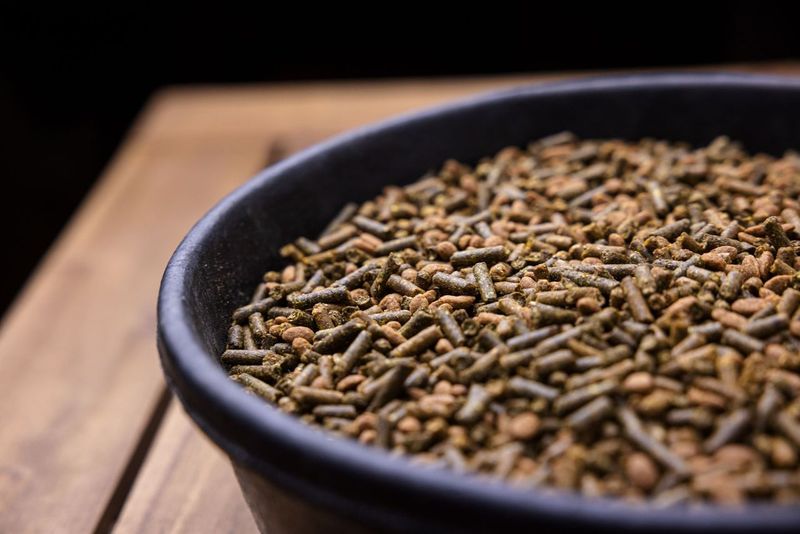
Fewer bags. Fewer tubs. Fewer processed feeds. Fewer deliveries. Less waste overall. Pellets, cubes, and fat supplements absolutely have their place. I use them regularly when the situation calls for it—poor dentition, higher calorie needs, travel, medical conditions, or limited forage availability. But whenever possible, they should add to long-stem hay, not replace it.
Chewing long-stem forage matters in ways processed feeds simply can’t fully replicate.
If you’re able to source hay locally, that’s another bonus. Shorter hauling distances mean less fuel use, less packaging, and more money staying in your local farm community. If you ever get the chance to talk with your hay grower or see where your hay comes from, take it. That connection matters—and it often leads to better hay choices over time.
Simple doesn’t mean outdated. Sometimes, simple just works.
BALANCED DIETS MEAN LESS WASTE (IN MORE WAYS THAN ONE)
When I see feed rooms stacked with half-used supplements, it’s rarely because owners don’t care. More often, it’s because they’re trying to do the right thing—and have been told, directly or indirectly, that “more” is better. It usually isn’t.
There are two main kinds of waste that come from over-supplementation.
1. Packaging Waste
Every extra supplement means more plastic containers, bags, scoops, and shipping materials. That adds up quickly—both financially and environmentally. A streamlined diet, where each product has a clear purpose, reduces waste and often saves money at the same time.
If a supplement truly is needed, buying a larger container can sometimes reduce packaging overall. And those empty tubs can often be reused or recycled with a little creativity.
2. Nutrient Waste
Anything your horse doesn’t need or can’t use ends up in the manure pile. That includes excess minerals and vitamins. I often mention iron—not because it’s uniquely dangerous, but because it’s a good example of how “extra” nutrients don’t disappear. They cycle right back into the soil and, in some cases, into water systems.
This isn’t about panic. It’s about efficiency. A well-balanced diet feeds the horse—not the manure pile—and helps protect soil and groundwater in the process.

KNOWING WHO MAKES YOUR FEED ACTUALLY MATTERS
Another big topic heading into 2026 is sourcing.
If ingredients are coming from across the globe, that means more transportation, more fuel, and
more energy used before the product ever reaches your barn. I’m not saying imported
ingredients are automatically bad—or that everything must be local to be “good.”
But awareness matters.
Knowing who makes your feed, where ingredients come from, and how transparent a company is goes a long way. Clear labels, consistent quality, and honest sourcing practices make it easier to trust what you’re feeding. Sustainability isn’t about flashy claims—it’s about accountability. Sometimes the most responsible choice is simply choosing a company that is open and straightforward about how they operate.
One area I am actively monitoring is the increased use of algae and seaweed ingredients, particularly how these materials are harvested and whether sourcing practices are environmentally responsible. These ingredients can be valuable, but how they are obtained matters.
BARN LIFE: WHERE SMALL CHANGES ADD UP
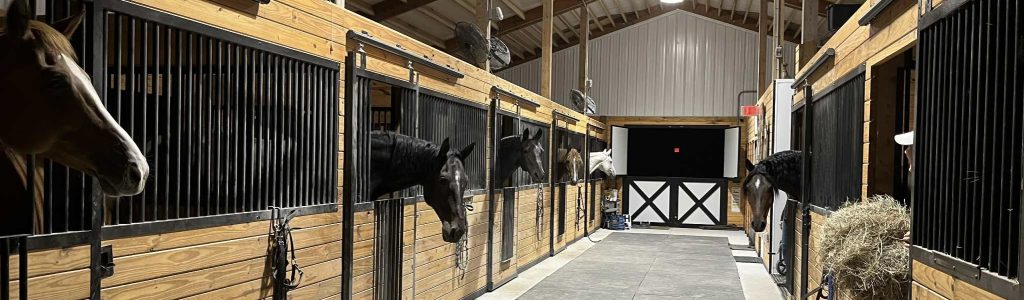
Some of the most meaningful improvements don’t come from switching products at all…They come from day-to-day management.
● Store feed properly so it doesn’t spoil or attract pests
● Use feeders that reduce waste and contamination
● Match feed amounts to actual needs—not habit or guesswork
● Revisit diets as seasons, workload, or health status change
Every pound of feed that ends up on the ground is money lost and resources wasted. Horses don’t need complicated diets—they need appropriate ones.
Good hay, the right amount of concentrate (if needed), adequate salt, and targeted
supplementation when truly necessary can support horses at every life stage—from growing horses, to retirees, to those competing at the highest levels.
CHOOSING WHAT WORKS
I don’t choose feeds because they sound trendy or because they carry buzzwords like “natural” or “eco-friendly.” I choose feeds because they work.
I use NRC 1 models, ingredient analysis, and real-world results. If a feeding program supports the horse and also happens to be better for the environment, that’s a win. But nutrition has to work first. Always.
I would love to see more feed companies move toward recycled packaging, improved
manufacturing efficiency, and clearer sourcing practices. Those changes don’t need to be extreme. Steady, transparent progress matters.
PROGRESS BEATS PERFECTION EVERY TIME
You don’t need to overhaul your barn to feed more sustainably. Focus on forage quality. Avoid unnecessary supplements. Reduce waste where you can. Recycle when possible.
If you’re feeding thoughtfully, you’re already ahead of the curve.
Sustainable feeding isn’t about doing everything right. It’s about making better choices—one decision at a time.
WHAT MATTERS MOST
● Forage-first diets support horse health and reduce environmental strain
● Balanced nutrition cuts waste, saves money, and simplifies feeding
● Sustainability works best when it’s practical and evidence-based
QUESTIONS TO THINK ABOUT:
● Where could I simplify my horse’s current diet?
● Do I understand who makes my feed and why I trust them?
● If local hay is limited, how can I reduce reliance on unnecessary extras?
*Please note that her guidance is educational in nature and is not a substitute for veterinary or medical advice, nor is it a diet suggestion for your specific horse.
Copyright Notice:
© 2025 Revolution Equine Nutrition. All rights reserved. This material is intended for personal use only and may not be reproduced, distributed, or transmitted without express written permission. Printed with express permission for DressurSPORT.com 2026. Photo ©️Nicole Major Lucky Productions
🌐 https://revolutionequinenutrition.org/
SOCIAL MEDIA:
🎙️PODCAST:
https://www.buzzsprout.com/2331476
READERS: SHARE YOUR QUESTIONS & COMMENTS IN THE FORUM BELOW


