
Leather for saddlery comes from a relatively small group of animals whose hides provide the right combination of strength, fiber density, and workability. The demands of riding equipment: weight-bearing, flexibility, resistance to sweat and weather—means that not every type of hide is suitable.
🌎Unfortunately, over the last 20-30 years many of the tanneries have closed, especially in North America. Most of the leather we now purchase, comes from various European nations, which makes the product even more expensive given shipping, duties, tariffs, and taxes that need to be paid.

Here are the main sources for leather, which is always a by-product of the meat industry. This makes it a practical use for material which would otherwise go to waste. Considerations for sourcing include animal welfare ethics and tanning practices, which can vary widely, but may not be part of common knowledge.
🐂 CATTLE 🐄

COWHIDE is by far the most important and widely used product in both Western and English saddlery. It is thick, strong, and durable with a tight fibre structure. The softness and thickness depend on the processing methods, which I will discuss further on. While leather from other animals may offer more softness or aesthetic appeal, very few can match cowhide in overall performance for saddle manufacture.
🦬 BUFFALO 🦬

BUFFALO may occasionally we be used as an alternative, but it is much tougher and the grain is slightly more textured. It was very popular as an option for English saddles in the 1990s; not so much anymore.
🐮 CALF 🐮
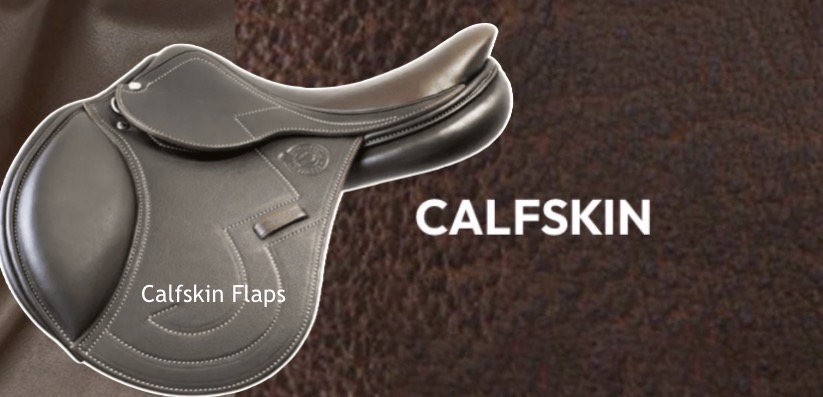
CALFSKIN is considered a “premium leather” from young cattle—being very soft and supple with a finer grain. It is NOT considered very durable, although it has been used in high-end saddles because it offers a luxurious feel. Unfortunately, it wears through very quickly and is quite expensive.
🐖 PIGS 🐖

PIGSKIN was also quite popular several years ago but has become less common in saddlery. It is still used in specific applications as it is breathable and relatively tough for its weight; although, it is known to be less strong than cowhide. Primarily used in saddle seat components and is easily recognizable by its distinctive pore pattern.
🐐 GOATS & DEER 🦌

Hides from these animals are used mainly for decorative or specialty saddles. The leather is extremely soft and flexible, but it DOES NOT hold up well for daily use.
Other more exotic leather types include:
· OSTRICH with its very distinctive ‘pimples’
· 🐊ALLIGATOR
· 🐊CROCODILE
· 🦘KANGAROO (mainly in Australia)
These leathers are limited by cost, availability, and lack of suitability for use in main “load-bearing components” of saddlery.

Saddlery is a unique intersection of craftsmanship, material biology, tradition, and ethics. The type of leather and the tanning method used to produce it directly influences how a saddle performs, feels, and lasts. A well-made saddle must strike a balance between durability and suppleness.
It needs to:
· support weight
· resist stretching
· conform to the horse and rider
And endure exposure to:
· sweat
· weather
· and friction
Not all leather is equal in this regard, which is why saddlers should be highly selective about both the source material AND HOW the hide is processed.

🥇FULL-GRAIN LEATHER is the highest quality leather available. It is the outermost layer of the hide and retains the natural grain. It is used mainly in the seat and flaps.

🥈TOP-GRAIN LEATHER (also called “Nubuck Leather”) may have been “corrected,” to remove any imperfections, and it is used for panels and billets.

🥉SPLIT or SUEDE LEATHER is made from the lower levels of the hide once the top-grain has been removed from the hide. It can be used on seats and knee pad areas since it provides good grip—but it wears out much more quickly.
➡️Added by the Editor:
PREPARING HIDES/LIMING
The process before Tanning, is called Liming. For saddles, other leather tack & goods, this takes place to prepare the animal’s hide to be used for Leather purposes. I have included a YouTube link for those who want to understand this process, ⚠️BUT BE WARNED, IT MAY BE VERY DIFFICULT FOR SOME READERS TO WATCH!⚠️ https://youtube.com/shorts/452hD0gJdc0?si=PZ20Mndn8X_G_v6P
TANNING

The transformation from raw hide to usable leather is achieved through “tanning”—a chemical process that stabilizes the collagen fibers and prevents decomposition. The method used dramatically affects the leather’s properties.

1. 🥇VEGETABLE TANNING is the gold standard, being the oldest and most traditional tanning method using plant-based tannins from bark, leaves, and wood. It is a slow process, often taking weeks or even months. Here is where proper care (discussed later) comes into play to retain the hide’s suppleness and durability after cleaning and use. Vegetable tanned leather can be wetted and is shaped precisely to a saddle tree, then dried to hold its form for years. This CANNOT be done with chrome-tanned leather.

2. 🥉CHROME TANNING is a modern, chemical-based method using chromium salts (which still has its uses but seems to have fallen out of favour for a number of reasons—including mainly environmental and health concerns.) It is a very quick process, completing the tanning in a matter of only days, and is used mainly in lower-end saddles coming from places such as India.
3. 🥈Occasionally Chrome Tanning will be COMBINED with a second Vegetable Tanning process. This tanning method is often chosen for cost and speed, not longevity.
Historically, urine was used as a source of ammonia to help in the leather tanning process, which acts as a cleaning agent. It helps to soften the hide and remove impurities—however, the often still-present distinctive odour can be quite off-putting.
🟫 DYEING ⬛️

DRUM DYEING is a process where the leather hides are placed inside a large rotating drum, which applies the dye a deep, even, and rich consistent hue. This is what you want—and you can test if your saddle leather flap has been dyed using this method by bending it back and seeing if the colour goes all the way through—if it’s drum dyed, the colour will stay the same.

If you bend it back and the colour is not showing all the way through, then it the leather has been only ’PAINTED’ onto the surface. This is when the dye has been applied AFTER the tanning process—via a roller or by hand. It tends to be only a surface treatment, and the colour will wear differently over time.
Understanding these materials not only deepens appreciation for the craft but also helps riders make informed decisions when investing in equipment that directly affects both performance and the welfare of the horse.
🫧 LEATHER CARE 🧽

Taking time to take the proper care enhances appearance and lifespan, no matter the brand. So now let us discuss how to take care of your leather tack properly!

🧽SADDLE SOAPS should be used for cleansing only. Soap (usually somewhat basic in pH) and Sweat (more acidic) are the two greatest enemies of your leather tack—impacting leather longevity and appearance if not removed properly. Saddle soap rids accumulated sweat and grime which, if left on, will result in the leather becoming brittle and cracking. Better just to use water rather than leave on a layer of saddle soap, since a clean saddle does not irritate your horse’s hide.
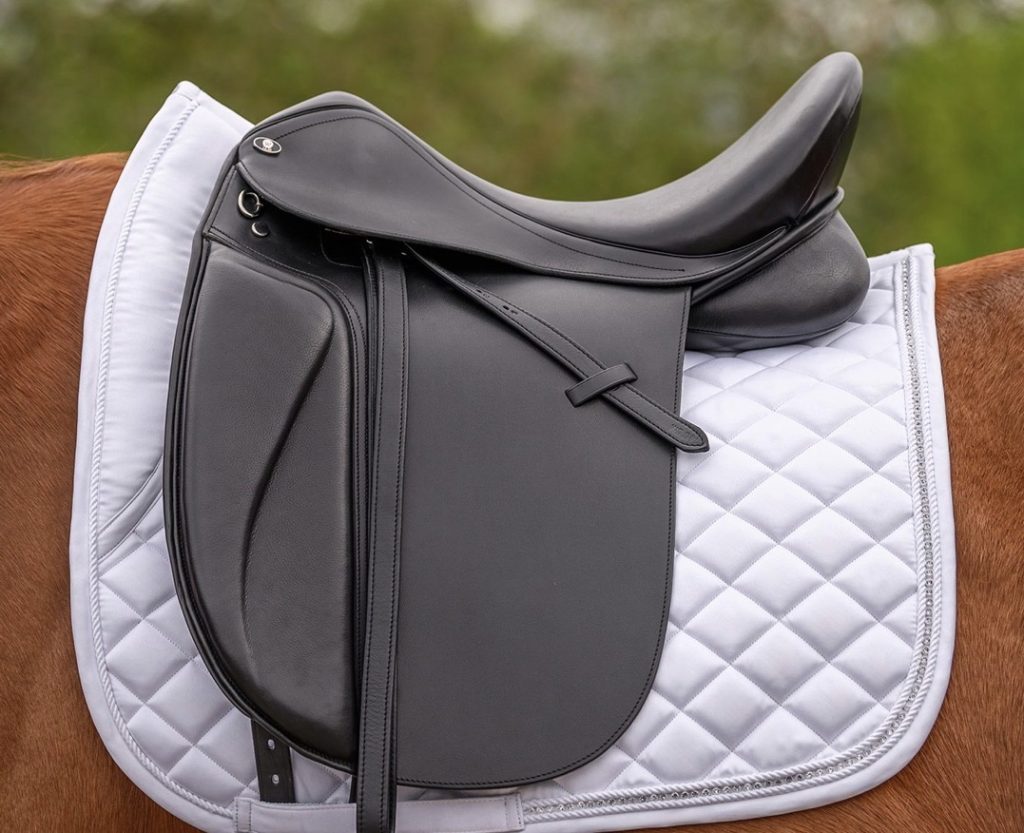
SADDLE PADS Most people protect their saddles with a simple white cotton saddle pad—which can be easily washed. Important here is to find a detergent that will not irritate your horse’s skin. (Such as “Dreft Detergent” or Detergents for horse garments available online)

🫧SOAPS containing BUILT-IN MOISTURIZERS are beneficial—only because they remove fewer natural lubricants of the leather during washing. Leather can be destroyed faster by leaving on excess soap because of excess chemicals remaining on the surface.

Leather is basically treated dead skin (via tanning), but it still retains about 25% moisture. Either of the tanning processes permanently alters the protein structure of the skin, making it more durable and less susceptible to decomposition from bacterial attack. Every time you clean your saddle, the soap (even glycerine) should be rinsed off and moisturizer applied, since leather is no longer alive and cannot replenish its moisture content itself.

🧴For MOISTURIZING, we recommend a LEATHER CREAM without any cleaning ingredients.

LEATHER OIL should be used sparingly—to darken the original colour, and thereafter only on the saddle panel as a lubricant—the wool will soak up any excess. On the seat it soaks through into the laminated glued layers of the tree, eventually causing tree breakage. (True for most English saddles which still use beechwood trees; not so much for saddles made with synthetic bases).

OIL should not be used anywhere the leather comes into contact with you (breeches, gloves) as it discolours these. Oiled flaps can soften the leather, making them too flexible. If used too generously on bridles, the leather may stretch out of shape. Use only products that are meant for leather.

BABY OIL is meant for babies; 🫒OLIVE OIL is meant for salads!
💧Wipe down tack and saddles after every use; clean thoroughly once a week. Over a longer period of time, store your saddle at room temperature, never < 5⁰C, with 30-40% humidity to retain the leather’s suppleness.

MILDEW is sometimes an unpleasant by-product of storage—but mildew development indicates that the leather is still alive with enough moisture content to allow its growth. Giving it a good wash and apply leather moisturizer to quickly restore the original looks.

SADDLE RACKS The best saddle rack is:
· The same length as the gullet.
· The panels of the saddle should not be touching the saddle rack to retain their form.

· A saddle cover is good to keep out excess dirt and moisture while the saddle is not in use.
Following these few simple steps should ensure you have a saddle to enjoy for many years!
Schleese Saddlery & Saddlefit4Life®️
©2026 Saddlefit 4 Life™ All Rights Reserved
www.saddlesforwomen.com or https://saddlefit4lifeacademy.com/
For more information about Jochen Schleese and Schleese Saddlery Ltd. please go to www.saddlesforwomen.com or https://saddlefit4lifeacademy.com/

TO ASK QUESTIONS OR COMMENT ON THIS ARTICLE, PLEASE USE THE FORM BELOW


