
INTRODUCTION: THE HOOF TELLS THE STORY
One of the most common issues I see in the field—across all types of horses, from backyard horses to high-level performance horses—is the combination of low heels and thin hoof walls.
These aren’t just cosmetic problems. They’re definitely not something you “just keep an eye on.”
They directly affect:
- Soundness
- Performance
- Longevity of the horse
And if they’re not addressed correctly, they can lead to a chain reaction of issues that go far beyond the foot itself.
In my experience, a lot of these cases don’t start as severe problems—they develop over time. Gradually. Subtly. Until one day the horse is:
🐴 Short-strided
🐴Uncomfortable, or
🐴 Dealing with soft tissue strain that could have (SHOULD HAVE) been prevented.
THIS ARTICLE WILL BREAK DOWN THE FOLLOWING:
What low heels and thin walls actually means…
- The risks they create, and
- Most importantly: what we can do about it
UNDERSTANDING LOW HEELS: MORE THAN JUST A TRIM ISSUE
Low heels are one of those things that is talked about a lot, but not always fully understood.
When we say a horse has “low heels,” we’re really talking about:
- A collapsed or under-run heel structure.
- A hoof capsule that is not supporting the limb the way it should.
Instead of the heel being upright and functional, it starts to run forward and lose its ability to:
• Maintain healthy circulation
• Absorb shock
• Support weight properly

THE CONSEQUENCES OF LOW HEELS
Low heels don’t just stay in the heel—they affect the limb.
1. HEEL PAIN
This is usually the first thing we start to notice. When the heel is compromised:
- The structures in the back of the foot take on more and more stress
- The horse may begin to avoid loading the heel properly
You’ll often see:
- Shortened strides
- Landing toe-first instead of heel-first
- Reluctance to move forward freely
These are not just “movement issues,”—your horse is showing you its discomfort!

2. TENDON & LIGAMENT STRAIN
When the heel collapses, it changes the mechanics of the entire limb. Now there is increasing strain on:
- Deep digital flexor tendon (DDFT)
- Superficial digital flexor tendon (SDFT)
- Suspensory ligament
The horse is no longer moving in alignment. Instead, it’s compensating. Unfortunately, compensation is only where the injuries start.
3. INCREASED STRESS ON THE NAVICULAR REGION
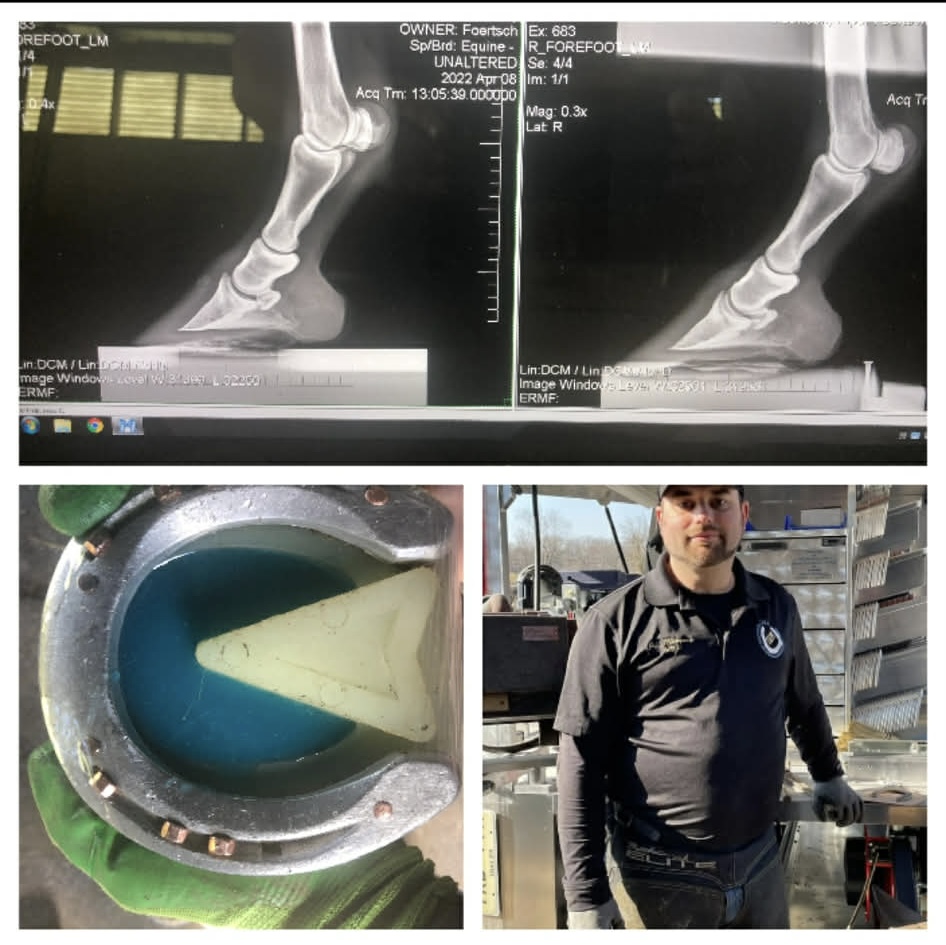
Low heels often go hand-in-hand with increased pressure in the navicular area.
WHY?
Because when the heel is low:
📐The angle of the hoof changes
🧲The DDFT places more pressure on the navicular bone
Over time, this can contribute to:
- Chronic heel pain
- Reduced performance
- Long-term soundness issues
4. POOR SHOCK ABSORPTION
The back of the foot is designed to:
- Absorb impact
- Disperse energy
When the heel is compromised, that system fails. Now instead of absorbing shock, the limb:
• Transfers it upward
- Increases joint stress
- Increases soft tissue fatigue

THIN WALLS: THE FOUNDATION PROBLEM
Now let’s talk about the other half of this equation—thin hoof walls.
A horse with thin walls does not have the same structural integrity to:
- Hold nails securely
- Support the weight of a shoe
- Maintain long-term stability
This is where a lot of farriers run into frustration—and where a lot of shoeing jobs fail prematurely.
THE REALITY OF THIN WALLS
Here’s the simplest way to look at it: You’re trying to attach something to a structure THAT DOESN’T HAVE ENOUGH MATERIAL TO HOLD IT..IF you take:
- A heavy steel shoe
- Use standard nail placement, and
- Apply them to a thin-walled hoof…
You’re asking that hoof wall to support:
- Weight
- Movement
- Torque
- Environmental stress
That’s a losing battle if you don’t adjust your approach.
WHY HEAVY SHOES BECOME A PROBLEM
When you nail a heavy shoe onto a thin wall:
🐴The wall can’t support the load.
🐴Nails loosen faster.
🐴The hoof becomes more prone to cracking and chipping.
🐴Shoe loss becomes more likely.
It’s not that steel shoes are bad—it’s that they’re not always the right tool for the job.
THE ROLE OF LIGHTER WEIGHT SHOES
In these cases, we need to think smarter—not heavier.
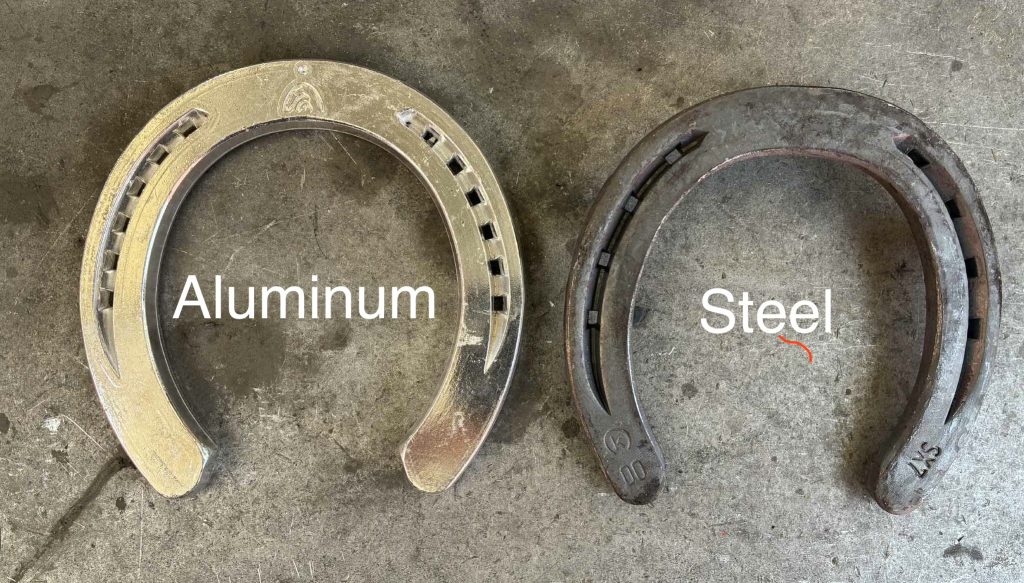
A lighter weight shoe, such as:
🧲 Aluminum
🧲 Lightweight steel
These can greatly reduce the stress placed on the hoof wall. But why does this matter?
🧲 Less weight = less pull on the nails
🧲 Less stress on weak wall structures
🧲 Better chance of maintaining the shoeing cycle
Now, does a lighter shoe provide the same level of support as a heavier steel shoe? The answer is “No…” But that’s the trade-off. By using a lighter shoe and nail, you’re choosing Retention and hoof health over maximum support. And in many thin-walled cases, that’s the correct decision.
THE BALANCE: SUPPORT VS. SUSTAINABILITY
This is where farriery becomes decision-making—not just application. A farrier must ask themselves:
“What can this hoof realistically handle?”
Because if the hoof can’t hold the shoe, it doesn’t matter how supportive the shoe is.
MANAGING HEEL PAIN: WHAT ARE OUR OPTIONS?
Now let’s bring these two issues together—low heels AND thin walls—and talk about solutions.
If a horse is dealing with heel pain, chances are:
- There’s too much pressure on the back of the foot
- The structures aren’t functioning correctly
SO, WHAT CAN WE DO?

1. LIFTING THE HEEL (WEDGE APPLICATIONS)
One of the most common approaches is raising the heel.
This can be done with:
🧲 Wedge pads
🧲 Wedged shoes
WHY?
Because lifting the heel can:
🧲 Reduce strain on the DDFT
🧲 Change the hoof angle
🧲 Relieve pressure in the navicular region


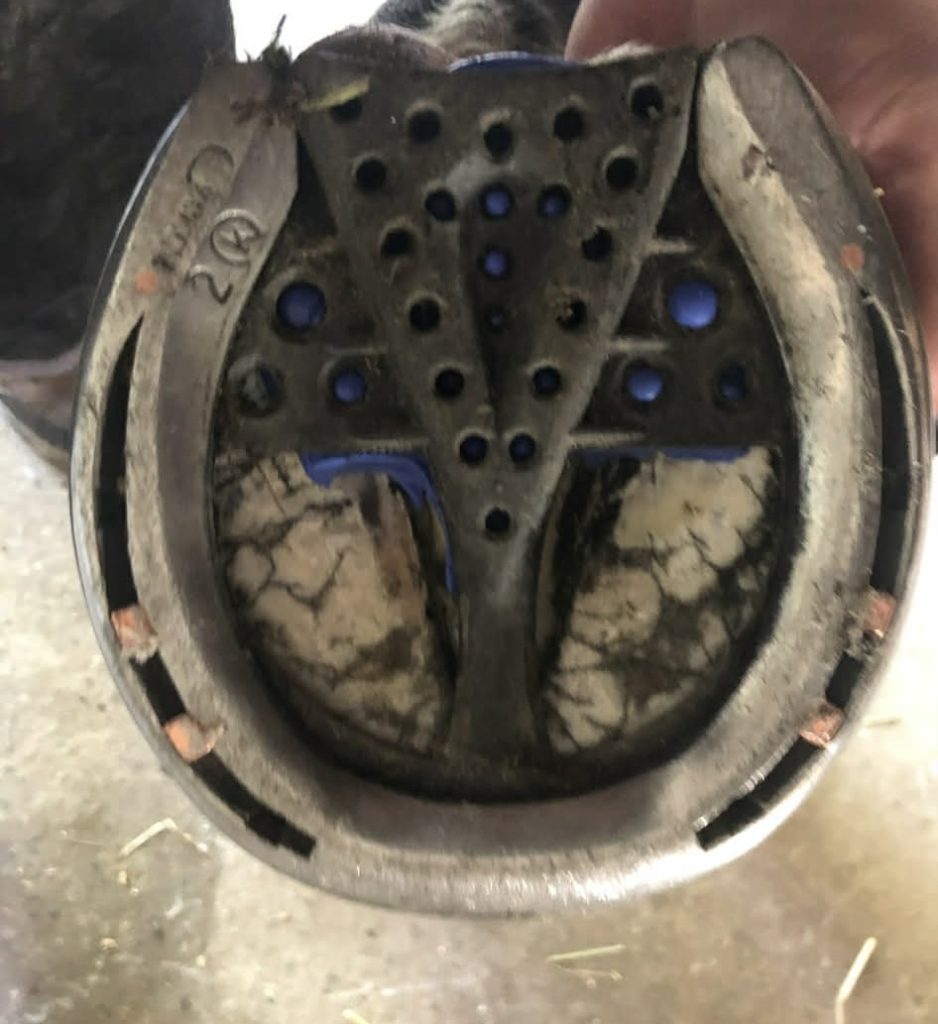
FROG SUPPORT WEDGES (preferred Option)
In my professional opinion, when using wedges, frog support is critical! WHY? Because we don’t just want to lift the heel—we want to:
- Maintain or improve circulation
- Engage the frog
- Support the back of the foot
Frog support wedges help:
- Distribute weight more evenly
- Encourage blood flow
- Promote healthier hoof growth over time

2. GLUE-ON SHOES
For thin-walled horses, glue-ons can be a game changer.
WHY?
Because now we’re:
- Not relying solely on nails
- Reducing stress on the hoof wall
MOST GLUE-ON SYSTEMS ALSO OFFER:
- Built-in shock absorption
- More even distribution of force
This can be especially helpful when:
🧲 The wall integrity is compromised
🧲 Nail retention is poor

3. Frog Support PADS
Another tool we can use is shock absorption pads.These help:
🧲 Reduce concussion
🧲 Protect sensitive structures
🧲 Improve comfort
Especially in horses dealing with:
- Heel pain
- Thin soles, or
- Hard ground conditions
4. ADJUSTING THE ENTIRE APPROACH
Sometimes it’s not just about adding something—it’s about changing the whole plan. That could include:
- Shorter shoeing cycles
- Adjusted trim strategy
- Different nail placement
- Environmental management
🚫THERE JUST IS NO “1-SIZE-FITS-ALL” ANSWER!
THE IMPORTANCE OF INDIVIDUALISED SHOEING…
Every horse is different.
What works for one horse may not work for another; and what works in one environment may fail in another. This is why cookie-cutter shoeing doesn’t work—especially in cases involving:
- Low heels
- Thin walls
- Heel pain
THE FARRIER + OWNER CONVERSATION
One of the most important parts of managing these cases is communication. In my professional opinion, horse owners should be having real conversations with their farrier about what’s going on. Not just—saying, “Put shoes on;” but instead there needs to be a more in depth conversation about… “What are the issues we’re dealing with?”
“What are all the options available for the horse?”
“What are the pros and cons of each approach?”
Because there are always options.
WHAT HORSE OWNERS SHOULD ASK THEIR FARRIER
If your horse is dealing with heel pain, thin walls, or shoeing issues, ask your farrier:
- What’s causing the problem?
- What are my options?
- What’s the best option for my horse’s job?
- How does my horse’s environment affect this?
A good farrier will:
- Explain the reasoning
- Adjust the plan
- Work with you—not just on the horse
ENVIRONMENT & WORKLOAD MATTER
You can’t separate the hoof from the horse’s lifestyle. Things that matter:
🐎 Turnout conditions
🌧️ Moisture levels
⚡️Work intensity
🧲 Footing
A horse in wet, muddy conditions will have different needs than one in dry, controlled footing. And a performance horse will need different support than a light-use horse. ⛓️💥Everything connects.
LONG-TERM THINKING: NOT JUST FIXING THE PROBLEM
The goal isn’t just to “fix” low heels or thin walls for one cycle. It is to improve hoof quality over time, reduce stress on the limb, and to maintain soundness.To do this requires:
🧲 Consistency
🧲 Proper planning
🧲 Patience
FINAL THOUGHTS
Low heels and thin walls are two of the most common—and most impactful—issues we deal with as farriers.
They affect:
🐎 How the horse moves
😀 How the horse feels
👍 And how long the horse stays sound
The solution isn’t one product, one shoe, or one technique. It’s more complicated than that. It’s:
🧠Understanding the problem 🧰Choosing the right tools, and
⚖️Adjusting based on the individual horse
—CLOSING STATEMENT—
At the end of the day, there’s no shortcut when it comes to hoof care. If a horse is dealing with heel pain, weak hoof walls, or structural imbalance…it deserves a thoughtful approach—not a rushed one.
Work with your farrier. ASK QUESTIONS! Understand the options. Because the right decision today can make all the difference in how that horse moves tomorrow.
PLEASE ASK QUESTIONS OR LEAVE COMMENTS IN THE FORUM BELOW.
SOCIAL MEDIA:


 APF II, President/CEO of North American Farrier Association & Owner of Forge Fate Farrier Service, began his farrier career in 2008, apprenticing under respected farrier Tom Smith, where he developed a strong foundation in hoof balance, biomechanics, and practical horsemanship. Those early years instilled in him the importance of precision, work ethic, and continual growth. From that apprenticeship, Jeff built Forge Fate Farrier Service into a respected practice specializing in performance horse shoeing and therapeutic applications. Serving a wide range of horses—from backyard companions to upper-level athletes—Jeff is known for his detail-driven approach, individualized shoeing strategies, and focus on long-term soundness and performance enhancement.