

An equine nutritionist’s perspective for competition riders
In today’s competitive dressage world, marginal gains matter. Riders leave no stone unturned when it comes to improving performance – from saddle fitting and physiotherapy to carefully planned training programs. Yet one of the most powerful tools for supporting health and performance is often overlooked: making sure your horse gets sufficient forage.
From a nutritional perspective, feeding adequate forage is not simply about preventing hunger or maintaining weight. It is fundamental to digestive health, behavioural wellbeing, and of course performance. During competition season especially, this is more relevant for the prevention and management of equine gastric ulcers – a condition affecting a significant proportion of sport horses.
Studies consistently show that 60–90% of performance horses may develop gastric ulcers at some point in their careers. Dressage horses, despite working in a discipline often perceived as lower intensity than racing or eventing, are by no means exempt. In fact, their management – stabling, travel, high concentrate diets, and structured training schedules – can place them at considerable risk.
For riders competing at higher levels, understanding how forage supports gastric health can make a meaningful difference to both horse welfare and competitive success.
The Horse Was Designed to Graze

To understand why forage matters so much, we must first appreciate how the horse’s digestive system evolved.
Horses are designed to consume small amounts of fibrous plant material almost continuously. In a natural grazing environment, horses may eat 16–20 hours per day, slowly ingesting grasses that are high in fibre and relatively low in energy density.
Two aspects of equine stomach physiology are particularly important:
1. Continuous acid production
The equine stomach produces gastric acid 24 hours a day, whether the horse is eating or not.
2. Limited stomach capacity
The stomach is relatively small – typically holding 8–15 litres. It was never designed to process large, infrequent meals.
When horses graze naturally, forage intake stimulates prolonged chewing. Chewing produces saliva rich in bicarbonate, which helps to buffer stomach acid. At the same time, fibrous feed material forms a mat in the stomach, which helps prevent acid from splashing into sensitive areas of the stomach lining.
When forage is restricted, both of these protective mechanisms are compromised.
What Happens When Forage Is Limited

Performance horses may go several hours without forage – particularly overnight, at competitions, during travel and longer training sessions.
From a digestive standpoint, this creates several problems:
- Reduced saliva production due to less chewing
- Increased stomach acidity because acid continues to be produced
- Greater exposure of the stomach lining to gastric acid
- Higher risk of ulcer formation
In addition, high-concentrate diets – commonly used to meet the energy demands of sport horses – can exacerbate the issue by increasing stomach acidity and reducing chewing time.
The result is an environment in which gastric ulcers can develop.
Why Dressage Horses Are Particularly Vulnerable

Although gastric ulcers are widely associated with racehorses, dressage horses are increasingly recognised as a high-risk population.
From an equine nutritionist’s standpoint, several aspects of dressage horse management contribute to this.
1. High-Concentrate Diets
Dressage horses require significant metabolic energy for the mental focus controlled power, balance, and sustained muscular effort.
Many horses therefore receive substantial quantities of grain or starch-based concentrates. While these feeds are useful sources of energy, they are typically consumed quickly and require relatively little chewing compared with forage.
This means:
- Less saliva production
- Shorter feeding times
- Increased periods with an empty stomach
All of which can increase ulcer risk.
2. Management
Elite dressage horses are frequently stabled for large portions of the day to support controlled management, recovery, and turnout scheduling.
However, limited turnout reduces natural grazing behaviour and time with conspecifics (other horses).
The result is a stressed horse, alert even during rest periods with a high head and neck position and hence less time spent foraging.
These fasting periods are strongly associated with squamous gastric ulceration, the most common form seen in sport horses.
3. Training Intensity and Abdominal Pressure

Dressage work requires engagement of the horse’s core muscles, collection, and lightness of the forehand.
These movements increase intra-abdominal pressure, compressing the stomach during exercise.
When the stomach is empty or partially empty, gastric acid can splash upward onto the sensitive squamous region of the stomach lining. This phenomenon – sometimes called acid splash – is a major contributor to ulcer development in performance horses.
Forage present in the stomach helps reduce this splashing effect by creating a fibrous buffer.
The Role of the Margo Plicatus
Within the equine stomach, the margo plicatus is the distinct ridge that separates the squamous (upper) and glandular (lower) regions of the stomach. This area is particularly vulnerable because it marks the transition between tissue that has little protection against acid and tissue that actively produces protective mucus and secretions.
As a result, the region around the margo plicatus tends to be the most common site for squamous gastric ulcers, as acid from the lower stomach can easily splash onto this unprotected lining during exercise – especially when the stomach lacks sufficient forage to act as a buffer.
4. Competition Stress and Travel
Competition horses experience additional stressors:
- Transport
- New environments
- Changes in feeding schedules
- Altered turnout routines
Stress can influence gastric physiology and appetite, further increasing ulcer risk.
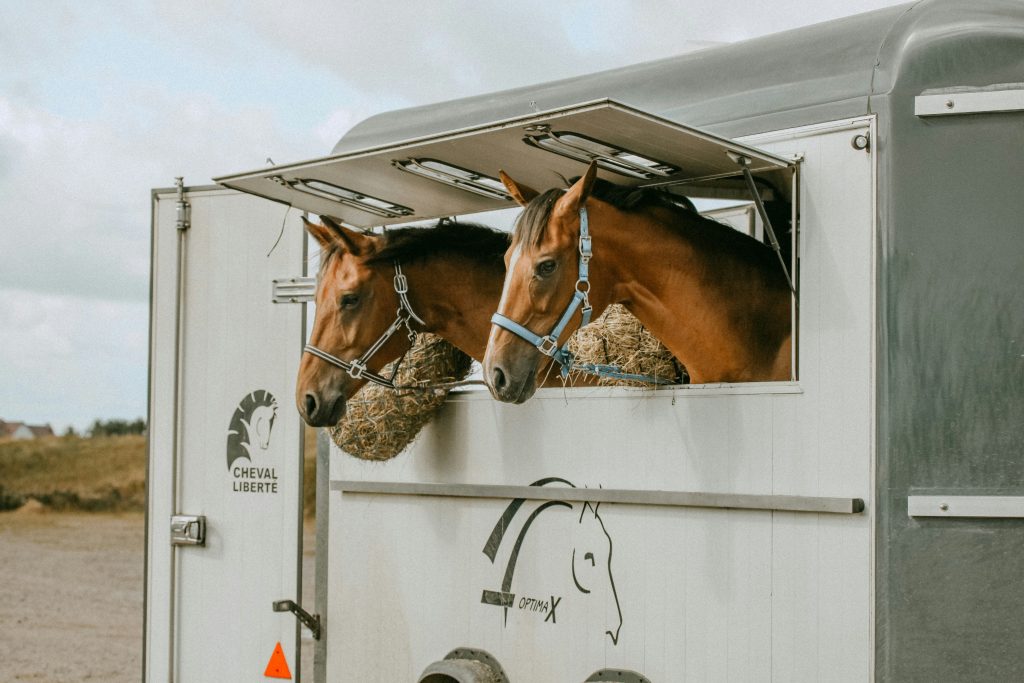
For dressage horses competing internationally or travelling frequently, maintaining consistent forage intake becomes even more critical.
Subtle Signs Dressage Riders May Notice
Dressage riders may notice:
- Reduced willingness to go forward
- Resistance in the contact
- Girthiness during tacking up
- Sensitivity to leg aids
- Reduced topline development
- Difficulty maintaining weight
- Behavioural changes under saddle or in-hand
In some cases, the horse simply feels “not quite right” despite normal veterinary examinations.
Unlike acute lameness or respiratory illness, gastric ulcers often present with subtle performance-related symptoms.
While these signs are not diagnostic on their own, gastric ulcers should always be considered as part of the differential diagnosis.
How Forage Protects the Stomach

From a nutritional perspective, forage supports gastric health in three primary ways.
1. Saliva Production
Chewing hay or grass stimulates significant saliva production – far more than concentrate feeds.
Saliva contains bicarbonate, which helps buffer stomach acid and maintain a more stable gastric pH.
2. Physical Protection

Fibrous forage forms a mat-like layer in the stomach.
This layer helps prevent gastric acid from splashing upward into the squamous region during movement and exercise.
When horses work with an empty stomach, this protective barrier is absent.
3. Stable Digestive Function
Consistent fibre intake supports the entire digestive tract, including the hindgut microbial population responsible for fibre fermentation.
A stable hindgut environment contributes to overall digestive health, appetite, and energy metabolism – factors directly linked to performance.
Practical Feeding Strategies for Dressage Horses
Ensuring adequate forage intake does not necessarily require radical changes in management, but it does require thoughtful planning.
Here are evidence-based strategies that can significantly reduce ulcer risk.
Provide Forage as the Dietary Foundation
Ideally, horses should receive at least 2% of body weight in forage daily.
For a 500 kg dressage horse, this equates to approximately:
10 kg of forage per day (dry matter basis).
Many performance horses benefit from even higher intakes – please consult your trusted equine nutritionist.
Minimize Fasting Periods
Horses should ideally not go more than 20 minutes without forage.
Strategies include:

- Slow feeders or haynets
- Multiple feeding times
- Sufficient grazing time
Reducing overnight or competition-day fasting is particularly important.
Feed Forage Before Exercise
Providing hay directly before training can significantly reduce acid splash during exercise. Safely allow your horse to feed from a haynet while brushing and saddling and only take it away a couple of minutes before bridling.
This simple practice helps ensure the stomach contains protective fibre when the horse begins work.
Balance Concentrate Feeding

High-starch meals can contribute to gastric acidity.
Where possible:
- Divide concentrate feeds into smaller meals
- Consider lower-starch performance feeds
- Increase energy from digestible fibre and appropriate fat sources
This approach supports both gastric health and sustained energy relea
Maximise Turnout and Grazing
Whenever feasible, daily turnout with access to grass supports natural grazing behaviour and promotes continuous forage intake.

Even partial turnout can make a meaningful difference to digestive health and mental wellbeing.
The Performance Connection
From a competitive perspective, gastric ulcers are not just a health issue – they can directly affect performance.
A horse experiencing gastric discomfort may:
- Resist engagement
- Resists rider’s aids
- Show tension in the topline
- Lose impulsion
- Struggle with collection
These issues can easily be mistaken for training problems when the underlying cause is physiological.
By contrast, horses with optimal digestive health often demonstrate:
- Improved rideability
- Greater willingness to work
- Better muscle development
- More consistent performance
Correct nutrition and having a nutritionist in your team is a critical part of the recipe for success. It takes a village.
Final Thoughts

Dressage demands precision, athleticism and harmony. Achieving this consistently requires horses that are not only fit and well trained but also physiologically comfortable.
Adequate forage intake is one of the simplest yet most powerful tools owners and riders have to support gastric health and reduce the risk of Equine Gastric Ulcer Syndrome.
From an equine nutritionist’s perspective, the guiding principle is clear: forage should always form the foundation of the diet. Concentrates, supplements, and performance feeds may support specific energy needs, but they should never replace the continuous fibre intake that the horse’s digestive system was designed to handle.
For dressage horses working at the highest levels, protecting stomach health through thoughtful forage management is not merely preventative care – it is an essential part of sustaining long-term soundness, wellbeing, and competitive success.
READERS: SHARE YOUR QUESTIONS & COMMENTS IN THE FORUM BELOW


