
Fitting the Dressage Saddle: yes, I’m warning you—these are controversial! —Jochen Schleese, CMS, CSE, CSFT
Over the last couple of years there have been numerous new ‘saddle fitting’ forums which have appeared online in an effort to address some of the challenges many riders face in ensuring their saddles fit—both themselves and their horses. While I think it’s great that so many working saddle fitters actually take the time to peruse the posted pictures and answer the myriad of questions (which are often quite similar), I have maintained that the only way to actually determine whether or not a saddle actually fits the horse and rider is to see how they work together ‘live’ and in motion.
Of course, this is not always possible given geographic boundaries or other issues, which is why especially the restricted social interactions during the pandemic have led us to develop the best possible virtual saddle fit program—online and with a professional to assist. Saddle fit is that important!
I have often heard riders say, “I have been using my saddle for x number of years. It fits me perfectly and fits every horse I use. Never had to get it fitted.” I have to really bite my tongue on that one but usually just manage to smile and say. “Lucky you”. Most people do not realize the possible damage they may be doing to themselves and their horses, but the fact is that there are still saddles on the market that actually inhibit the development of the horse, and as such—they may actually be right. Their saddles may still fit the same as it did when they first bought it. But, the analogy here is sort of like the Chinese custom of binding the feet so that they will not grow. Doesn’t mean it’s the right thing to do…(tradition aside!) Fitting the saddle properly should have less to do with opinion and more to do with science and the laws of nature. There was a time when people argued and swore that the earth was flat – there are still people who would argue that there is no physical difference between the male and female pelvis when it comes to saddles! (Scary—and some of these are even equine professionals!)
Saddle fit is important in every discipline, but especially in dressage as it is the basis for all other equestrian sports. In its basic definition, dressage is the art of riding and training a horse in a manner that develops obedience, flexibility and balance. Something that is necessary for all disciplines but difficult to achieve if the saddle doesn’t fit the rider (first and foremost) nor work for the horse. If the rider is uncomfortable—this translates down to the horse’s performance and comfort. Think about how sensitive their backs are—they feel a fly landing!
As such, there are however several major problems arising in today’s modern saddle construction, because of the fact that
a) People are getting heavier (larger)
b) There more horse owners than horse’men’ (and women) around now (which means much of the inherent knowledge about horse husbandry may have been lost)
c) Horse’s saddle support area is getting smaller (horses are being bred with shorter backs which leaves a smaller area for the saddle)
d) The structure of saddle trees and saddle panels have deviated from proper function. The side rails of the saddle trees are too narrow for proper weight bearing surface area, and the panels are generally much too soft to afford any real support to the too narrow rails. Panels need to be firm for support.
All of these challenges work together to result in more and more back issues—for both horse and rider!
Let me explain my theory on this, and please recognize that my ‘opinion’ on this has been substantiated with the use of various diagnostic tools, as well as being supported by the simple fact that the horse will change in conformation as it matures; especially at ages 3,5 and 8. It would be doing the animal a huge disservice and potentially causing unnecessary pain and long term back damage to not to have the saddle adjusted to ensure continued health, comfort and performance, which is why we recommend at least annual checkups for saddle fit. Dr. Joyce Harman in her book “The Horse’s Pain Free Back and Saddle Fit Book” actually states at one point that, depending on the discipline, saddle model, and riding style that adjustments may need to be made as often as monthly! (although once a year is pretty much the minimum requirement for most saddles).
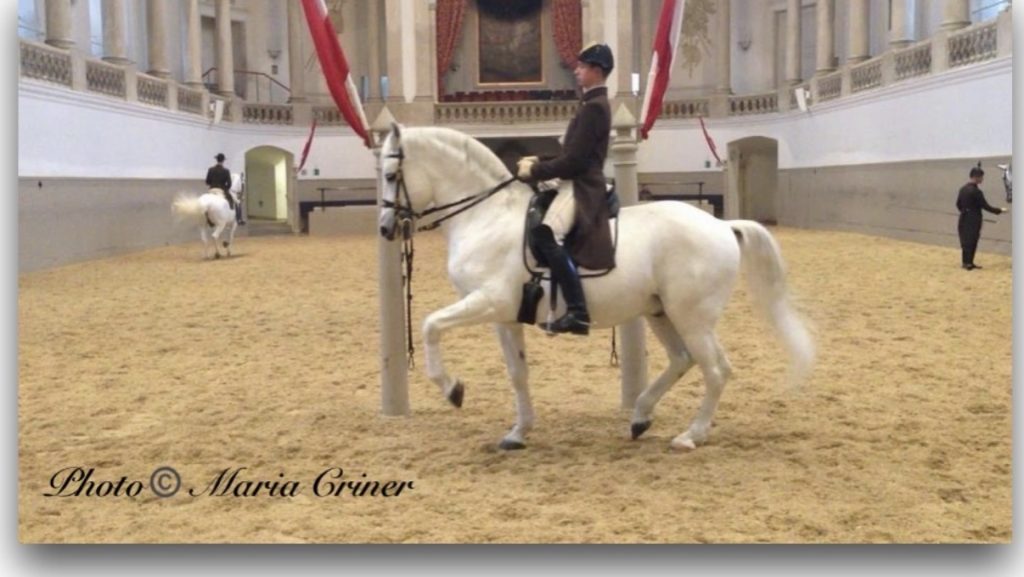
The most common dilemma in saddle fit seems to be whether the saddle needs to fit the horse first or the rider. The short answer is that the saddle needs to fit the rider first as I said, and here is why. Colonel Alois Podhajky, the director of the Spanish Riding School in Vienna from 1939-1964 states, “It is of the utmost importance not to cause the rider any discomfort. With a cramped posture it is impossible to achieve a pliable seat. Without a pliable seat it is not possible to achieve oscillation in a horse’s back. And if its back cannot oscillate, the horse will suffer pain and will not be able to collect”. The point? The saddle has to fit the rider as well as the horse. Which means, among other things—the saddle has to be gender appropriate.
Now let’s look at the various methods that the saddle is then fitted to the horse. This is of course important for any discipline, but dressage is the basis for all other riding styles, so that these points are particularly important especially in dressage saddles.
FIT#1: “THE CLOTHESPIN FIT”
Seen in Jumping, Dressage, but mostly for Polo

This type of fit is often seen in polo saddles, where the saddle actually is designed to ‘lock’ onto the spinal processes. Polo ponies often have atrophied back muscles, and usually 6-8 ponies are used in a game because they simply are in too much pain and not strong enough to continue. They have too little musculature to compensate. The saddles with this type of fit will put excess pressure on the multifidus muscles and spinal nerves, which is what leads to muscle atrophy in the back.

Some saddle manufacturers and their trained saddle fitters still maintain that a saddle is fine with a relatively (1-2 fingers) narrow channel. The tree is often too long and flat (resting on the shoulder cartilage and lumbar area) and sits with minimal weight bearing surface on the longissimus muscle. In this scenario, the saddle barely moves because it is ‘clamped’ on the spine (other than perhaps to twist during motion as it is ‘kicked back’ by the bigger shoulder). This saddle actually rarely does need to be adjusted because bone structure, cartilage and ligaments do not adapt and change their conformation through training like muscles do – and the muscles really won’t change much because the horse simply is not able to use his muscles properly to develop a proper topline with a saddle that fits like this. The saddle doesn’t need to be refitted as no development happens.
FIT #2: “THE BRIDGE FIT”

These saddles are built for contact only at the front and the back of the saddle support area, and some equine professionals believe that by increasing the pressure at the front and the back the saddle becomes more stable and the horse will bring up his back during movement to result in full panel contact. This is a false assumption, as multiple diagnostic tools have proven.
Massive pressure in the front and back remains—dry spots, white hair, etc. result at the front and the back, but rarely in the middle. The horse’s back should be loose and supple and should swing left to right and up and down. If the back is in pain this movement doesn’t happen and the horse becomes a leg mover rather than a back mover. Same as in Theory #1 Little fitting required, since the saddle barely moves as the horse’s topline doesn’t change positively. We see atrophy under the cantle and behind the shoulders and deformation in the lumbar-sacral area.

FIT #3: “THE HYPEREXTENSION FIT”
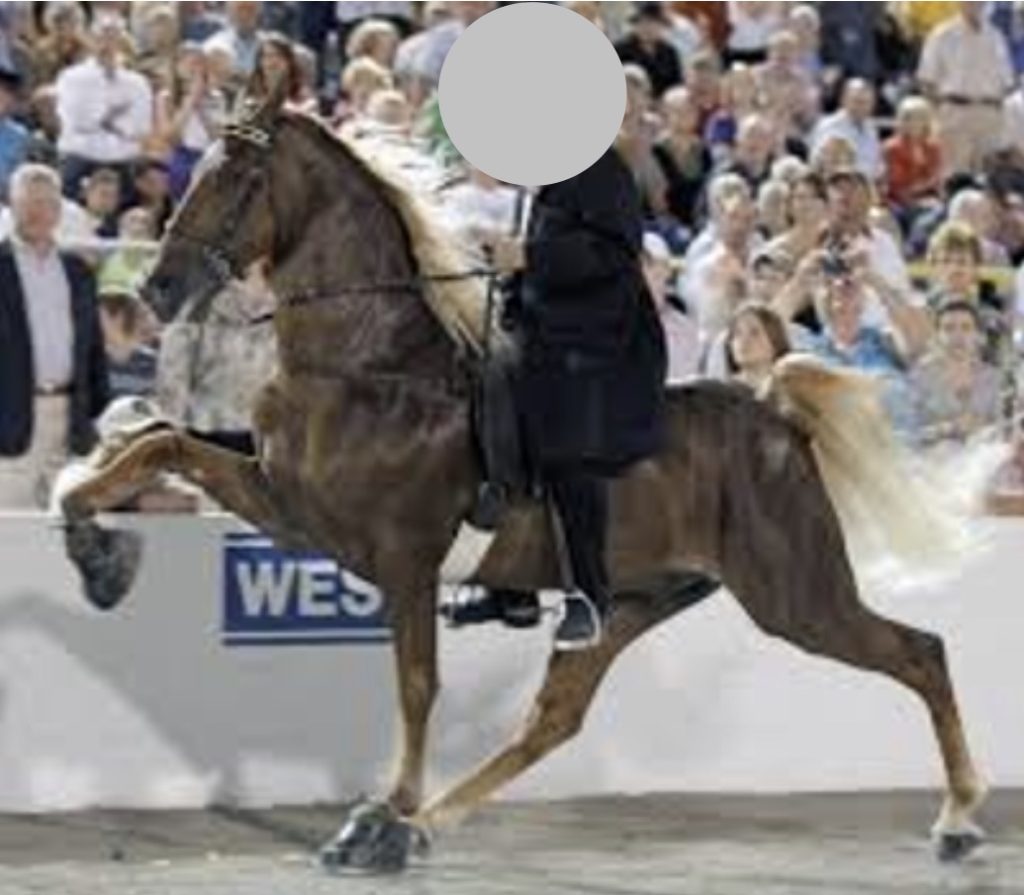
This type of fit is specifically used on saddles which are purposely built to allow the hollow back look which is popular with saddle seat, “big lick” and Tennessee Walker enthusiasts. The rider’s weight sits primarily on the lumbar area. They literally prevent the horse’s back from engaging by disallowing the ‘wave of motion’ through the horse’s back. They prevent spinal mobility and don’t allow the horse to canter. This creates a false elevation where the hindquarters cannot step under and carry the weight. The back hollows and the shoulder blade rolls further back to create the artificially high lift in the front leg. The saddles have extremely narrow gullets to not allow the back to come up. Or is anyone going to argue that this is a natural type of gait for a horse? And don’t even get me started on the ‘training methods’ that still seem to be pervasive to achieve these looks.
FIT #4: “THE TREELESS FIT” (Bareback Pad)
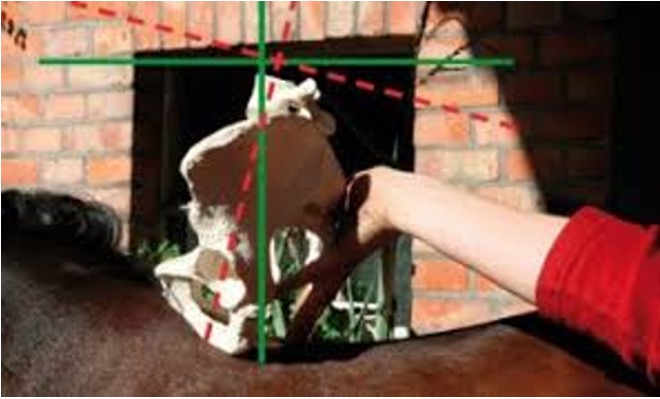
The person who changed the name of bareback pads to treeless saddles is unquestionably a marketing genius. The word saddle traditionally infers the inclusion of a tree. The tree’s job is to act as an interface to support the rider’s vertical spine over the horse’s horizontal spine and distribute the rider’s weight over a larger surface area on the horse’s back. Without the tree, you have no support for the rider and little weight bearing surface. There has been no scientific publication to date or veterinary endorsement which approves the use of a treeless saddle.
While admittedly there have been some radical improvements in treeless saddles over the past couple of years, there are still many issues I have with them. I know they have their advocates, and they may work for a while, but in the long run they will still result in concentrated pressure points on the horse’s back (mainly below the seat bones on the spine and ligaments—and this has been documented in scientific press). The rider’s weight is effectively doubled on the horse’s back as there is no support for the rider’s pelvis. Therefore there is no pliable seat and the horse will suffer for it.
FIT #5: “THE MODERN SPORT FIT”
(sometimes a combination of Fits 1, 2 and 3)
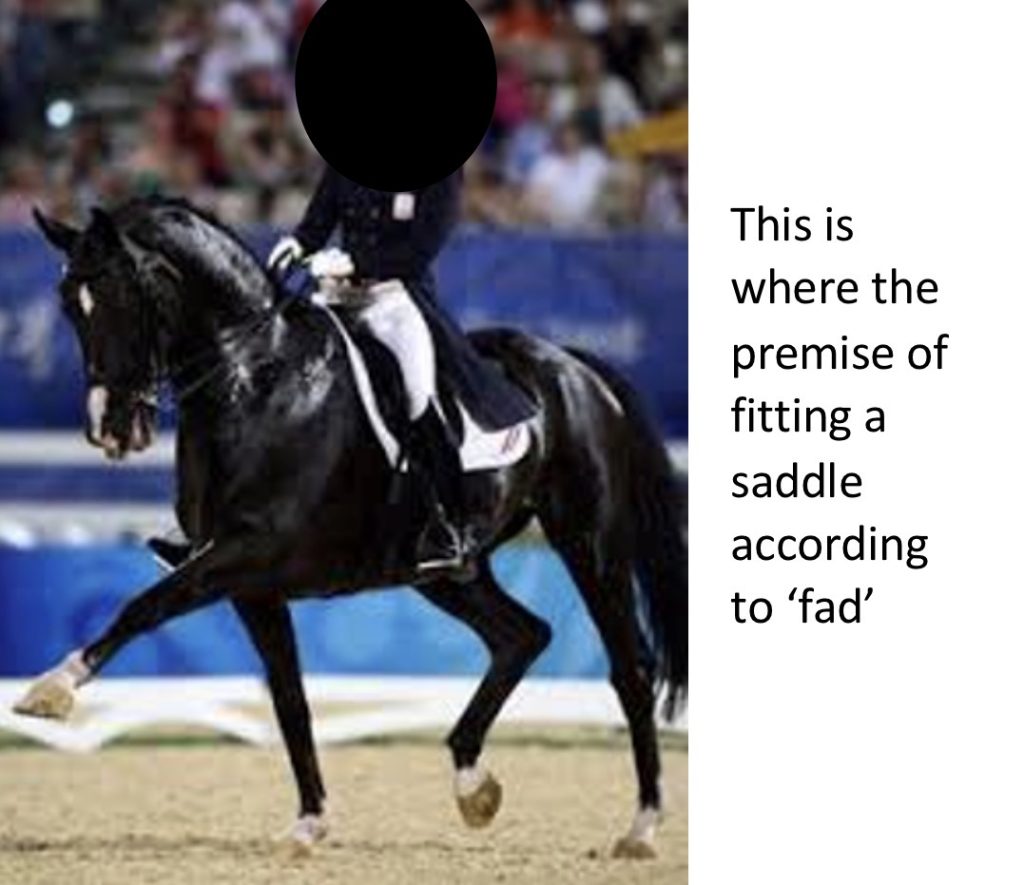
This is where the premise of fitting a saddle according to ‘fad’ sometimes overtakes the more common sense logic of ‘function’. I remember when I first came over to Canada from Germany and saw my first show jumping competition. Most of the riders were using extremely small, flat saddles that I later learned were called ‘close contact’—in direct opposition to the bigger, bulkier jumping saddles I had been used to in Germany. What I couldn’t understand was the fact that almost without exception there was keyhole pad upon rubber pad upon felt pad under the saddle—basically negating the concept of ‘close contact’. But everyone was doing it because the elite was riding this way.
Unfortunately, this is part of the concept that ‘one size fits all’. Saddles are bought because top riders endorse a particular product (for whatever reason) – and not necessarily because they are right for the individual or actually fit either horse or rider. That’s what I mean by fad. These saddles are often placed too far forward (on the shoulder cartilage) because they may be too long for a certain horse. This is the worst fit of all of the fits, as the saddles rest on the shoulder cartilage, lumbar spinal processes and ligaments. As explained previously, the horses do not move properly through the back, but mainly through the legs. The false show trot, also known as resulting from ‘rollkür’ in dressage, or false elevation as shown in the Big Lick impresses the uneducated masses. These types of fit create long term damage to spine, nerves and joints with little obvious muscular pain, as there is little or no weight being carried by the back (longissimus) muscles—as it should be.
FIT #6: “THE SPECIALTY FIT”

The fit for specialty saddles actually uses a combination of various fit methodologies to work. It is different from saddle to saddle. These are saddles which are generally used in specific disciplines, such as racing, side saddles, or parades. Each of these saddles of course require different fit considerations given their specialized uses. Each specialty saddle requires the understanding of the fitter of the biomechanic movement of the horse and the goal and use of the saddle in each discipline. While the general premise of how a saddle should fit given the requirements of both human and equine anatomy doesn’t change, there are specific ‘opinions’ of saddle fitting which are a must for these disciplines which fly against the usual rules.
Racing saddles: the jockey stands in the stirrups. The greatest area of contact will therefore be in the front of the saddle.
Parade saddles (drum saddle): Must rock extremely to accommodate the rider sitting in the saddle to lift the drums away from the horse’s shoulders.
Side saddles: the tree is completely different on the left and right sides, and the stuffing needs to be totally asymmetric. Both legs are on one side of the horse.
FIT #7: “THE FAKE ADJUSTABLE FIT”

The ‘fake’ saddle adjustment is often practiced on saddles which are not really built to be adjustable. Home-made hydraulic tree machines are being used on wooden trees which are not meant to be spread under the rider’s weight over the horse’s withers. The part of the saddle over the horse’s withers is called the pommel. On a traditional English wooden tree it has a thin metal plate on the bottom of the pommel (small radius) and a thin plate on top of the pommel (larger radius) connected by around 16 rivets along its length. If a hydraulic press is used to spread or narrow the pommel of the wood tree, the rivets will pop and the metal will rip—resulting in a broken tree. Wood trees are used in saddles in all price ranges so you have to know what’s in your saddle.
Most saddle companies advertise their saddles as being adjustable. Unless the saddle can be adjusted in tree width independently from the tree angle, (orthopedic adjustment on left and/or right); narrowed or widened over spinal clearance; increased or decreased flocking in panel; billet alignment correction/adjustment; panel contact area widened/narrowed/lengthened/shortened.
The saddle cannot be balanced properly on the horse and it cannot be truly considered adjustable. In motion the saddle will not stay in position front to back or left to right, and the rider will never be able to sit over the balance alignment point of the horse.
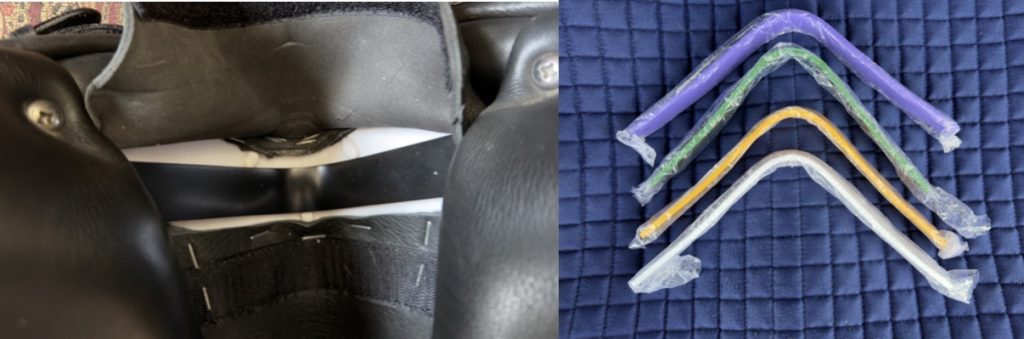
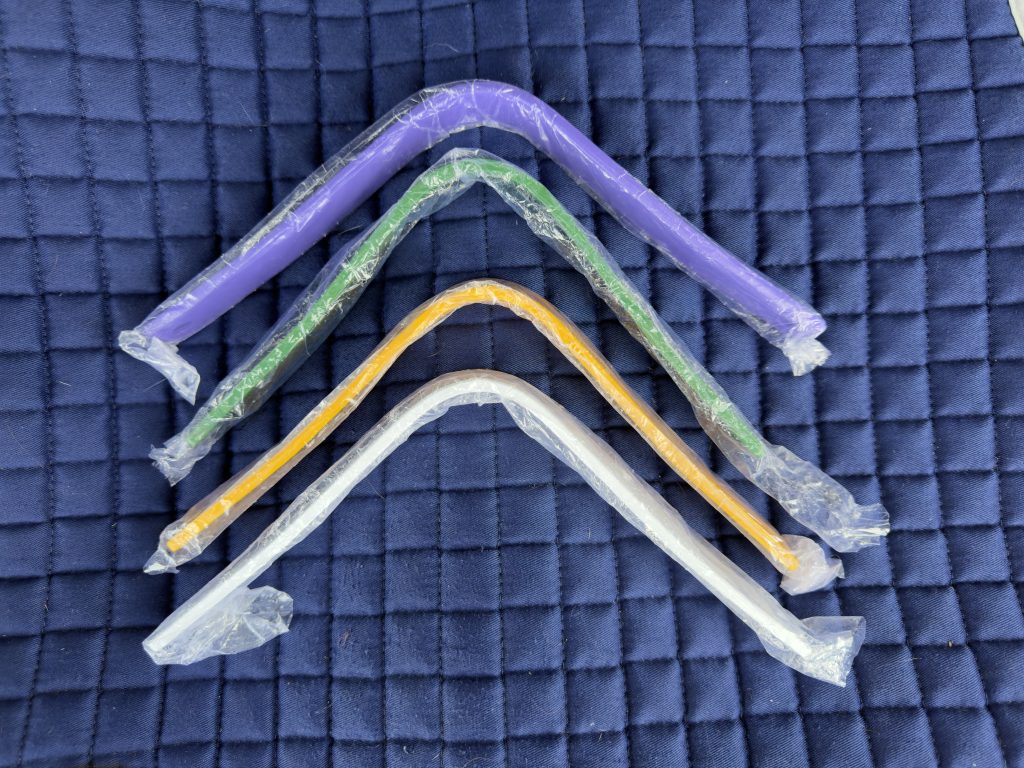
Saddles which are DIY with interchangeable gullet plates can give the impression of being adjustable at any time to accommodate changes in the horse’s conformation; unfortunately these gullet plates only change angles, and not width. The tree as well may suffer in its integrity in conjunction with constantly changing gullet plates, and adjustments are confined to only a handful of predetermined angles. If a saddle fitter can only work on the stuffing this does not do your horse justice and is known as a ‘fake’ adjustable fit. “Adjustable” does not always mean adjustable – so do your homework! Know what’s in your saddle and what your fitter can actually do.
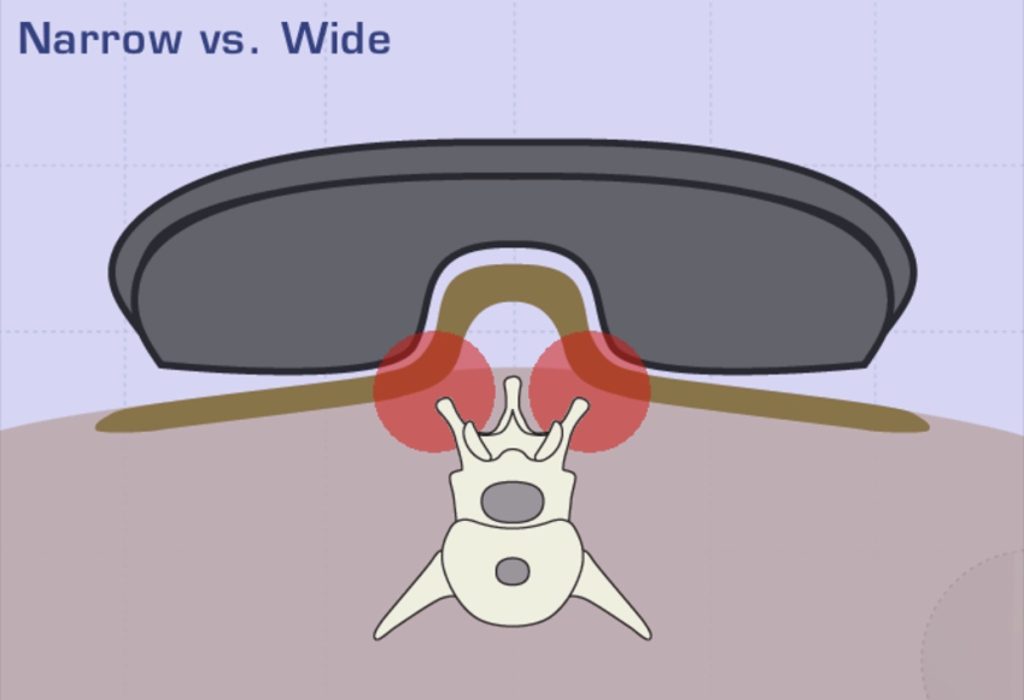
If the saddle can only be adjusted in tree angle and by adding stuffing through a slit in the side of the panel, this very often causes more pressure on the horse’s back after the adjustment. The pressure can actually cause atrophy. The paradox is that capillary ischemia is proven to be caused by as little as 4.67 kPa (kilopascals) of pressure; many of these saddles have readings deemed “acceptable” of far beyond 11+ kPa! (again—documented in the literature; not just because I say so!)
FIT #8: “THE TREE LIFT FIT”
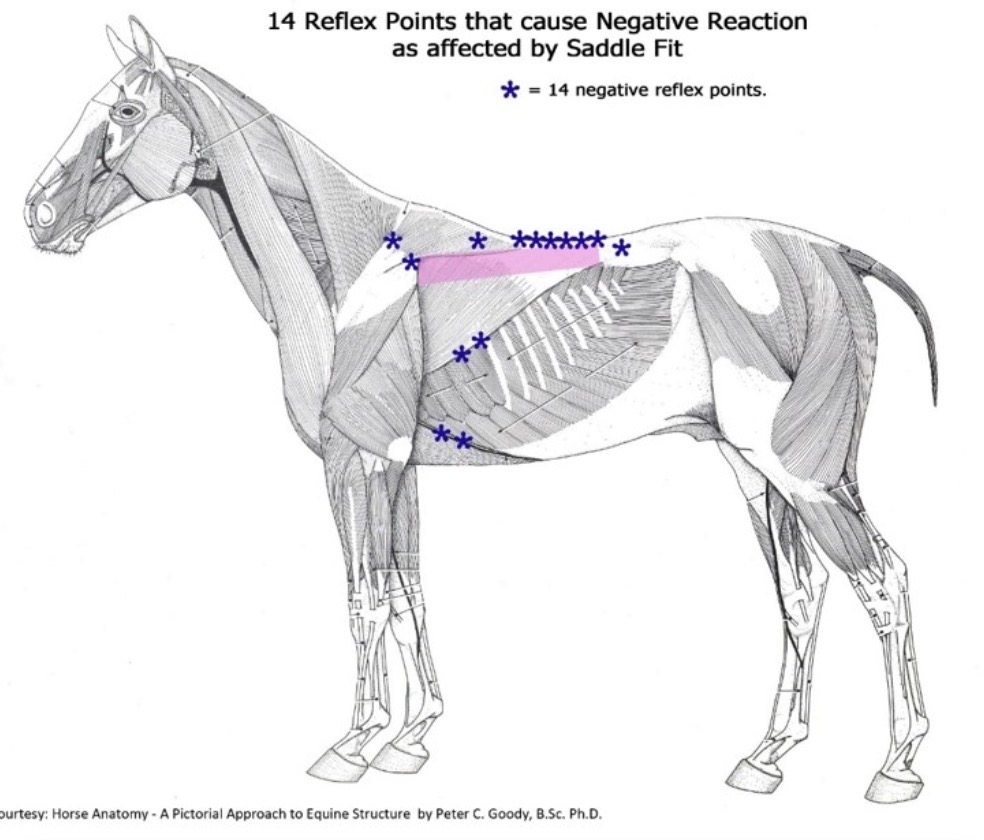
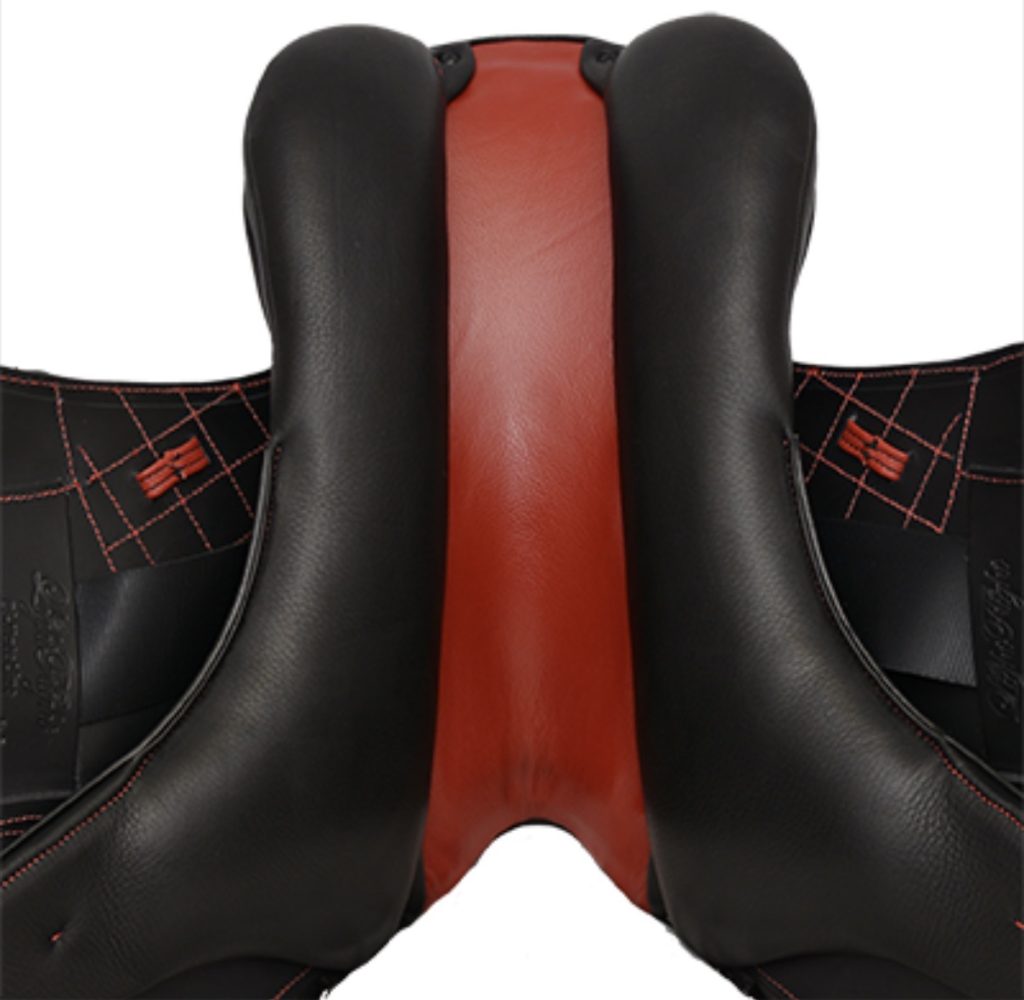
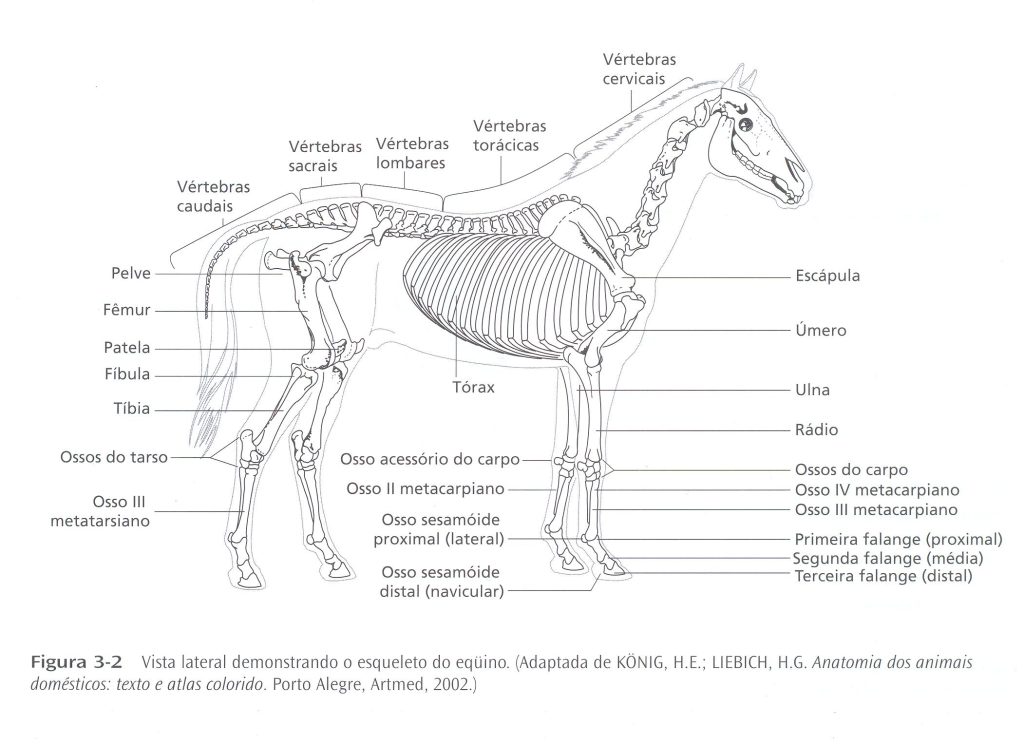
The reasoning behind the name “tree lift fit” is that a saddle with a properly fitting tree has to support the rider’s pelvis and distribute her weight—but in movement it needs to allow the horse’s back to engage and come up by lifting away from the pommel (shoulder) and cantle (loins) area. This type of functional fit specifically accommodates the anatomy of both the horse and rider to ensure optimum comfort and protection against long term pain and possible back damage. The tree has rear-facing tree points to ensure that if properly placed behind the shoulder there will be no cartilage damage. The gullet channel is wide enough to not impact spinal processes, and the rider’s weight is properly distributed within the saddle support area of the horse’s back (on top of the rib cage and on the belly of the longissimus dorsi muscle between the base of the withers and the 18th thoracic vertebra).
The saddle support area is on the weight bearing longissimus dorsi (long back muscle). The advantage to having the saddle on the saddle support area muscle is to stay away from the reflex points that create negative behaviour or negative conformation and health issues. Staying off the spine, lumbar area and shoulder keeps the back muscles loose and supple. Your horse can then articulate through the

SI joint, and use his haunches better by stretching his gluteus maximus and hamstring, and get his hind foot closer to the sternum. This allows the horse to carry more on the hindleg and decreases pressure on the foreleg. With the tree lift fit, the horse and rider now have the most efficient way to train for maximizing both flexion (contraction) and extension (stretching). In order to achieve this, full range of motion is required. By reducing the pressure on the shoulder your horse will be able to lift the base of his neck and become supple through the poll. With the tree lift fit the horse has every potential to develop his topline properly. The downside is that the saddle may need to be refitted several times a year as his conformation will change positively! A growing muscle releases lactic acid and not every soreness is a negative.

If the horse has been in ill-fitting saddles in the past that have caused some back pain, don’t be discouraged if your horse shows signs of muscle soreness after switching to a saddle which has been fitted properly, as this is good muscle soreness. It will help him heal, get stronger, and develop correctly.
Over the past couple of years a large number of social media forums have appeared dealing with saddle fit issues. Unfortunately most of the questions asked have to do with saddle fit to the horse – posting pictures of the saddle on someone’s horse from various angles (although inevitably never the right ones!) and of course totally disregarding the necessity to actually determine fit dynamically. A saddle which may look like it fits while the horse is standing still may actually be causing huge issues once the horse is in motion. Another part of the equation is also usually the rider. Rest assured that if the saddle does not fit the rider—for whatever reason –the rider’s discomfort will translate down to the horse and impede its performance and ultimate well-being. Saddle fit is such a comprehensive topic that determining fit to rider is just the first part of the conversation.
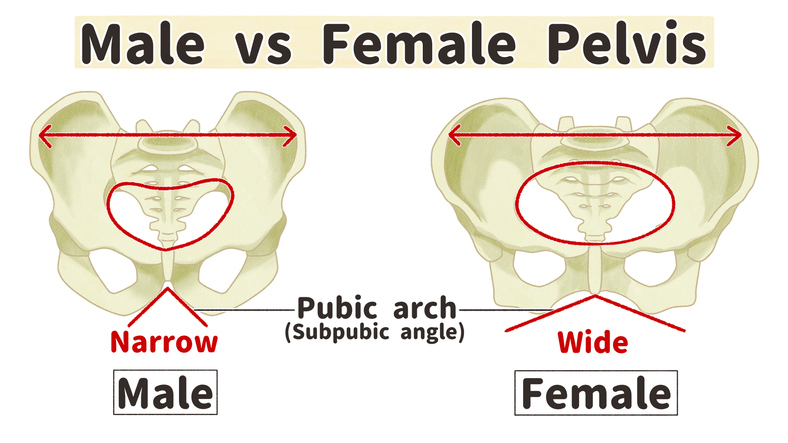
One would hope that people working as saddle fitters all have a comprehensive understanding of equine biomechanics and how saddles need to fit to prevent long term back damage in the horse, but unfortunately few also have a good understanding of how rider anatomy impacts saddle fit. For many many years, saddles have been traditionally made for men—by men. At the end of the day, although of course there are now issues with gender decisions (not getting into that!) male and female pelvises are what they are at birth – and are used to identify sex in cases where only skeletal remains are left to determine identity after death.
So let’s look at what some of these anatomical differences are and how they should absolutely be taken into consideration when determining saddle design and fit. Here is diagrammatic visual of the anatomical skeletal differences between male and female:
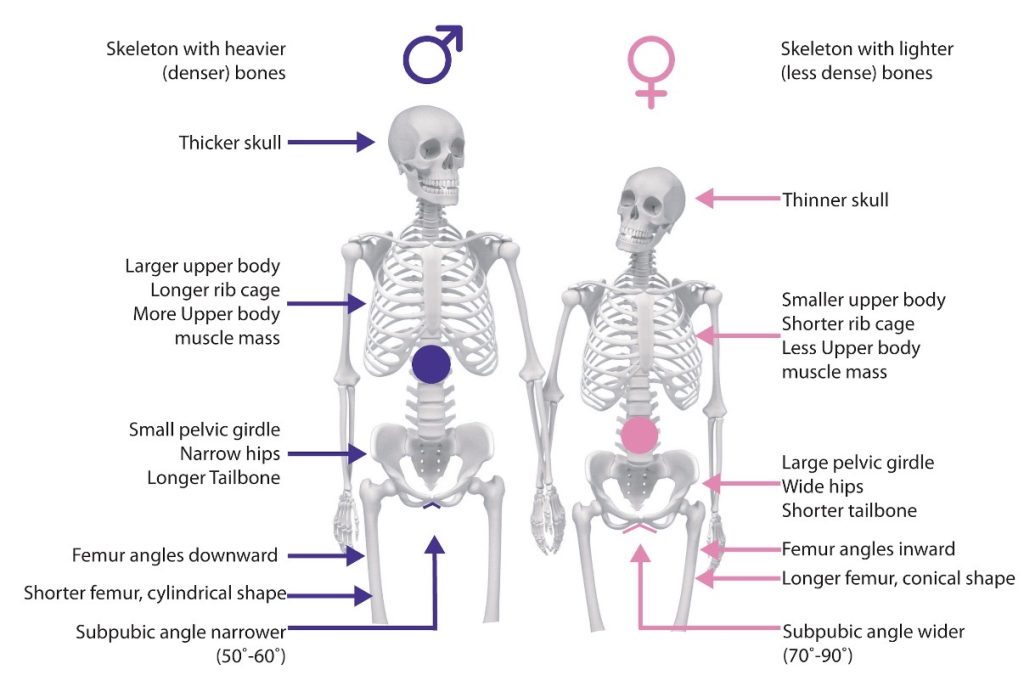
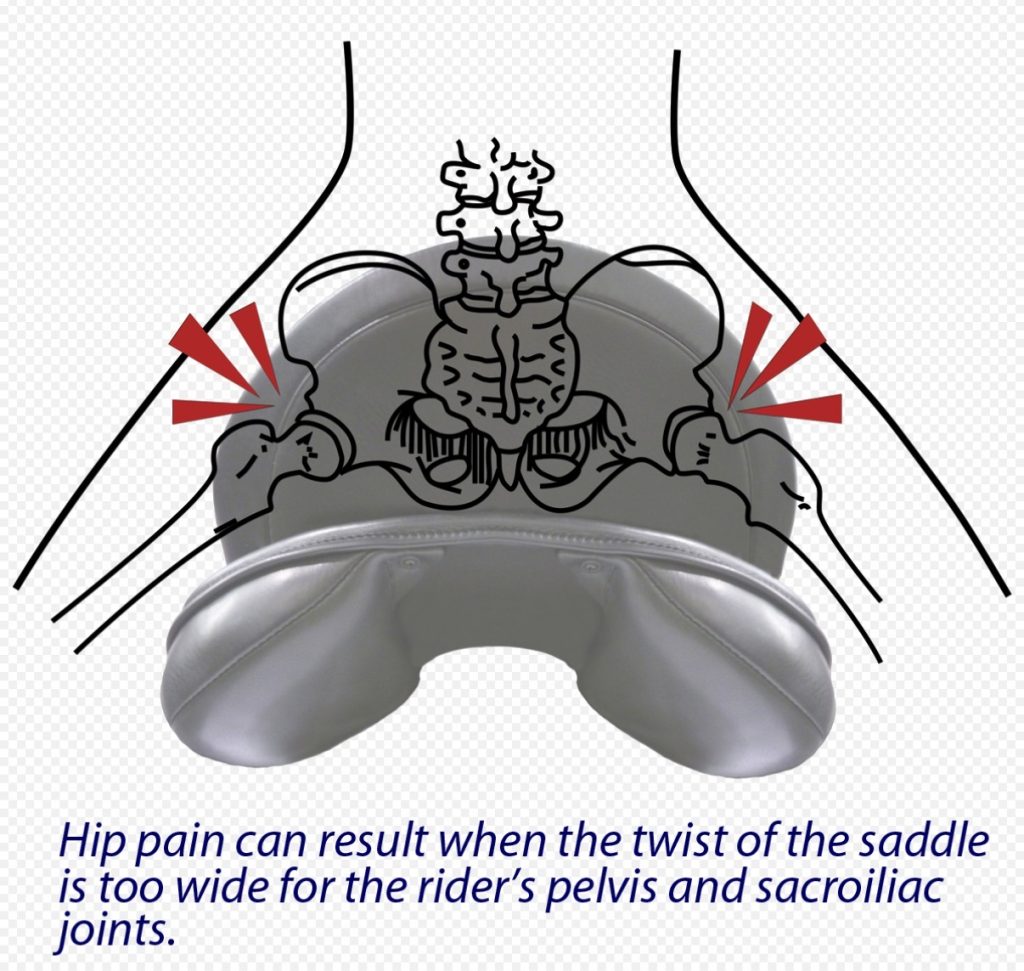
1. The width between the upper inner thighs affects the width of the twist you will need in your saddle. The twist is that part of the saddle where your upper inner thighs sit against it. Because of a phenomenon called “Qflexion” (whereby female thighs tend to angle outwards at the hip and back inwards at the knee), women will carry more weight on their upper inner thigh than a man. The leg is pushed forward, and the knee and toes are out at 45 degree angle when a woman sits on a male saddle that is too wide between her upper inner thighs. The position results in a leg that goes out and forward, and it is difficult to achieve the ‘shoulder-hips-heels’ straight line. This is different when you see a woman on a female saddle, where the toes point forward and there is more upper leg on the barrel or sides of the horse.

2. The ratio of the length of the upper leg to the length of the lower leg will determine the position and/or length of the stirrup bar. Most women have a longer upper leg than a lower leg. The analogy here is that the stirrup bar acts like the fulcrum and the stirrup leather is the pendulum. With a regular stirrup bar positioned normally, the female’s leg will usually end up being too far forward (“get your leg back!” – does this sound familiar?) because the leg will fall according to its centre of gravity. Therefore, for women an extended stirrup bar (or sometimes even an extra-extended stirrup bar!) allowing the stirrup leathers to be positioned further back will ensure that the leg hangs in the correct position. One common result is sitting in the ‘chair seat.’ Most men have pretty equal leg lengths so that they do fine with the normal stirrup bar length and position.

3. Women’s hip bones are articulated onto the pelvis at the joint differently. Especially female adult amateur riders, who started riding later in life or who don’t ride regularly, are challenged to have their legs hang straight, because the articulation causes the legs to naturally angle out. Men’s legs hang straight naturally, but changing the angle of the flap and possibly also the position of the thigh roll can address this with a female saddle. If the flap is too straight, the knee comes too close to the front of the flap, and in motion the leg will actually go over the flap. Forcing this (“get your leg back!”—again!) can move the pelvis forward, resulting in back pain and discomfort. Proper flap positioning is another small point in accommodating the female anatomy in saddle design.
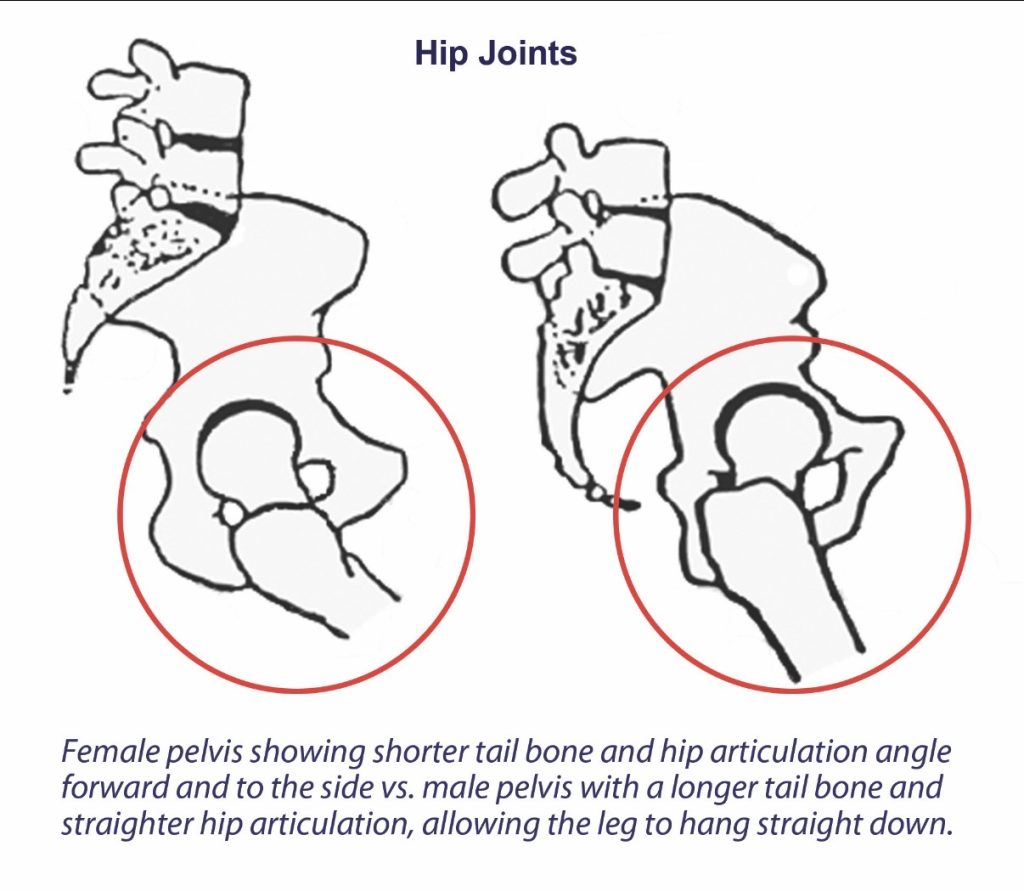
4. One of the areas in saddle where the most mistakes occur during measurement is the width of the twist and the width of the seat. The twist is that area of the saddle which is actually located between your thighs, whereas the width of the seat is determined by the space between the seam running along the edge of the seat. In the male pelvis, the seat bones are much closer together and the distance between the two seat bones is much smaller, therefore he fits into the padded part of pretty much most saddles very comfortably.
This is shown with the help of butt casts which we use when making full custom saddles.
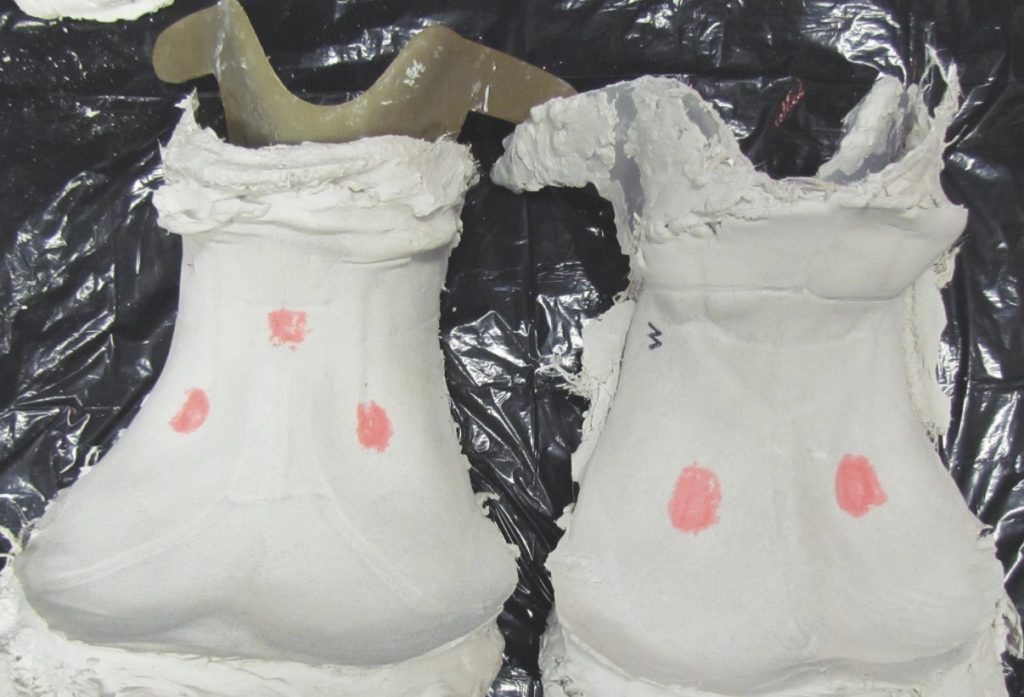
5. The female pelvis has the seat bones much further apart, which means that if she is riding in a ‘male’ saddle, she will likely be sitting on the seat seaming, which is generally pretty uncomfortable. Often this seat twist and seat width are mixed up, and she will end up buying a saddle with a wide twist rather than the wide seat she needs to accommodate her pelvic shape. As a result, the knees and hips will angle out instead of being able to hang straight down (remember, the twist is that area between the thighs), and she will not sit comfortably for both reasons—the twist is too wide, and the seat is too narrow. You need to look at the distance between the seams on the seat, which should be wide enough to allow the female seat bones to sit on the padding—if this is too narrow, it feels like you’re sitting on a ridge, or that your seat bones are falling off the edge of the seat.
6. The last area of consideration is at the pubic symphysis. The male pelvis has a relatively higher pubic symphysis (ps)—when he sits in a balanced position with his spine perpendicular to the ground on the saddle, his ps will be tipped upwards and not in contact with anything. In contrast, when the female sits on the saddle with her spine perpendicular to the ground, her ps is much lower and closer to front of saddle—to the point of contact and rubbing. This can result in recurring bladder infections even to the point of bleeding. The pelvic tilt is also affected by the saddle model and the saddle balance. You want to ensure that the four natural curves of the spinal column are positioned in such a way as to act as shock absorbers—as they were meant to be. Incorrect positioning will result in the very commonly occurring lower back aches some riders experience.
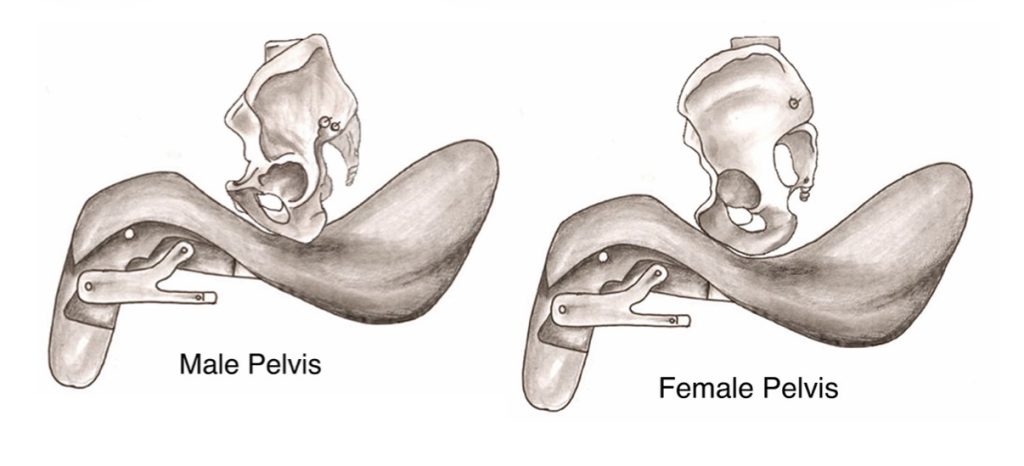
7. When a male rider sits on a male saddle, he can balance on his seat bones as on a bipod, whereas the female finds her balance on a male saddle in a tripod position—which means her ps will be in contact with the front of a saddle. Often times because it simply hurts for a woman to sit on her pubic symphysis, she collapses at the hip to escape the pain—resulting in a chair seat, and the coach yelling “sit up straight, get your leg back!” (or something along those lines!)
8. Besides the usual height, weight, leg measurements, you need to take into consideration hip circumference, length of leg hip to knee, knee to heel, thigh circumference, and position of leg in the stirrups for the discipline the rider prefers.
So in summary here are nine of the reference points on the saddle itself that can assist in determining proper saddle fit to the male or female rider.
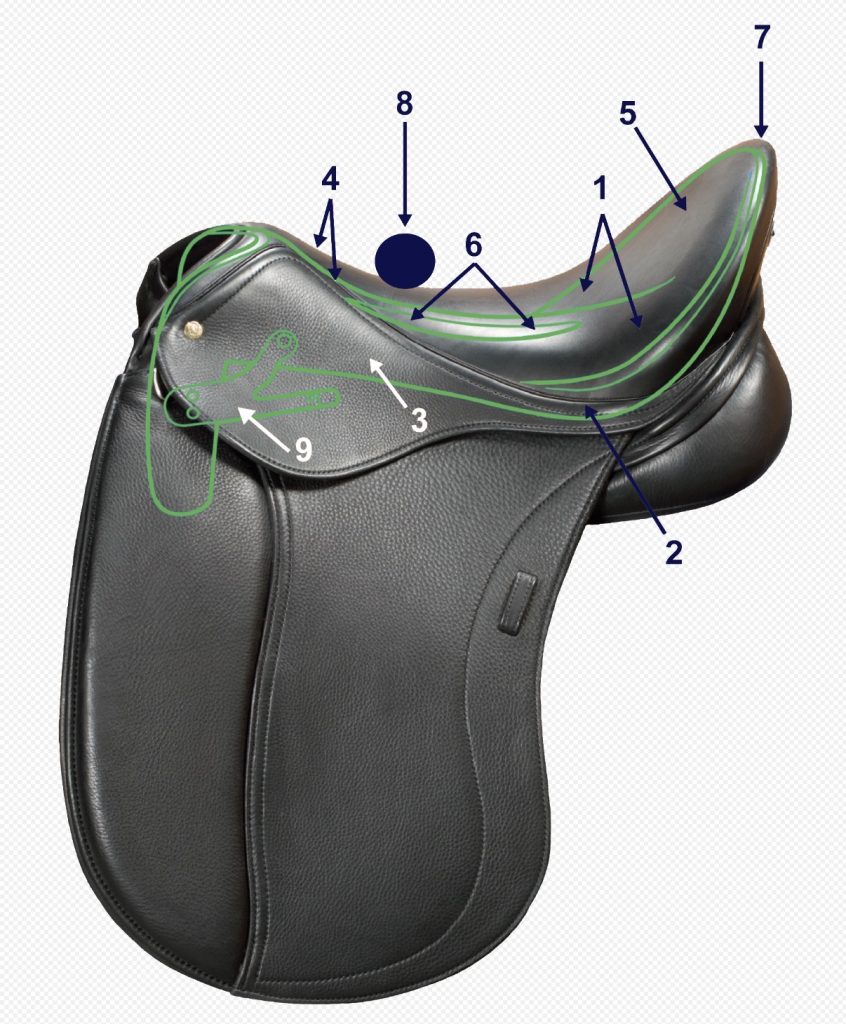
SPECIFICALLY, THESE ARE THE POINTS AS THEY RELATE TO PROPER SADDLE FIT:
1) The rear of the seat (cantle) needs to be wider to accommodate a wider pelvis and support the higher (and larger) gluteus maximus muscle
2) The saddle skirt needs to be attached lower on the seat leather, with extremely flat seaming to avoid pressure and pain to the upper inner thigh and the proximal end of the gluteus muscles.
3) The twist is usually narrower that that for a man to allow the upper leg to hang straighter down and to counteract the natural turnout that occurs because of the rounder quad shape in the female rider and due to the hip joint articulation.
4) The waist seaming is usually wider and the pommel is at a much flatter angle to avoid hitting the pubic symphysis. This allows the female to balance on her ‘tripod’ of pubic symphysis and seat bones.
5) The seat foam has to be formed to support the shorter female tailbone and the higher gluteal muscles.
6) Seat size is often chosen too small to achieve the necessary support if (5) is not done properly. Area six needs special treatment to avoid any pressure in the sensitive area of the crotch for both men and women.
7) A higher cantle can provide even more support for the female rider.
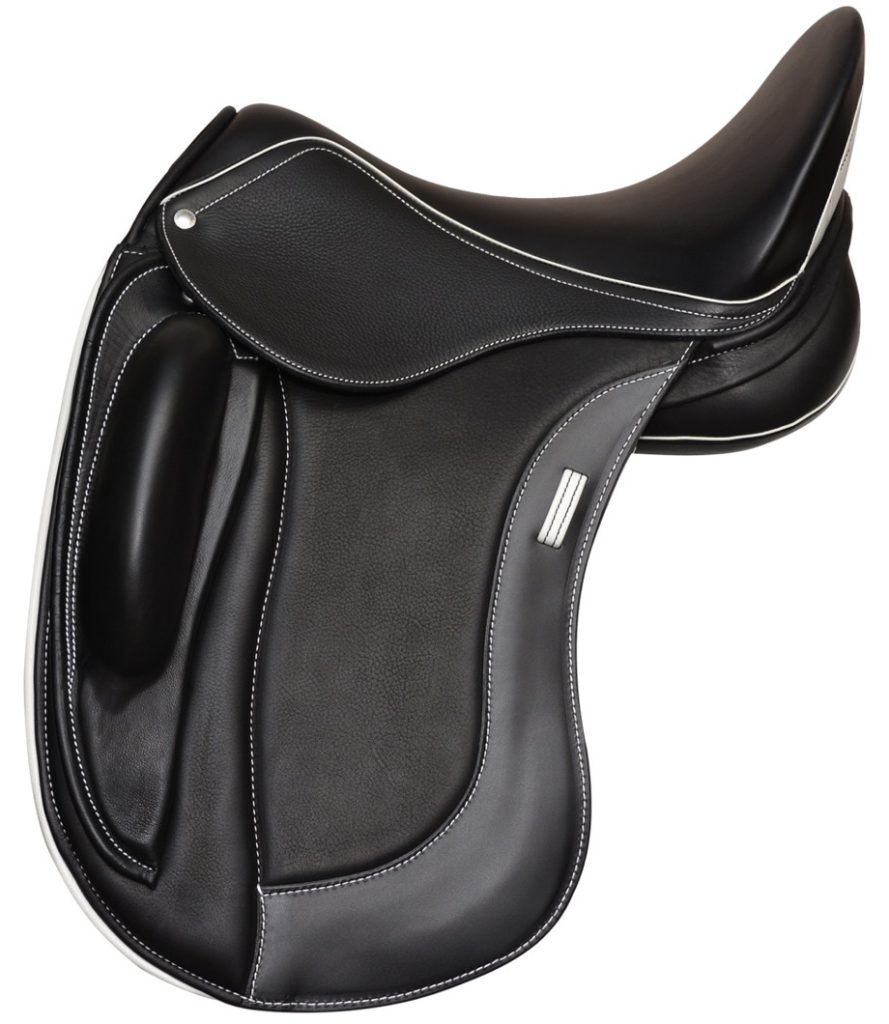
8) The position of the female pelvis usually requires a saddle that has its deepest point more forward than what is found in a ‘male’ saddle. (forward balance saddle)
9) Stirrup bar position to accommodate upper leg length.
Saddle fit to horses is the second part of the equation and is dependent on many individual facets in the circle of influence to the horse—including breed, gender, nutrition, training etc. But two of the most important aspects are saddle length to ensure the saddle stays within the saddle support area between the base of the withers and before the 18th vertebra, and accommodation of the necessary width and angle of the shoulders. You can ask 10 people what they understand by the term “shoulder freedom” and you will get 10 different answers.
The only true answer is—and try this yourself- to completely rotate your shoulders up towards your ears and back around in a full circle. That is what shoulder freedom means; not the excessive ‘flinging’ you can often observe at high level dressage tests during the extended trot. This flick of the leg is actually in response to being pinched at the shoulder and over the withers, which is why it is so important to ensure that you have a saddle with rear-facing tree points. Then and only then can you actually ensure shoulder freedom! A wide enough gullet channel not to impinge on the spinal processes, rear-facing tree points to allow shoulder freedom, and saddle which sits only within the saddle support area of the horse’s back are three of the most critical design points – especially for dressage saddles!
About Jochen Schleese and Schleese Saddlery Service Ltd.
©2026 Saddlefit 4 Life™ All Rights Reserved
For more information about Jochen Schleese and Schleese Saddlery Ltd. please go to
www.saddlesforwomen.com or https://saddlefit4lifeacademy.com/


2 Responses