

UNDERSTANDING THE BIOMECHANICS BEHIND HOOF MAINTENANCE INTERVALS
Hoof care is one of the most foundational elements of equine management. Nutrition, conditioning, veterinary diagnostics, saddle fit, and training methods all play vital roles in maintaining equine soundness—but every single one of those systems ultimately relies on a stable mechanical base…
🧲That base is THE HOOF.🧲

Despite this, one of the most overlooked decisions horse owners make is HOW OFTEN their horse’s feet are trimmed.
In many regions, a 5–6 week trim schedule has become the default. For some horses, in some circumstances, that interval may work reasonably well. But when we step back and examine hoof growth through the lens of biomechanics—particularly what begins to occur after week four—it becomes clear that trim timing is not merely a matter of scheduling convenience. However, a four-week trim is a matter of mechanical management.
This discussion is not about criticizing common practices nor suggesting that there is only one correct approach. Every horse is an individual. Growth rates vary. Workloads vary. Conformation varies.
What this article aims to do is explore the biomechanical implications of extended trim intervals and explain why, in many cases, a consistent 4-week trim schedule can offer measurable benefits in terms of strain reduction on the horse’s body, balance control, and the long-term soundness of your horse.
THE HOOF AS A DYNAMIC STRUCTURE

To understand trim timing, we first need to understand the hoof as a living, dynamic structure.
The hoof capsule is not static…It is continuously growing, adapting, and responding to load. On average, hoof wall growth may range from roughly ¼ to ⅜ of an inch per month, though this varies significantly based on:
🧬Genetics
🍎Nutrition
📊Metabolic status
🌦️Environment (moisture, footing, climate)
🐎Workload and concussion
⚕️Overall health
The hoof is alsoa weight-bearing interface. It transmits load from the ground through the distal phalanx, through the soft tissues of the digit, and into the limb. Any change in the orientation of the hoof capsule changes the way forces are distributed up the kinetic chain.
⏳THAT IS WHERE TIMING BECOMES IMPORTANT. A trim is not simply cosmetic reshaping. It is a recalibration of alignment.
WHAT HAPPENS AFTER WEEK FOUR?

During the first few weeks after a trim, hoof growth remains within a manageable range.
🛜Minor flare may begin.
🔜The toe may start to migrate forward slightly.
↪️The heels may begin to drift.
⚠️But in most horses, distortion is still minimal.
After the four-week mark, however, growth often begins to outpace mechanical balance.
Research & field observation suggest that:
📐Hoof angulation may change by approximately 2-degrees/week after week four.
📐For every 1 degree of angular change, soft-tissue strain may increase by roughly 4%.
While exact numbers will vary depending on the horse, these estimates illustrate an important principle: small angular changes can translate into meaningful increases in strain.
By week six: if angulation shifts have progressed, the horse may be carrying significantly more stress through:
⛔️The deep digital flexor tendon
⛔️Thesuperficial digital flexor tendon
⛔️The suspensory apparatus
⛔️The navicular region
⛔️Associated ligaments, & supporting structures.
This is not a dramatic or sudden change—it is gradual. It ACCUMULATES QUIETLY. But the BODY recognizes it.
ANGULAR CHANGE & SOFT-TISSUE STRAIN: WHY It Matters

Let’s examine that strain relationship more closely…
If we accept a working model that 1 degree of change may increase soft-tissue strain by 4%, then:
📐A 2-degree shift could equal roughly 8% increased strain.
🆘A 3–4 degree shift could equal 12–16% increased strain.
The equine limb is resilient. It is designed to handle tremendous load. But tissues such as tendons and ligaments are sensitive to repetitive overstrain. They respond to consistent loading patterns. When that loading gradually increases—even subtly—fatigue accumulates. Injury often occurs not because of one dramatic event, but because of repeated microstrain that exceeds tissue capacity over time.
A trim schedule that allows angulation to drift repeatedly into higher strain ranges may contribute to that accumulation. This does not mean every horse on a 6-week cycle will become unsound. Many variables influence injury. But it does highlight the importance of staying ahead of distortion rather than correcting it after it has progressed.
BREAKOVER & LEVER ARMS

One of the most visible consequences of extended trim intervals is increased toe length.
💉Injection therapies
🧊Tendon rehabilitation
As the toe migrates forward:
⚠️The lever arm increases.
⏱️Breakover is delayed.
🆘The deep digital flexor tendon must work harder during the lift-off phase.
The longer the lever arm, the more torque is placed on structures at the back of the limb. Even modest increases in toe length can affect stride timing and force distribution.

A “delayed breakover” may lead to:
⛓️💥Increased strain on the navicular apparatus
🔺Elevated tendon loading
〰️Shortened stride length
📉Subtle performance inefficiencies
Again, these changes are rarely dramatic at first. They are progressive. A 4-week trim interval allows toe migration to be addressed BEFORE the lever arm becomes excessive.
HEEL MIGRATION & HOOF DISTORTION

Another common development beyond week-four is “heel migration” or collapse.
As the toe lengthens and weight shifts forward:
⏩Heels may begin to run forward.
📐The palmar/plantar angle may decrease.
⛓️💥The hoof-pastern axis may begin to break back.
When the hoof-pastern axis is misaligned, the distal limb must compensate. This may alter:
🔻Fetlock drop under weight-load
↪️Digital cushion engagement
🪢Tendon tension at mid-stance
⚡️Energy return during propulsion
Over time, compensatory loading patterns may develop elsewhere in the limb or body. Maintaining more consistent trim intervals can help minimize heel distortion and maintain more stable alignment.

COMPENSATION: THE QUIET ADAPTOR
Horses are exceptionally good at compensating.
They adjust stride patterns.
They shift weight distribution.
They redistribute load to the opposite limb. Because of this adaptability, early mechanical inefficiencies may not be obvious to the naked eye.
A horse may appear comfortable at six weeks, while internally compensating for angular changes. Compensation, however, is rarely neutral. It places increased demand on alternate structures. When compensation continues over months or years, secondary issues may arise—often far removed from the hoof itself.
⚖️MAINTAINING MORE CONSISTENT BALANCE REDUCES THE NEED FOR COMPENSATION ⚖️

The 4-Week Philosophy: ⚖️Maintenance vs. Correction 🚫
One of the greatest advantages of a 4-week schedule is philosophical.
At four weeks, most trims are maintenance trims.
📉Distortion = Minimal
Ⓜ️Toe migration = Modest
🆗Heel drift = Manageable
The farrier is refining balance ⚖️rather than correcting imbalance 📐
On extended intervals, trims often become more aggressive corrections:
📈Greater material must be removed.
💢The hoof capsule has had more time to distort.
Frequent minor adjustments are typically more conservative than infrequent major corrections. From a tissue strain perspective, this can be significant.
SEASONAL GROWTH CONSIDERATIONS

Hoof growth is not constant throughout the year.
In warmer months, growth often accelerates.
☀️Increased daylight,
🔄improved circulation, and
📈higher activity levels contribute to faster wall production.
❄️A horse on a fixed 6-week schedule in winter may effectively experience the equivalent of a 7-week mechanical interval during peak summer growth.⛱️
📆A 4-week baseline accommodates growth variability and keeps distortion from compounding seasonally. This does not mean rigid adherence without flexibility—but it provides a stable framework.
PERFORMANCE HORSES & MECHANICAL PRECISION
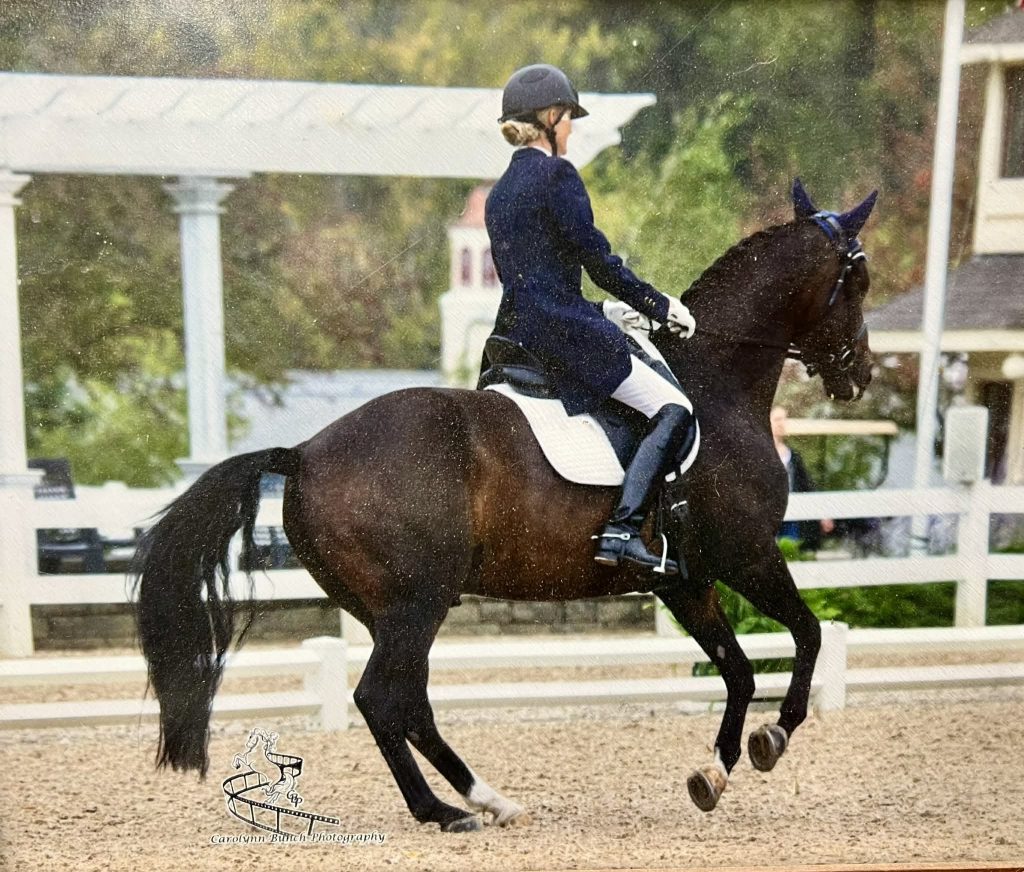
In performance horses, small mechanical variations can influence performance outcomes.
Disciplines such as dressage, hunters, jumpers, eventing, reining, and barrel racing require:
⏲️Precise stride timing
💯Consistent breakover
🟰Symmetrical loading
Even slight changes in hoof orientation can influence how efficiently a horse moves. A shorter trim interval can help maintain more consistent mechanics during intense training or competition seasons.
Importantly, this approach supports—not replaces—COLLABORATION WITH VETERINARIANS, TRAINERS, AND BODYWORKERS.
BACKYARD HORSES AND SUBTLE ACCUMULATION

It is easy to assume that only elite athletes require tight mechanical management.
In reality, recreational horses may benefit just as much.
Backyard horses may not have the same level of performance monitoring. Subtle lameness or asymmetry may go unnoticed longer.
Additionally, many recreational horses live on varied terrain and may experience uneven wear patterns. Consistent trim intervals help ensure that minor distortions do not accumulate unnoticed. EVERY HORSE, regardless of discipline, BARES WEIGHT 24 HOURS A DAY.
ECONOMIC CONSIDERATIONS

Trim frequency inevitably intersects with budgeting.
From a purely financial standpoint, increasing from a 6-week to a 4-week schedule may mean one or two additional trims per year. However, preventive management must be weighed against:
🩻Diagnostic imaging costs
Performance & Therapeutic Hoof Care Specialist
⏳Time off work
📉Performance loss
Preventive maintenance often proves more economical over the long term. It is not about increasing services—it is about protecting structural integrity.
INDIVIDUAL VARIATION

No schedule fits every horse.
Some horses have slower growth rates and maintain balance longer. Others distort quickly. Conformation, workload, footing, and metabolic health all influence mechanical tolerance.
A 4-week interval should not be viewed as an inflexible mandate but rather as a proactive baseline. In many cases, it allows the farrier to evaluate growth patterns and adjust accordingly. It provides room for small fluctuations without allowing distortion to progress unchecked.
🛑INJURY PREVENTION & LONGEVITY 🔛

The long-term goal of any hoof care program is durability.
Durability is not simply the absence of lameness—it is sustained mechanical efficiency. By minimizing angular drift and excessive strain, a consistent trim schedule supports:
🔛Tendon longevity
✅Joint preservation
⚖️Balanced musculoskeletal loading
📉Reduced compensatory stress
Soundness is rarely maintained through reactive measures alone. It is built through steady, preventative management.
A COLLABORATIVE APPROACH

It is important to emphasize that trim interval decisions should be collaborative.
Veterinarians, trainers, and farriers each bring valuable perspectives. Open lines of communication between all involved ensures that scheduling decisions align with:
🧲Workload demands
⚕️Medical history
🦴Conformation challenges
🌦️Environmental conditions
A four-week schedule is one tool among many in comprehensive hoof care planning.
RESPONSIBLE HORSEMANSHIP

Ultimately, hoof care reflects horsemanship philosophy.
Convenience is understandable. Life is busy. Scheduling multiple horses can be complex; but the hoof is the foundation of movement. When that foundation shifts, the entire structure above it responds.
Choosing a shorter maintenance cycle in many cases reflects a commitment to proactive care.
It signals a focus on:
⚙️Biomechanical stability
🛟Soft-tissue preservation
🔁Consistent breakover
📆Long-term durability
It is not about promoting one universal rule. It is about understanding how small, incremental changes influence the larger system.
FINAL THOUGHTS

The question of trim frequency is not about tradition versus innovation.
IT IS ABOUT MECHANICS.
After week four, hoof growth often begins to alter angulation in ways that can increase strain through critical soft tissues. While many horses tolerate some variation, allowing distortion to accumulate repeatedly may increase the mechanical burden placed on the limb.
🧲A consistent 4-week trim schedule helps farriers stay ahead of imbalance rather than chasing it.
🧲It encourages maintenance rather than correction.
🧲It supports efficiency rather than compensation.
🧲Every horse stands on its feet every moment of every day.
🧲Protecting that foundation is not optional—it is essential.

READERS: SHARE YOUR QUESTIONS & COMMENTS IN THE FORUM BELOW
🌐 WEBSITE: http://www.forgefatefarrierllc.com
SOCIAL MEDIA: