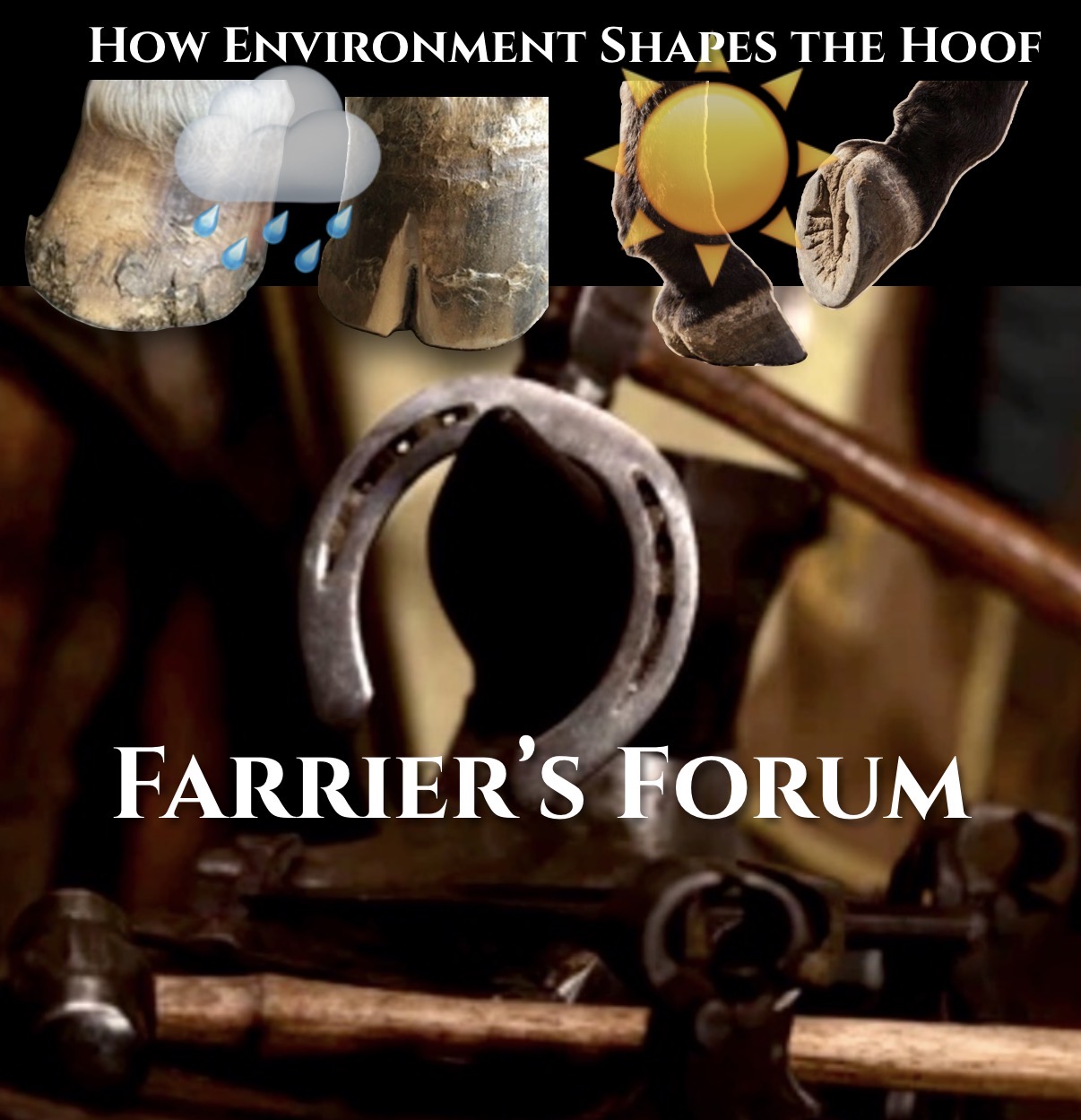
The Battle Between Wet ☔️and Dry🌵 Conditions
The old saying “no foot, no horse” exists for a reason. A horse’s hoof is a living structure constantly responding to the environment around it. From the dry desert climates of the Southwestern US to the muddy spring pastures of the Northeastern US, environmental conditions can dramatically impact hoof quality, soundness, and overall horse health.
One of the biggest challenges horse owners and farriers face is managing the constant transition between wet and dry environments. Hooves are designed to adapt, but extreme or inconsistent conditions can quickly overwhelm the foot’s natural ability to maintain balance. Understanding how moisture, dryness, bacteria, and fungal organisms affect the hoof is essential for preventing long-term problems.
THE EFFECTS OF WET ENVIRONMENTS ON THE HOOF
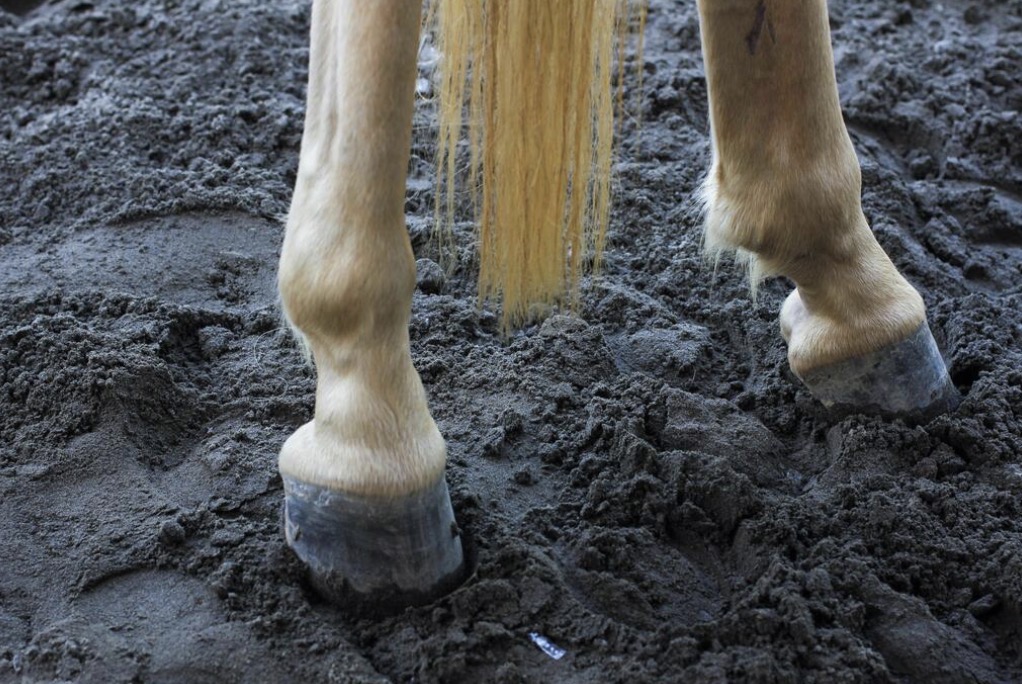
Wet conditions are one of the most common causes of hoof deterioration. Horses standing in mud, soaked paddocks, urine-saturated stalls, or consistently wet pastures experience constant moisture exposure that softens the hoof capsule.
When the hoof becomes excessively soft, the horn tubules lose strength and integrity. This can lead to:
- Weak, shelly hoof walls
- Increased cracking & chipping
- Soft soles
- Difficulty holding shoes
- Excessive hoof wear
- Loss of structural stability
Many farriers notice that during rainy seasons horses tend to lose shoes more frequently. The softened hoof wall simply does not hold nails as securely as a healthier, tighter foot.
Wet environments also create the perfect breeding ground for bacteria and fungal organisms. Some of the most common conditions include:
🌧️ THRUSH 🌧️

Thrush is one of the most recognizable bacterial infections in the horse’s foot. It commonly develops in the frog and central sulcus when horses stand in wet, dirty conditions for prolonged periods.
Symptoms may include:
- Black discharge
- Strong foul odour
- Deep cracks in the frog
- Tenderness or sensitivity
- Contracted heels in chronic cases
If left untreated, thrush can invade deeper tissues and contribute to lameness.
🌧️ WHITE LINE DISEASE 🌧️

Wet conditions can also weaken the white line, allowing fungal and bacterial organisms to invade the inner hoof wall. White line disease often begins subtly but can progress into severe wall separation and structural compromise. In advanced cases, horses may require:
- Aggressive hoof resection
- Specialty shoeing
- Long-term treatment plans
- Environmental management changes
White line disease (aka: Seedy Toe) is a bacterial AND fungal infection that invades the inner hoof wall and causes separation between the hoof wall and the sensitive structures of the foot. In wet, muddy environments, moisture softens the hoof and allows organisms to penetrate deeper into weakened areas of the white line. If left untreated, the infection can progress aggressively and lead to abscess formation, pain, lameness, and major structural damage to the hoof capsule.
In this case, the already separated and infected hoof wall had to be removed to expose the damaged area to oxygen and allow proper treatment and drainage of the abscess.
Many owners mistakenly believe the problem is only “thrush” and attempt to treat it topically with products such as “Koppertox” alone.

While topical treatments can help manage bacteria and fungi, they often cannot fully resolve advanced white line disease when deep hoof wall separation and trapped infection are present.
Proper farrier care, debridement, environmental management, and sometimes veterinary involvement are critical for successful recovery.
SCRATCHES & PASTERN DERMATITIS

Although not directly inside the hoof capsule, wet muddy environments commonly contribute to bacterial and fungal skin infections around the pastern and heel bulbs. Constant moisture breaks down the skin barrier and allows opportunistic organisms to thrive.
This creates a cycle where poor footing, skin irritation, and hoof imbalance all begin feeding into one another.
☀️ DRY ENVIRONMENTS & BRITTLE HOOVES 🌵

While excessive moisture presents its own problems, extremely dry environments can be equally damaging.
Hot weather, drought conditions, dry lots, rocky terrain, and hard-packed ground often cause the hoof capsule to lose too much moisture. Instead of becoming soft, the hoof becomes rigid and brittle.
☀️ Dry hooves commonly develop:
- Vertical cracks
- Chipping
- Flared walls
- Sole bruising
- Reduced elasticity
- Increased concussion stress
A healthy hoof needs a certain degree of flexibility to absorb shock. When the hoof becomes excessively dry, it loses some of its natural ability to expand and contract during movement.
Farriers frequently notice horses becoming foot sore during dry summer months, especially on hard ground. Horses that travel long distances on abrasive terrain may wear their feet faster than they can grow.
🌧️ THE REAL CHALLENGE: CONSTANT TRANSITION BETWEEN WET & DRY ☀️

In many regions, the true problem is not simply wet or dry conditions alone—it is the constant fluctuation between the two.
Spring and fall often create the worst-case scenario for hoof health. Horses may stand in mud for days and then suddenly experience dry, hard ground immediately afterward. This repeated expansion and contraction places enormous stress on the hoof capsule.
Think of the hoof like wood. When wood repeatedly absorbs moisture and dries out, it expands and contracts until cracks eventually form. The same principle applies to hoof horn.
These environmental swings commonly contribute to:
- Quarter cracks
- Wall separation
- Lost shoes
- White line stretching/Seedy toe
- Increased maintenance needs
- Greater risk of lameness

🌧️ Seedy Toe, also known as white line disease, occurs when bacteria and fungi invade and separate the inner hoof wall at the white line. Wet, muddy environments are one of the biggest contributing factors because constant moisture softens the hoof capsule and weakens the natural barrier that protects the foot. Once the white line becomes stretched or damaged, bacteria and fungal organisms can penetrate the area, leading to crumbling hoof wall, cavities, and progressive separation.

🌧️Horses living in consistently wet conditions should have regular hoof care, clean dry footing when possible, and proper trimming or shoeing to reduce leverage and stress on the compromised area. Early detection and treatment are extremely important to prevent deeper structural damage and lameness. For farriers, these transitions often require more aggressive hoof management strategies and shorter shoeing intervals.
🌧️ MANAGING HOOF HEALTH IN WET CONDITIONS 🌧️
While weather cannot be controlled, management practices can significantly reduce environmental damage. Some important strategies include:

🧲 IMPROVE DRAINAGE
Mud management is critical. High-traffic areas around gates, water troughs, and feeding stations should have proper drainage or gravel footing whenever possible.
🧲 KEEP STALLS CLEAN

Urine and manure create bacteria-rich environments that weaken both the hoof and surrounding skin.
🧲MAINTAIN REGULAR FARRIER CARE

Consistent trimming and shoeing schedules help prevent distortion and allow early detection of infections or structural issues.
🧲DAILY HOOF CLEANING
Picking out feet daily helps remove packed debris, reduces bacterial buildup, and allows owners to catch problems early.

🧲USE THERAPEUTIC PRODUCTS CAREFULLY
Thrush treatments, drying agents, and hoof disinfectants can be beneficial, but overuse may damage healthy tissue. Treatment should match the severity of the condition.
☀️ MANAGING HOOF HEALTH IN DRY CONDITIONS 🌵
For dry climates or drought seasons, the focus shifts toward maintaining elasticity and preventing excessive wear. Helpful strategies include:

🧲 MAINTAIN PROPER HYDRATION
Healthy hoof growth begins internally. Proper nutrition and hydration are essential for maintaining hoof quality.
🧲AVOID EXCESS TRIMMING
Over-trimming during dry seasons can leave horses overly sensitive on hard ground.

🧲 USE PROTECTIVE SHOEING WHEN NEEDED
Some horses benefit from pads, specialty shoes, or traction modifications to reduce concussion and preserve hoof integrity.
🧲 MONITOR HOOF BALANCE CLOSELY
Cracks and flares often worsen quickly in dry conditions if hoof balance is neglected. There Is No “Perfect” Environment
One of the biggest misconceptions in hoof care is that there is a single perfect environment for every horse. The reality is that horses are incredibly adaptable, but their feet require management that matches their environment☔️/☀️, workload🏇🏼, and genetics🧬.
A horse living in Florida’s humidity faces completely different hoof challenges than a horse living in Arizona’s dry desert climate. Likewise, performance horses traveling between regions may struggle with rapid environmental changes that affect hoof quality and shoe retention.
Good hoof care is about balance, consistency, and prevention. The farrier, veterinarian, and horse owner all play a role in recognizing environmental stress before it turns into a major soundness issue.

At the end of the day, the hoof is constantly telling the story of the environment the horse lives in. Learning to read that story is one of the most important skills any horseman can develop.
Ask comments or pose questions about this article in the Forum below
SOCIAL MEDIA:

 Jeff is licensed/ qualified NCJF, NFB, APF II, President/CEO of the North American Farrier Association & owner of Forge Fate Farrier Service, began his farrier career in 2008, apprenticing under respected farrier Tom Smith, where he developed a strong foundation in hoof balance, biomechanics, and practical horsemanship. Those early years instilled in him the importance of precision, work ethic, and continual growth. From that apprenticeship, Jeff built Forge Fate Farrier Service into a respected practice specializing in performance horse shoeing and therapeutic applications. Serving a wide range of horses—from backyard companions to upper-level athletes—Jeff is known for his detail-driven approach, individualized shoeing strategies, and focus on long-term soundness and performance enhancement.
