A gathering place for classical & western dressage, eventing & equestrian enthusiasts

DressurSPORT.com

HOW WESTERN DRESSAGE SADDLES DIFFER FROM TRADITIONAL WESTERN SADDLES

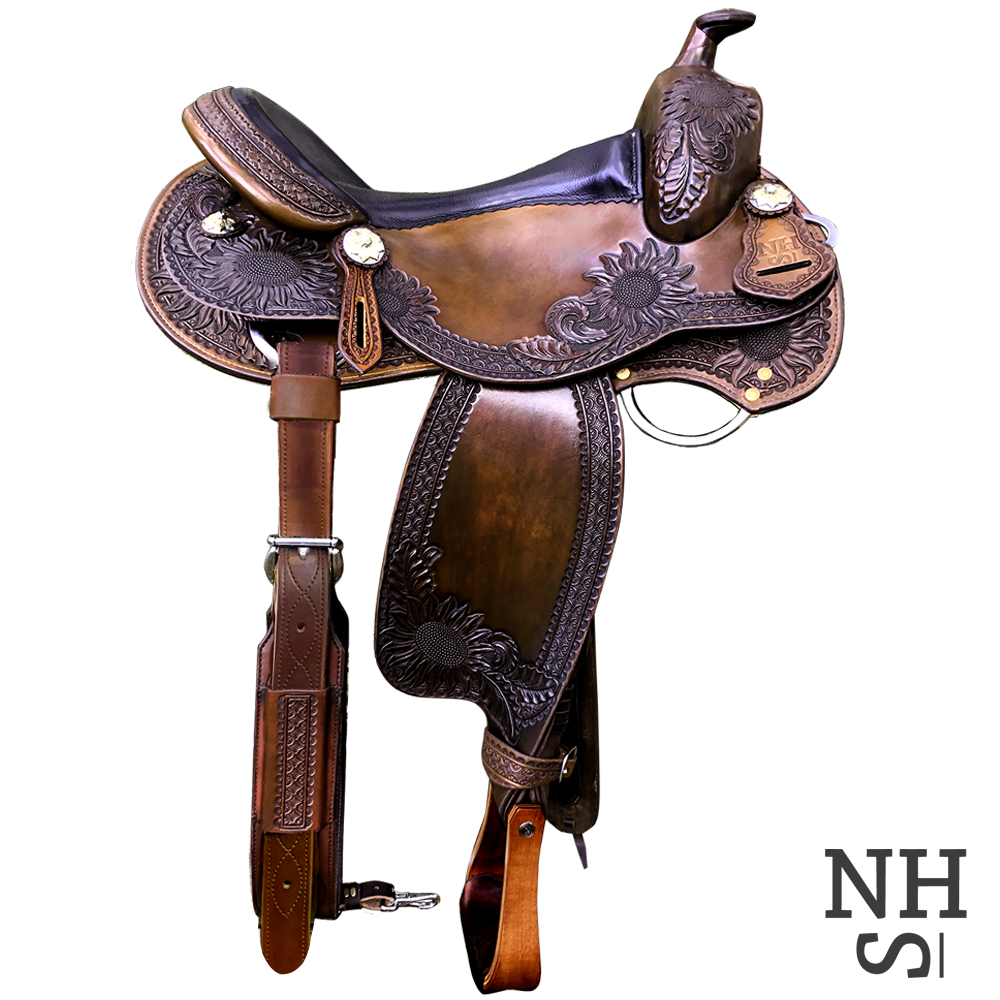
Western Dressage Saddle—Natural Horsemanship Saddles®️

Saddles are inherently impactful on horses’ moving bodies. Understanding basic horse biomechanics and restriction-eliminating saddle fit principles is especially important for Western Dressage riders.

Western Dressage is a discipline designed for balance, precision, and harmony between horse and rider…while asking for softness in performance of extremely athletic maneuvers. As the discipline has evolved, so has the equipment designed to support it—particularly the saddle. While a Western Dressage saddle may resemble a traditional Western saddle at first glance, the two serve different purposes and are engineered with distinct priorities in mind.


Traditional Western saddle design influences all Western Sport Specific designs. Typical “Roper” saddles are oriented to ranch work and include features such as heavy gauge leather, substantial horns (often wrapped in mule hide to prevent abrasion from roping), substantive pommels (forks) with a low center of gravity and installed rope straps to hold lariats. They generally have wide fenders and wide foot bed stirrups and their trees are reinforced for strength when handling livestock. Security, durability, and weight distribution are of primary importance, with rider balance point generally situated toward the rear of the seat.

This results in a seat built for stability, thus positioning the rider’s hip/leg angle, and the feet further forward. This is not ideal for Western Dressage postural alignment, requiring athletic refinement. Roping and other sport-specific saddles (Cutters, Reiners, Barrel Racers) are optimized for jobs quite different from the demands of
Western Dressage.


A Western Dressage saddle, by contrast, is developed to support the biomechanical goals of the sport. Riders need to sit more vertically aligned in order to ride with refinement and precision while influencing the horse with subtle cues rather than the larger movements typical of ranch or everyday riding. This generally means a closer contact feel, reduced bulk beneath the rider’s leg, and a seat shape supportive of dressage posture. The fenders hang in a way that accommodates balance. The overall construction allows the rider to find a centered, independent seat.


These distinctions don’t make one saddle style “better” than another; they simply reflect the suitability of equipment performance for the different jobs we riders ask our horses to perform. As Western Dressage continues to grow in popularity, understanding these different features/benefits helps riders choose a saddle that supports both the art and athleticism of the sport.


Western Dressage Saddle—Natural Horsemanship Saddles®️

SHARE YOUR QUESTIONS AND COMMENTS ABOUT THIS ARTICLE IN THE FORUM BELOW.

About The AUTHOR

LETITIA GLEN 🇺🇸

Letitia Glenn has been researching saddle fit and designing equipment to facilitate the horse in motion since 2001. Her company, Contour Saddlery, currently serves more than 10,000 horses and riders around the globe. In addition, Contour’s VersaFit ™ customizing pad and TaperShim™ systems improve comfort, performance and ridden horse wellbeing underneath saddles tremendously, including those made by other brands. When a horse is more comfortable, training is easier and faster. Overall performance and safety are greatly improved. Horse health quality stays higher over time.

Rethinking saddle fit has required challenging traditional methods. Simplified education that she has designed empowers riders to be confident in fitting their own saddles as their horses change shape due to age, level of training or circumstances. Her company team is bringing her mission to fruition via in person and virtual coaching worldwide. Among the conferences where Letitia has been a featured presenter: NAVC: North American Veterinary Conference 2015 (world’s largest veterinary NAMUCA: North American Mounted Unit Commanders Assoc 2025. community) The material presented stems from her research and applied solutions for recognizing,
evaluating and correcting saddle-fit issues.

Credentialed Independent research initiatives include these comparative studies: English tack: ARU Writtle University, UK Study in 2019: Dr. Roberta Blake PhD, FHEA, MScVetSurg, BScVetMed Associate Professor of Animal Biomechanics and Sports Medicine. School Research Lead. Net discoveries were extremely positive for horse wellbeing re: Contour Saddlery equipment vs traditional custom fit saddles. Letitia is a virtual classroom presenter ongoingly at these universities.

Dr. Stephen Peters’ study 2023: The Impact of Pain/Discomfort on Posture and Western tack: Movement of Horses secondary to saddle fit across three conditions. Conclusions were extremely positive relative to Contour Saddlery equipment and methodology compared to traditional equipment and fitting methods.

CONTOUR SADDLERY ™ Stable of Brands:
NHS ™ Western: Natural Horseman Saddles. English: Glenn Saddles™. Parelli Saddles: Western
VERSAFIT ™ Saddle Pad System Interface

RETHINK SADDLE FIT ™ SO YOUR HORSE CAN MOVE AS NATURE INTENDED ™

Letitia GlennFounder/Developer/Owner NATURAL HORSEMAN SADDLES, Inc Since 2001
dba CONTOUR SADDLERY 5950 SW 1ST Lane Ocala, FI 34474 Website: Contoursaddlery.com
Phone: 833-312-9444

Leave a Comment

Your email address will not be published. Required fields are marked *
