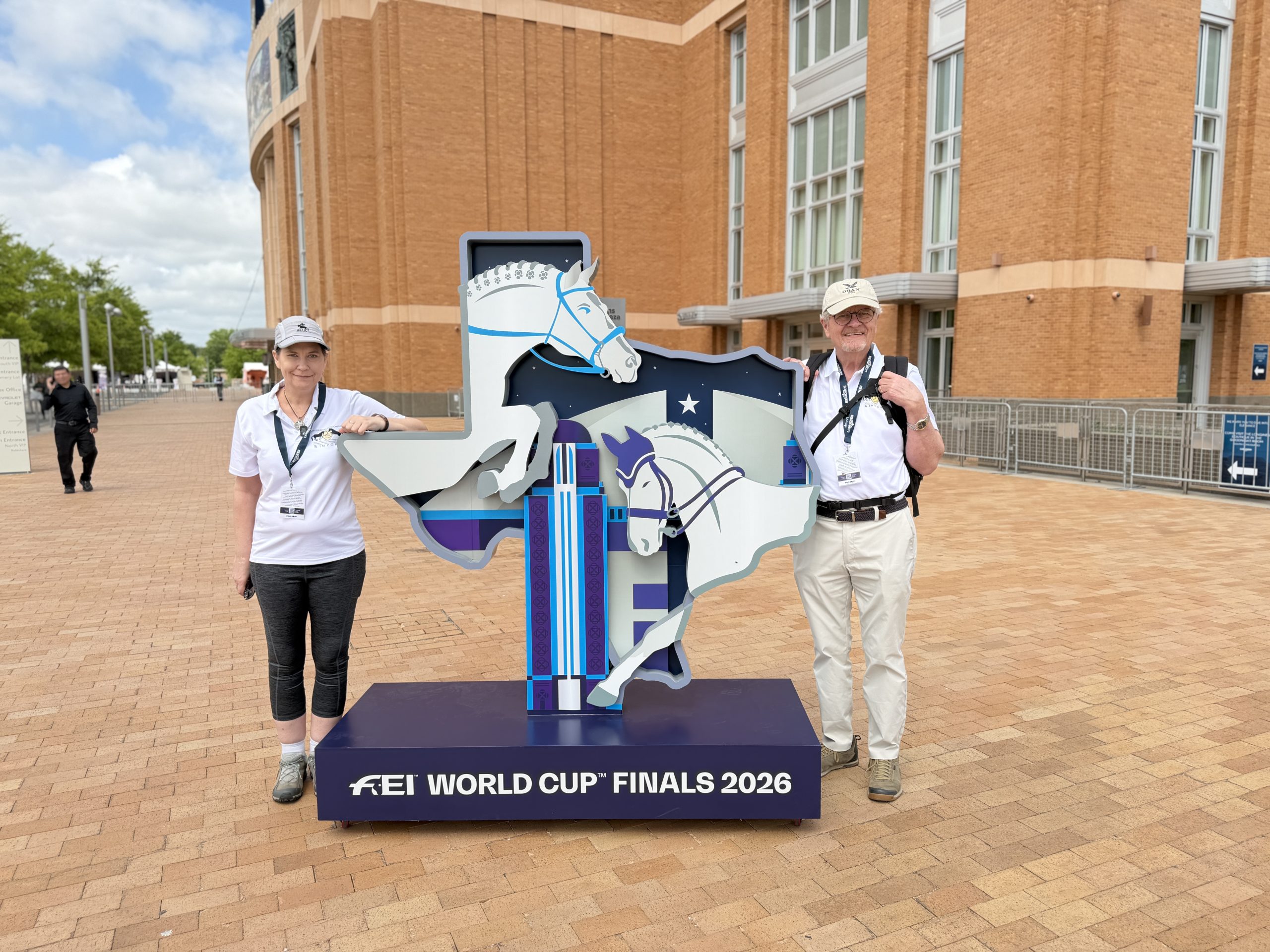
Jesse Kassner (my daughter and business partner) and I launched DressurSPORT.com in February. As you read her writing, you will quickly realize that Jesse knows an amazing amount about horses, riding and riders. She has trained in classical dressage and eventing and has taught dressage at very high levels. I have not. I am not planning to describe the dressage or jumping programs. I have Jesse to handle that.
For more than 50 years, I have been a construction, land use and property rights trial and appellate attorney. I was a builder before I became an attorney. I also know construction, photography and writing.
Going forward, I will be covering Equestrian News, Event Calendars and the ecommerce and importing aspects of this website. I will also provide or oversee articles on the physical infrastructure of these sports. As a former builder, I like looking at the indoor and outdoor arenas, cross country courses, and the buildings occupied by horses. Many riders have fathers or husbands, who, like me, aren’t riders but may be called upon to create equestrian facilities for those we love. My articles will be aimed at them.
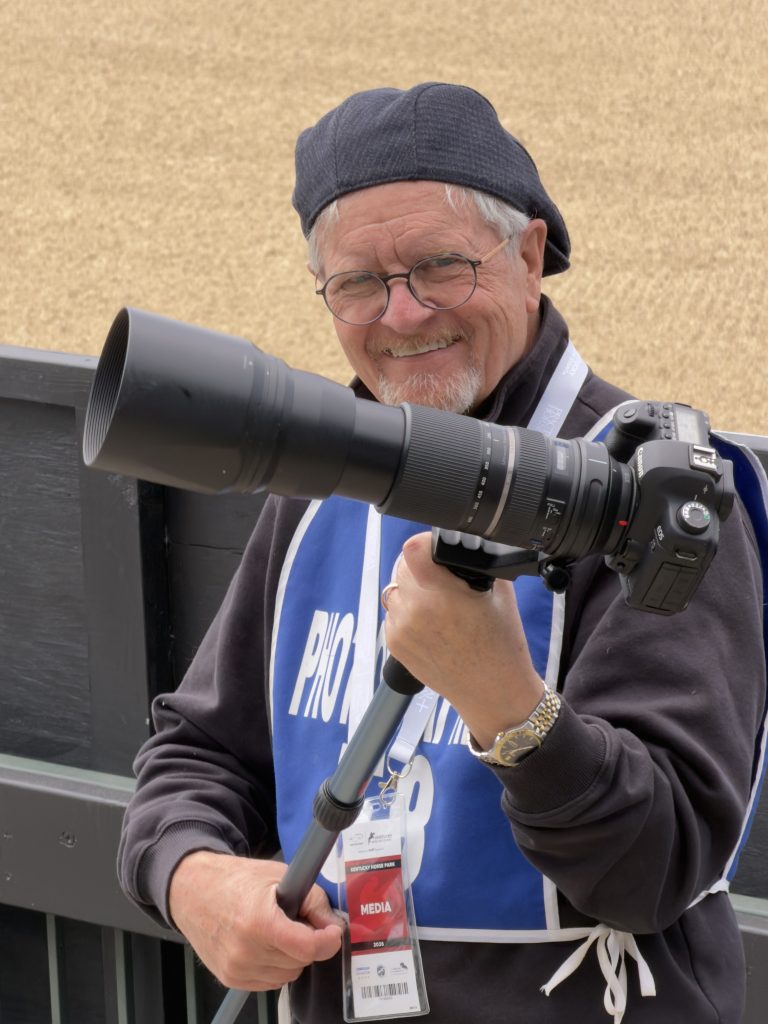
As an equestrian website, we are able to obtain press passes to attend important competitions such as the recent FEI World Cup for classical dressage and stadium jumping held at the Dickie’s Arena in Fort Worth, Texas, last month and the Kentucky Defender Three Day Five Star Event (KD3DE5*) in Lexington, Kentucky. As photographers and reporters, we are able to attend the daily press conferences, tour the back stage facilities, and photograph the competition from ringside vantage points adjacent to the judging stand.
Today I will share my non-equestrian’s observations and photos from Fort Worth. Next month, I will write about the Lexington KD3DE5*.

Let me start by saying this was my first trip to Fort Worth. I have been to Dallas on a number of occasions but never made the trip a few miles to the west. Dallas is an oil town. Besides oil, however, Texas is cattle country, and Fort Worth is and was the marketplace where the cattle were brought on all of the cattle drives we watched in the western movies when we were kids. Dickie’s Arena, where the World Cup was held, is only a few miles south of the stockyards that were the destination of all the famous cattle drives.
Aside from the World Cup events, my other big objective as a traveler, was to eat barbecue brisket as often as I could. Texas brisket, with pinto beans, potato salad, corn bread and a bottle of Shiner Bock is a fond memory from numerous prior visits to Texas. Needless to say, I had several opportunities to try the local barbecue and it was great. More on that later.
I was surprised to learn that Fort Worth is the 16th largest city by population in the United States. Dickie’s Arena, where the FEI World Cup was held, is a recently constructed 14,000 seat facility. Although primarily intended as a showplace for livestock events, the arena was a beautifully appointed, impressive facility that also serves as a concert venue. Immediately adjacent to the arena there is a large parking ramp, which was greatly appreciated each day when we had to haul all of our photography gear to the venue.
The main arena is at ground level, but the pedestrian entry into the building is one level above the arena floor, with ring side seating going down to the arena floor. A second level of seating rises up from the pedestrian access level with luxury boxes and high end bar and food areas interspersed within this upper level.
Hidden underneath the seating area on one side of the arena and adjacent to the main arena floor, there is a separate practice arena in which the competitors would warm up before entering the arena for the dressage and jumping events. We had an opportunity to watch several competitors as they went through their pre-test warm up routine to prepare their horses for the event. We spent a lot of our time in this lower area.
This area was more industrial in appearance, being located below the seating area, but it was well-protected from the stadium noise. The footing in this practice arena was the same as the footing within the primary arena.

From there, we could walk towards the entry to the floor of the arena. As we approached the arena floor, we entered a large staging area at one end of the arena. Here we encountered what appeared to be a large indoor, underground parking lot full of hay wagons covered with flowers and other greenery located just behind a curtain that led to the arena floor.

This area served as a staging area used by a very professional crew for changeovers from a dressage arena during the day and a stadium jumping course just a few hours later.
A small army of people dressed in tan pants, black shirts and black cowboy hats waited in tractors or sat at tables waiting. (More on this later…)

There was also a large truck that resembled one of the large, stainless steel milk tank trucks that are everywhere on the roads in rural Wisconsin. (Sorry—I don’t know what other image to offer to people who don’t live in dairy country) This truck was painted blue however, and had advertising on it for the company that supplied the footing that was placed on the concrete floor of the arena and warm up areas. I never saw this truck in action, so I don’t know if it was used to spray the footing materials onto the arena floor or if it had some type of auger that simply fed the footing material onto the concrete floor before it could be dragged and leveled by the fleet of tractors that periodically came out to regrade the arena floor. Being from Wisconsin, these tractors gave the impression of agricultural Zambonis getting the ice ready for the next period of hockey.

As we walked through the curtain at the edge of this staging area, we found ourselves, to my amazement, at the end of the arena floor, opposite the end where riders enter the arena. We were right next to the judge’s stand. Not just any stand…it was the one to which every competitor rides up at the beginning of his/her dressage test in order to salute the judge (@ C), or perhaps, I initially thought, to show off for the photographers lining that end of the arena. Jesse laughed when I suggested that. It quickly became clear that it was the end of the arena at which the head judge, the one being saluted by the equestrians, sat before standing up to tip his hat to each competitor in response to their salutes.
We were this close to the judges:

Not bad, eh?
When the arena was set up for the first day of stadium jumping, with all of the jumps in place, all of the competitors, their trainers, some grooms, and us in the media, were allowed to walk the course. As I watched, (remember, I am NOT an equestrian) I saw all of these people walking from jump to jump in measured steps. I decided early on that they were determining how much room there was in front of each of the jumps, how tall they were and how far their horse would have to jump in order to complete the jump. (Remember, I was a builder) I kept wondering why they were not using a tape measure to get the precise measurements. You know, “measure twice and cut once.”
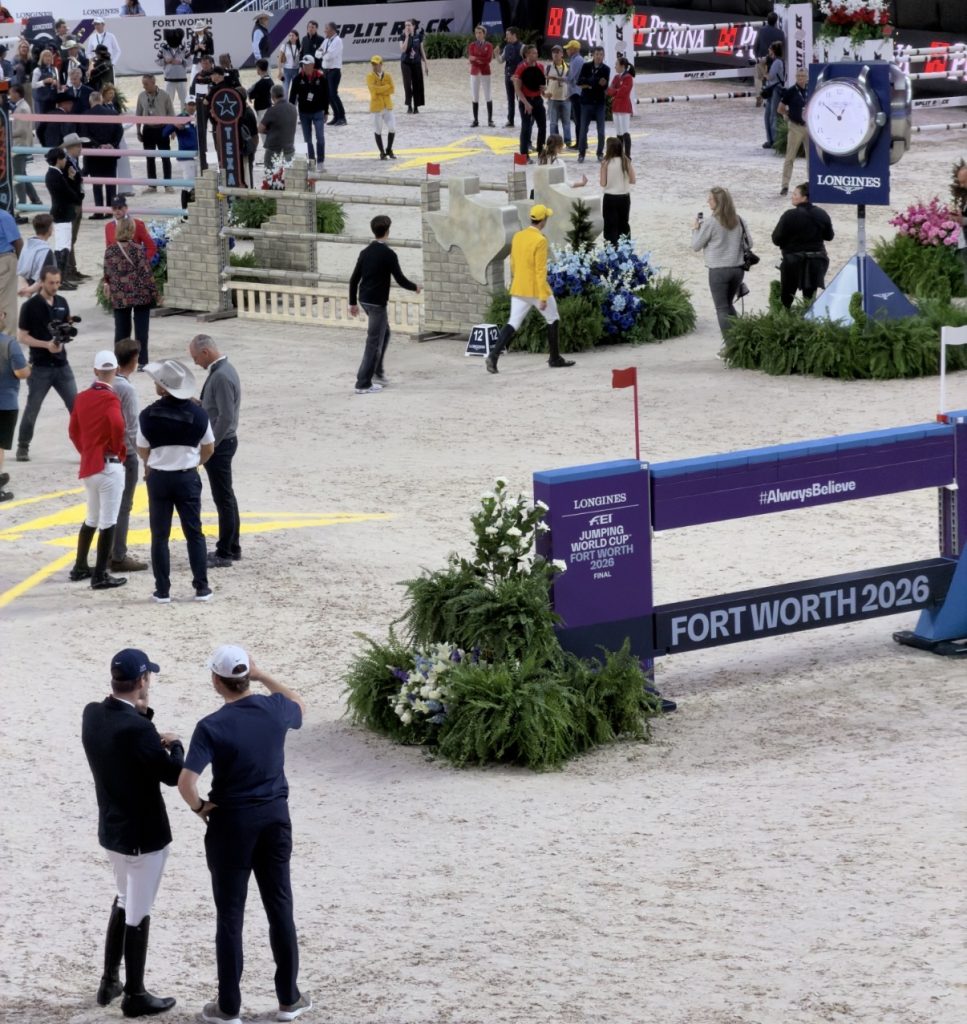
If you study the pictures, you will see that some of the people appear to be pacing off distance in front of a jump. Other people are talking to the pacers and then there are lots of us photographers and media people on the ground looking at the jumps or taking pictures of people. Being a former builder, I took pictures of jumps to see how high end jumps are designed and constructed. For example:


In construction, there is only plan A. When I mentioned this to Jesse, she explained that each rider needed to have in their head what their plan A, plan B and plan C would be. It would be a waste of time for me to try to explain all this to you so I asked her to write this next paragraph.
My dad, being a “measure twice, cut once,” kind of carpenter, posed the question to me “why do the riders and trainers walk the stadium jumping course without using tape measures-to, measure distances for one round of jumping?” This brought me way back to my eventing days. I explained to him that each rider and trainer, (who knew their horse’s strengths, weaknesses, and fears) had to have numerous walks to establish their tactics, or “battle plans,” pre-determined before they rode the course.
On the first walk, they would simply get to know the jumps and lines they had to ride in order to memorize the course.
The second walk of the course, they paced with their own individual steps, in order to judge the distances between and before each jump. They would determine where to ask the horse to take off in order to make the jump, and then stand on the landing side of the jump to pace out the strides from the landing spot of that jump to the next jump’s take-off point. They also have to decide how many strides there should be between the fences (landing spot, first stride, second, and so on to the next take off point). If riding a “line” (such as a “bounce line” (where the horse lands after one jump,, and jumps again), a “two-stride line,” a 4-stride line, a 6-stride line, etc.).
They would walk the course again, this time to determine what was the fastest way around the course, where they could cut time by jumping a fence at an angle, or where to land & try to pivot instead, or where to ride a curved, more time consuming line, landing to head to the next fence, AS WELL AS what fences had to be taken more carefully, more slowly, to set their horse up for a fence or combination of fences that would be trickier for them—some horses don’t like certain types of jumps, and where to use extreme caution due to a jump where the jump cups holding rails are flat rather than curved. Such rails are easier to knock off at the slightest touch. In these situations, the rider must put extra thought and effort into how they want to prepare their horse, in order to ensure that when riding those specific fences they would not knock the rails down.
Plans must be carefully thought through with the idea in mind that IF there were to be penalties over a fence, should the rider sacrifice time by being more careful over the next fences?
Or should they take a longer path to certain fences, which may make their ride too slow, incurring time faults?
Or if their ride is fast, but they know that a jump or combination will be tricky, should they push on?
Or slow up just enough to be positive that the tricky fence(s) are jumped more carefully, ensuring a clear round?
They also must think about the absolute fastest angles at which they could ride, which may be risky, but may also help them come in with the best time—hoping for no faults. That is why they walk the course numerous times, as do their trainers—to decide the best course of action, the backup plan, as well as how to ride the rest of the course if something goes wrong. Hence plan A, B, C, etc.
Horses are not wood—all horses have different lengths of strides, different talents, different fears, different personalities. Just like people, every rider has different drive, different relationships with their horses, different approaches to problems, and different skill levels. That all needs to be considered when walking any course—be it stadium jumping or cross country.
See, I told you she knows horses.
After our opportunity to walk the course ended, we returned to the press room. The press room/media center was also located on the arena floor level in a more industrial part of the facility. Each day there was a morning press briefing to discuss the days events. Tables were provided for use by the press as well as internet facilities, electrical outlets and snacks and beverages. After each session, there were press conferences including appearances by some of the competitors for questioning.
The press were provided with breakfast and lunch catered by the Split Rock Jumping Tour as well as beverages and snacks throughout the day. All our meals were working lunches. I must say, they treated the media well. A side benefit for Jesse and me was that the press room gave us an opportunity to ask questions and meet and observe other press people. They were uniformly friendly and open to us. They made what was a potentially intimidating situation comfortable. Marty Bauman, the press manager, was particularly helpful and patient. If he reads this, we both want to thank him for helping us.
As I said in the opening paragraph, I am not planning to describe the dressage or jumping programs. That is for Jesse to handle.
Now we get to the part where I talk about my secondary interest in this trip. Texas barbecue. I served on the National Home Builders Association Legal Action Committee for 20 years. In that time, I made numerous trips to Texas for Committee and Board of Directors meetings. That Committee briefed every land use case that went to the U.S. Supreme Court. We met with the Attorneys that argued those cases. We had a long string of successes and the National Association valued what the Committee was doing. When we went to Texas, they showed us what Texas was about, and when we ate, it was memorable.

Our first night in Fort Worth, we were tired from a long day of travel, so we went to a barbecue that was only about 150 yards from where we were staying. It was good, but different than I was hoping for. The next night, we went to the second highest rated barbecue in Fort Worth, TERRY BLACK’S. Terry Black’s original restaurant is in Austin and is regarded as the oldest barbecue in Texas. At least that is what the advertising says. More importantly, that one has a Michelin Star.
As an attorney, I am expected to be measured and careful about what I say. Fortunately, I am just about retired. THE FOOD WAS AWESOME. You buy your brisket by the pound. The first thing different about the restaurant was that you get in line, grab a tray, and buy each side dish separately. This is before you even know what the barbecue choices are going to be. Who knew a slip of a girl could eat so much? Everything looked good to Jesse. The brisket was every bit as good as my memories. For some reason I cannot explain, the thing I remember most about Texas barbecue is the beans. They have a seasoning unlike anything I have ever had outside of Texas. The beans at Terry Black were exactly like I remembered them.

As you are leaving the restaurant, you walk by the smokers. As you would expect in Texas, they were huge.
The only bad part of the experience is the realization that it is a 15 hour drive from Madison, each way, if I want to go back. One of the exciting things about travel is the memories you create. I will remember that meal.
Back to the World Cup: There is something about Texas. Here in Madison, Wisconsin, the government reaction to almost anything you want to do is to spend all their time trying to decide why it can’t be done. The state motto used to be “Forward.” Goes back to the Civil War. Today, if they could agree on anything, it would be to change the motto to “You want to do what???” What I like about Texas is that the response to almost any idea in Texas is “let’s figure out how we can do that.” They actively try to overcome problems. They strive to get things done.

I wanted to finish with a few comments about the Texas way that Dickie’s Arena handled the World Cup. Dressage is conducted on a 20 meter by 60 meter open arena. You can dress up the area outside of the area of competition, but the arena itself is a flat, open rectangle with a low perimeter defining the area of competition. The dimensions of that arena are very precise. In freestyle dressage, the rider and horse perform a routine that is timed to music. The pair must complete a routine that incorporates a series of maneuvers that must be a part of the routine, but the order in which they are performed is up to the rider, and must be choreographed to the music. Angles and distances travelled must be precise in order to complete a maneuver at the appropriate spot, not only in regard to the music but in regard to the point within the arena.
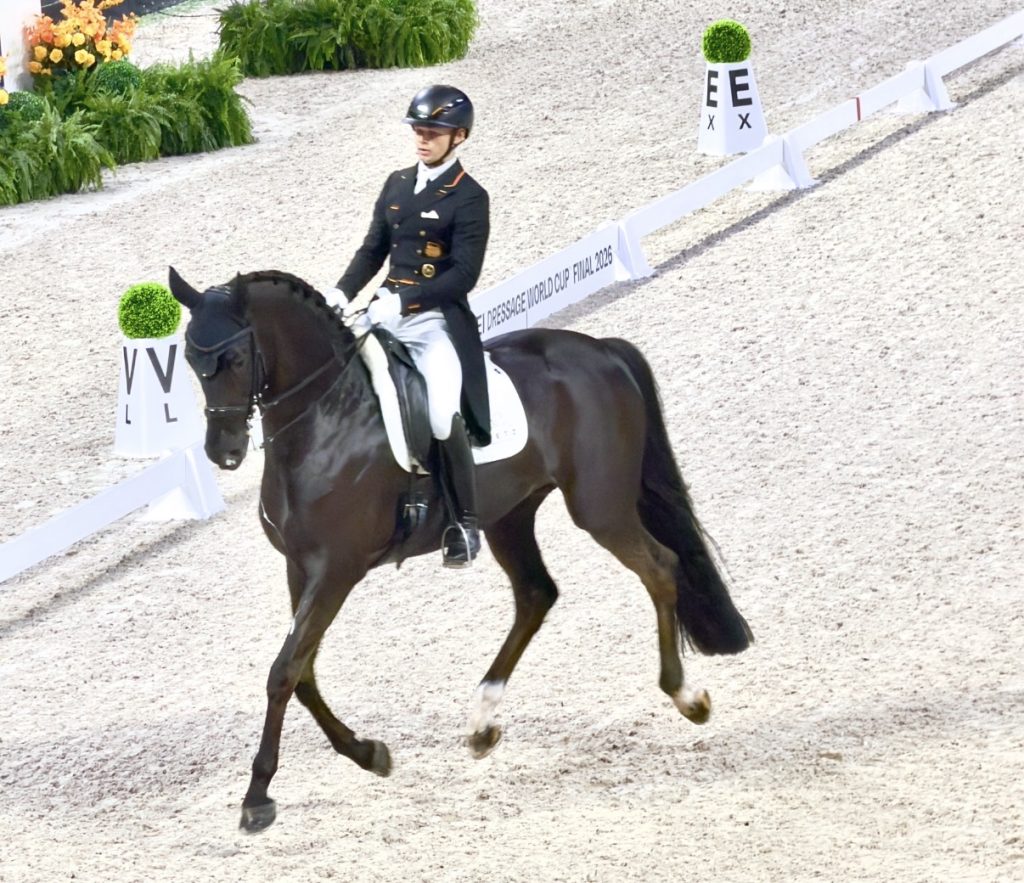
As I watched the competition, I noticed that the precision of each freestyle routine timing of the routine starts with the beginning of the selected music. As a rider approaches the gate to enter the actual arena the horse must be proceeding at a particular speed in order to get the timing correct. Each rider has apparently determined the physical point outside of the arena at which the music needs to start. As the pair (horse and rider) approaches the gate, a hand signal is given to the control room to start the music. The freestyle event was easily my favorite to watch.

The other event at this World Cup was Stadium Jumping. Unlike dressage, the area of competition is limited largely by the walls of the arena itself. The riders do not know where the jumps will be until they walk the course, as I noted earlier, without tape measures. I note these characteristics to emphasize the skill and speed with which the staff at Dickie’s was able to switch from dressage to jumping and back again each day.
The geometry of the dressage arena must be precise, each time the arena rails are put in place. The individual rails around the arena are what appeared to be 2”x6” boards approximately 4 meters long. They appeared to be fabricated from a light weight but rigid plastic material. Every 4 meters, a short plastic pedestal with a groove is place to hold the rails. At Dickie’s, they used spotlights mounted in the ceiling of the arena to show the ground crew how to locate the corners of the arena and critical locations of the things that needed to be correct. In the photos that follow, you can see small circles of light on the floor of the arena locating some of these critical points for the closing awards ceremony.

I did not get any photos of the set up of the dressage arena, (but Jesse did) but I would fully expect that the precise location and angle of the corners was physically verified by event officials before the competition starts. As a builder that has staked out numerous foundations, this would have been accomplished by determining that the distance between each of the diagonal corners is equal in length.

The crew, (the guys dressed in tan pants, black shirts and cowboy hats) were able to remove the entire dressage arena and prepare for the closing awards ceremony in 18 minutes. They first drove out several empty flatbed trailers onto which they loaded all of the flowers and greenery previously located around the dressage arena.

A second crew brought out an empty flatbed trailer onto which they loaded all of the rails for the dressage arenas.

A different trailer brought out a different set of flowers and greenery as well as the structures for the closing ceremony.
Pictures shown earlier in this article depicted numerous trailers that had been preloaded with materials needed for set up while numerous empty trailers had been stationed to immediately go out to remove the items no longer needed on the arena floor. The preplanning by the organizers of this World Cup event was impressive.

As the import/ecommerce manager for Dressursport.com, I also had the opportunity to review the equestrian trade show at the 2026 Fort Worth World Cup. We visited every exhibitor and made several useful contacts with vendors from whom we have & hope to secure inventory for the website. As you will see in a separate article in this issue, we are about to launch our store featuring quality imported gear made in Ireland and German! This initial launch will be limited in scope while we work out all of the various logistical components of an e-commerce store, but we expect to add new products to our store with each new issue.
Next month, I will provide a review of my impressions of the Kentucky Defender 3 Day 5* Event.
To watch the FEI 2026 World Cup Jumping round, the YouTube has posted this link:
Final round blend Farrington & Greya🇺🇸 on YouTube:
Becky Moody🇬🇧 & Jaagerbomb’s Grand Prix Freestyle winning test:
TO ASK QUESTIONS OR LEAVE COMMENTS, PLEASE USE THE FORUM BELOW

