Horses are not tools or unfeeling in their existence, and horses are not all the same, they are individuals. Some are better than others for a particular discipline or job, and they have preferences. They actively participate in the series of negotiations humans call riding.
Horses have things that they want: food, shelter, companionship, safety and to understand what is required of them by the rider so they can complete the task with efficiency.
Riders have things they want: more activity behind, more balance, more engagement, obedience, more jump, lightness; the list goes on.
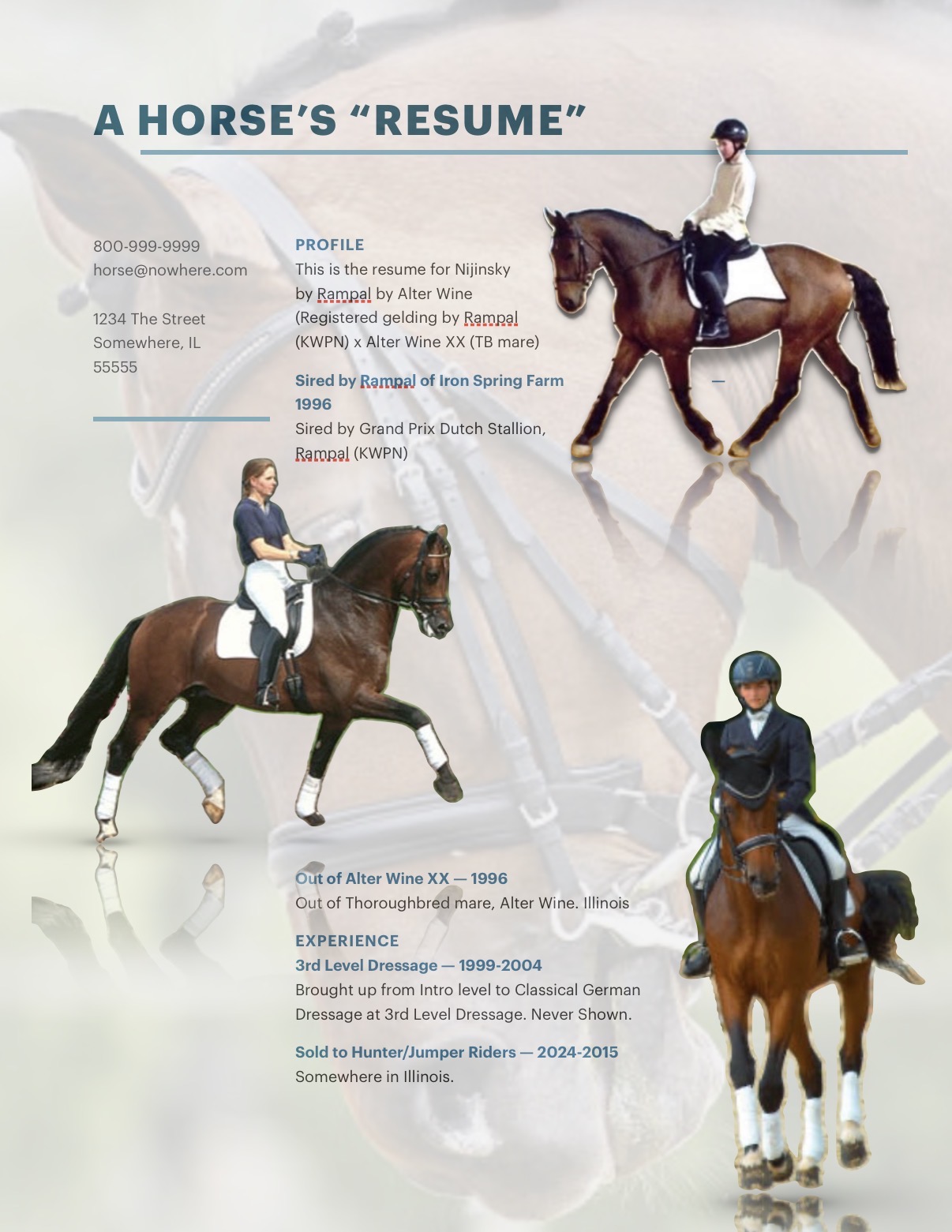
Each discipline has their own requirements for what is required of the horse and if the rider chooses a horse that is unsuited for the job, the job will not be done well or efficiently and both the rider and the horse will become frustrated. The rider must learn to “read” the horse’s resume and what the horse is bringing to the table to negotiate with.
The rider should not want an over qualified employee (horse) and they should not get one that needs training unless they are willing and able to do so. It is up to the rider to find the right horse for the job and negotiate the pay, the reward, to the horse (see the article First Basic of Horse Training: https://dressursport.com/the-first-basic-of-horse-training/ )

It is up to each person to be informed, to be honest with themselves of what their abilities are and what the horse’s job will be. It will not do either the rider or the horse any good if the expectations are not clear and if the person isn’t honest with themselves.
Too many horses are ruined, wasted or badly trained because the person acquiring them is not honest about their abilities.
🐎 Why does a beginner need an International level competition horse?
🐎 A young adult has the strength and reflexes to ride those big impressive horses that need some training, not a child or a senior adult.
🐎 A child should not be put on the horse they will need in 4 to 5 years if they keep riding, they probably won’t keep riding as the chances they will get hurt, scared or frustrated are extremely high.
🐎 A person should get a horse or pony that they can ride now, learn on now and if the horse challenges them, they can correct now.
THE “5-THINGS”
There are 5 things that make up a horse’s resume, in order of importance: Conformation, Temperament, Paces, Breeding/pedigree and Training. Each and every one of those points are important.

-1- CONFORMATION
Looking at a horse the rider needs to determine if the balanced front to back and side to side is what they need. Certain disciplines require a more uphill balance: dressage, eventing and show jumping. Others, such as western or show hunters, the front to back balance is less important and in western and sports requiring speed in quick spurts, straight angles in the hind leg are desired to help keep the horse sound.
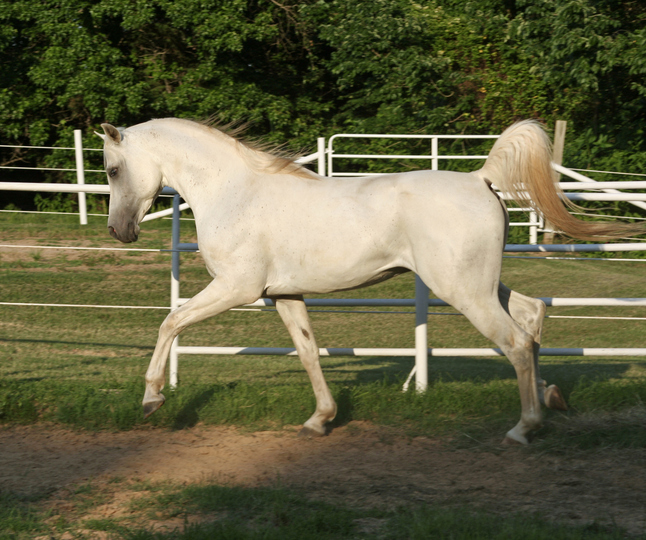
🐴 HEAD ‘TYPE:’ Every person has a head type they like but the rider should look for a fine connection at the throat to the jaw, and a short mouth for the horse to have a soft and light connection with the bit. The fine connection at the jaw makes it easy for the horse to flex at the poll, and a short mouth puts the bit on the bars of the horse’s jaw making them sensitive to weight of the bit.

🐴 THE NECK: A long neck can help the horse balance and bend, but will be easy for the horse to over bend or flex. A short neck on a horse will be harder for the horse to over bend or flex but it is stronger and may cause the horse to be harder on the bit and less likely to stretch for the contact.

📏 THE HEIGHT: The rider should look at the height of the wither compared to the croup of the horse. Whether the neck is set on the shoulder high or lower to determine if the front to back balance is what they want or can work with.

📐 THE ANGLE OF THE SHOULDER should slope gradually back and the forearm (from the point of shoulder to the elbow) should be as short as possible. The forearm determines where the front leg is set out in front or underneath the horse. If the front leg is set under the horse, the animal will struggle to reach forward with the leg.

🐎 THE BACK: The rider should look at the back of the horse, if it is smoothly connected to the sacroiliac joint, if the back is short or long. A long back allows the horse more freedom when moving laterally and side to side, a short back is less likely to strain and allows the horse to bring the hind legs more underneath itself.

📐 THE ANGLES: The angles wanted in the hindquarters will depend on what the horse will be required to do. Racehorses and disciplines requiring a lot of speed the horse is preferred to be straight legged from the hip down. They will move the entire hind leg as one piece with very little bend in the stifle or hock, this will help prevent the breakdown of those joints. Horses that do dressage, show jumping will need more angulation in the hind quarters so the horse can bear more weight behind and push down with the hindleg.

🐎 THE LEGS: Legs need to be straight, not necessary straight to the front but straight in the limb. A slight turn out or in if the entire leg will not put undue stress on any joint or ligament in the limb. A turn of orientation of the bone at a joint, such as the knee or hock however will cause stress there and is an opportunity for unsoundness.

🐴 If the entire hind leg has a slight turn out that will allow the stifle to slide along the barrel of the horse as the horse brings the hind leg under it giving the hind leg more forward reach.
🐴 Young or under weight horses can have quite a turn out in their legs that will correct somewhat as the muscles develop and push the legs into their correct orientation.

🧲 THE FEET: The hoof should be round, and correct with wide weight supporting heels. The walls should be wide and solid with the white line thin and well defined. The old saying, “No hoof, no horse.” is very true.
-2- TEMPERAMENT🌡️
A horse can be greater than the sum total of its parts.

A horse that wants to please the rider will be easier to ride and train. They will exert themselves to make the rider happy and are more likely to trust the rider’s decisions and will forgive the rider’s mistakes. This type of horse will strive so hard to please its rider that it will often overcome less than desirable conformation faults to make its rider happy.
A horse that wants to please will accept a correction. If a horse cannot accept any type of correction it will be very difficult to train. In some cases the rider can adjust their aids to help the horse understand, but if the horse has no desire to understand, then the training will be long and hard.

THE REACTIVE HORSE: reactive horse will respond quickly, and sometimes dramatically to the rider’s aids. As they become trained they will be a softer and less intense ride but will be reactive to everything not just to the rider unless trust is established. A non-reactive horse will be slower to respond or will not respond at all. The non-reactive horse will require more from the rider in the use of their aids but they will also be less reactive outside events.
THE PERSONALITIES: rider must be aware of their own personality and needs so that they can choose an appropriate horse. A person that wears their emotions on their sleeve might be better with a non-reactive horse. A person who can drop all their problems and worries when they step onto the stirrup can often ride the reactive horse with grace and little effort.
-3- THE PACES 🧲
There are other paces of horses than “walk, trot and canter,” and there are disciplines for those paces but only the paces of walk, trot and canter”will be covered.
THE WALK:

A four-beat gait with no moment of suspension. A clear over track (the hind foot landing in front of where the front foot was) should be present.
THE TROT:

A 2-beat gait with horse moving in diagonal pairs. In English disciplines there should be a moment of suspension and the horse should either “track up” or “over-track.” In Western disciplines there is no suspension as the one diagonal lands before the next diagonal moves, and because of that the horse will under track, the hind foot landing behind the front foot.
THE CANTER:

A 3-beat gait with a leading leg, a diagonal pair and the outside hind leg pushing off separately. There is a moment of suspension (called a canter jump) and an “over-track.”🇿🇦
To evaluate the gaits of a horse, it should be viewed while moving quietly. Any horse can move with power and expression when excited but the rider should see what the horse’s normal paces are as this will give them a better idea of what the horse will provide when being ridden by them. The rider must keep in mind what the discipline they will ride the horse in and what the requirements are. A field hunter will need ground covering paces more so than a show jumper, and good high level dressage prospect will need a solid 3-beat canter as the higher a rider goes the more work is done in that gait.
If the horse can be viewed moving freely without a rider the horse will show its natural gaits, balance and if the horse does a flying change naturally. The rider should watch the horse and determine if:
• The horse keeps the rhythm of the pace?
• Is the horse articulating the hind legs joints?
• Are the joints and hind legs articulating when extending or collecting?
• Are they swinging across their backs to add power to gait?
• Is each gait even, and regular and ground covering?
• Can the horse slow up and then go to speed without losing balance or the rhythm?
• Does the horse have natural suspension in the trot and canter?
STUDYING THE PACES: The rider should study the paces and the willingness of the horse when it is ridden by someone else and then by the rider evaluating the horse. When the horse is being ridden, does the horse have the same gaits as moving freely? If it doesn’t, what are the differences and why?

For example: A kind hearted, willing horse can have better paces under saddle because it has been taught and it is trying to please. A horse taught with fear will be tense, quick with shorter steps and usually a rigid body.
It is up to the rider to look, study and note the differences in the horse between free movement and under saddle and ask themselves why and if they can handle those differences.
-4- BREEDING/PEDIGREE 🧬

Breeding and Pedigree gives an indication of what the progeny should be. Genetics can be so haphazard—each parent has both expressed and hidden genetics. Training should be determined by the person evaluating the horse, if it will be appropriate for the rider and according to the demands of the discipline the horse will be used for.
Certain horses, stallions and mares, will produce a consistent type and it will help to look at what both of the parents have produced, brothers and sisters of the horse being considered. If those horses show consistency then the chances are the horse that is being looked at will also have those characteristics.
A horse with few or no offspring will be harder to determine what they will produce. Looking back into a pedigree will not help much since once a particular horse is more than 2 generations back in a pedigree it will have very little bearing (unless there is inbreeding) on what is being produced because of the genetic dilution so examining the parents and grandparents will give a better idea of what the horse can or will be.
TEMPERAMENT: Temperament and soundness should be looked at in the pedigree as well as the athletic ability. Both are inherited and very important most of the time to training and riding.
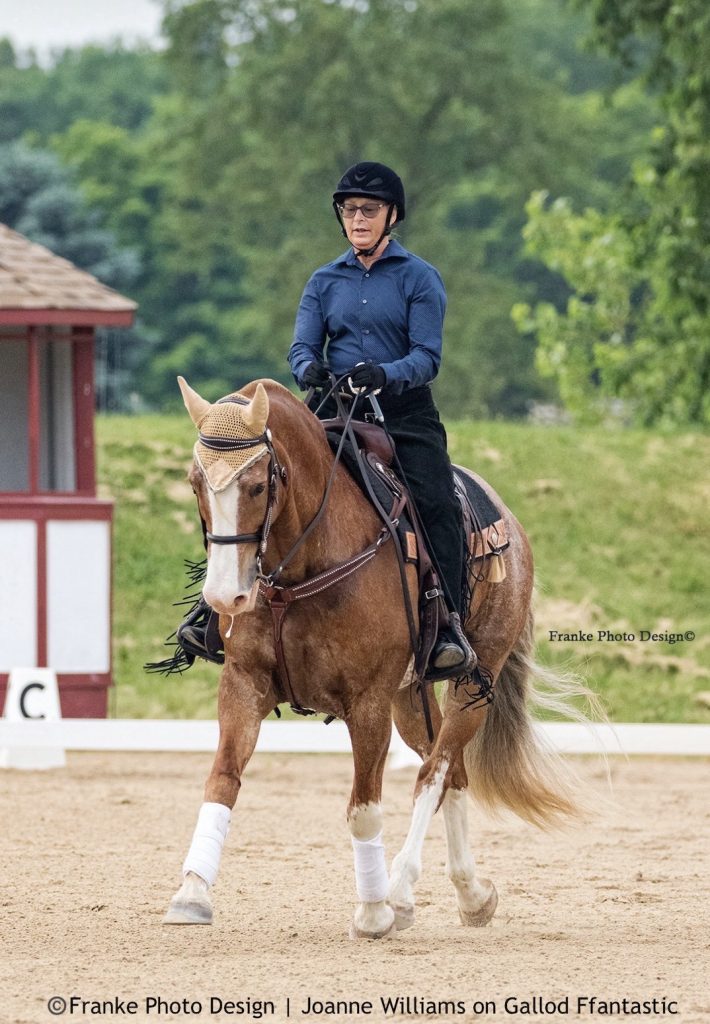
BREED & TYPE: Breed or type can also be used if the horse is not pedigreed. A Quarter Horse is usually calm, stocky and a good western horse or all-arounder. A Thoroughbred will usually be fast, tall, refined and have a good jump, an Arabian is sensitive, athletic and usually very refined. It will be up to the person looking to know their breeds and breed type.
It is said, “That a good horse is never a bad color.” This also applies to breed or type.

-5- TRAINING 🏅
Training should be looked at as the horse’s level of education in their pedigree, as well as the rider should know what their goals are for the horse they are looking at.

Someone looking for a hacking horse will have different requirements than a rider looking for their next 3* Eventer. A bigger or beginning rider should look for a kind, forgiving temperament above all else to help them learn, whereas an experienced rider may look at the potential of a young horse with little or no training.

The higher the schooling of the horse, the more sensitive it will be to the aids. The rider may confuse or frustrate the horse, and in the process give themselves a fright; alternately, if the horse is too far above the rider it is intended for, the rider will always lower the horse’s training to their level over time unless there is someone who can keep the horse schooled to the level it was at.
If the rider is above the horse in training, does the rider have the patience and fortitude to bring the horse along in its education?

When looking at the horse’s training the observer should also look to see if the horse is happy while being worked, or if it is sour, disrespectful, or resentful. A relaxed, happy horse is easier to ride, and train and usually has less medical issues.
MATCHING HORSE TO RIDER 💡

The rider or person evaluating the horse must consider if the horse will fit the job required.
• If the horse is young, can the horse grow in that job?
• If there is help for the horse to grow or learn as needed for its job and still be competent and happy.

• If a schoolmaster is required, a teacher for the rider, does the horse have the education and the temperament to teach that particular rider?
• Will both the horse and the rider enjoy the experience?

Looking at the above 5 points as a “Resume” will help to evaluate and find the right horse for each rider.
PLEASE ASK QUESTIONS OR LEAVE COMMENTS ON THIS ARTICLE IN THE FORUM BELOW
SOCIAL MEDIA:

