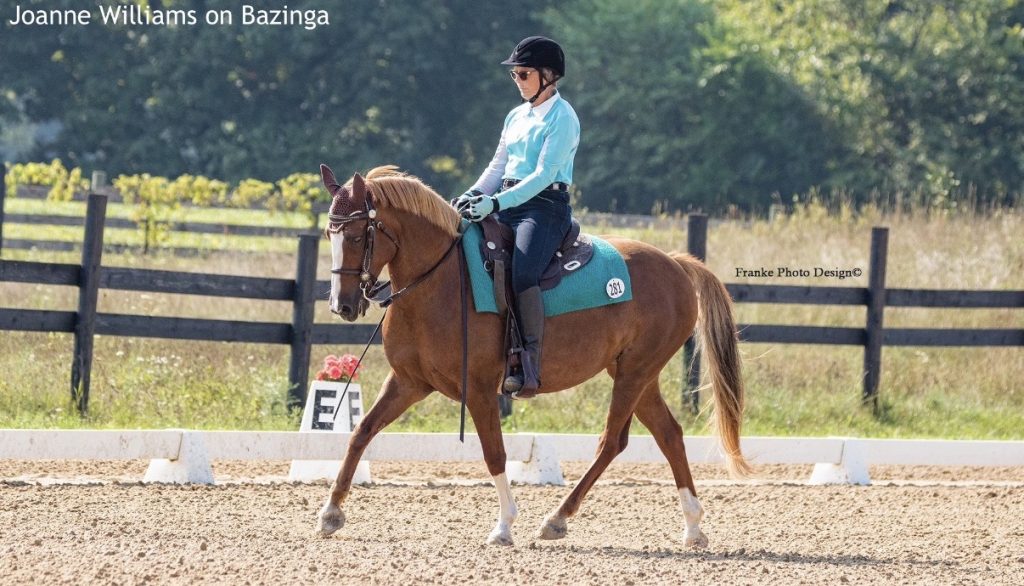
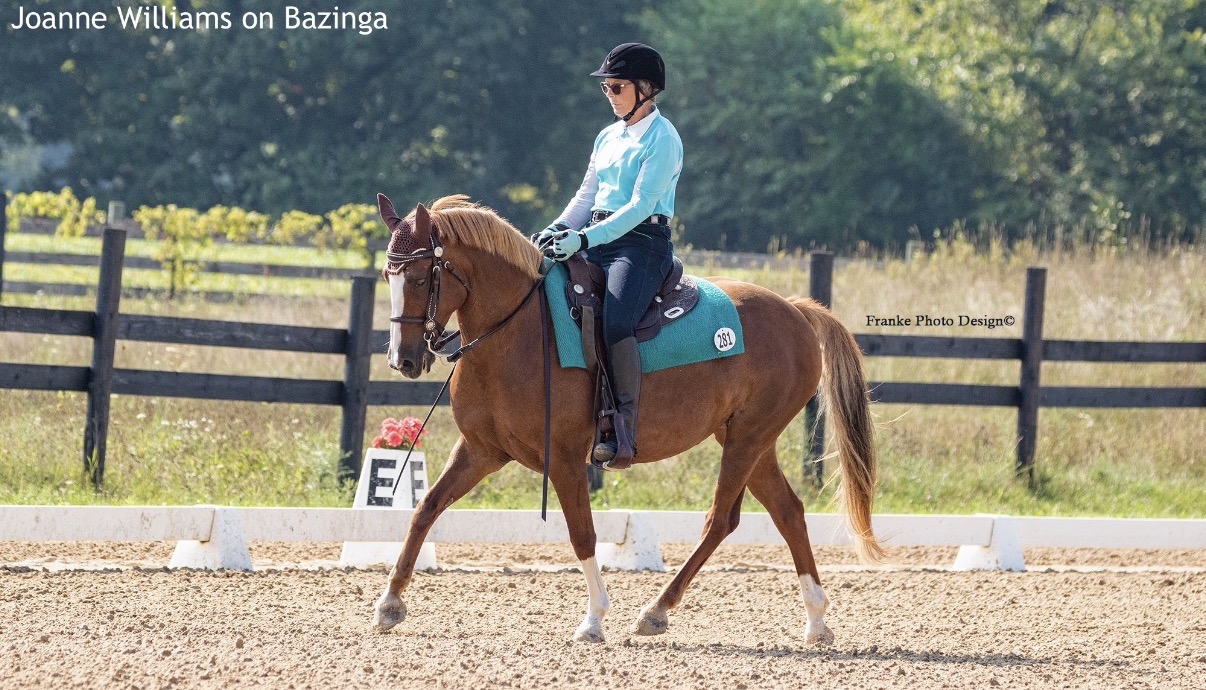
The Western Dressage Association of America (aka: WDAA) is one of the fastest growing associations in USEF. Western dressage effortlessly blends western traditions with classical dressage principles.
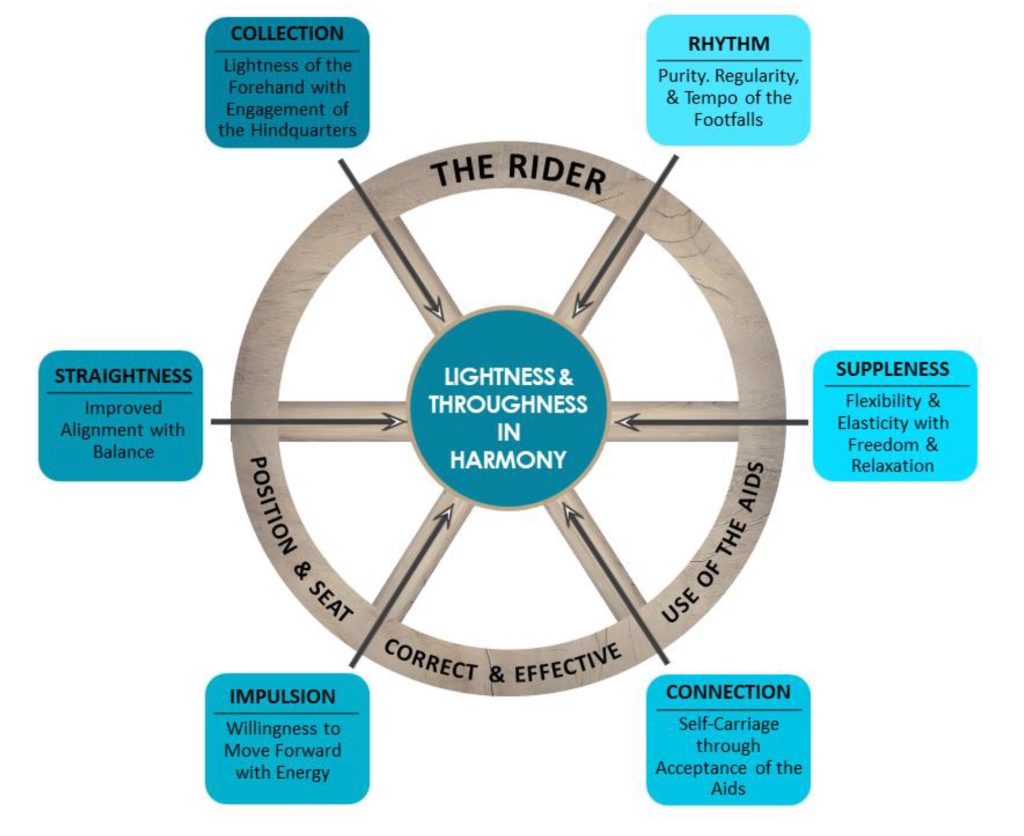
Western dressage in WDAA is a progressive system of training based on classical dressage principles with many traditional western elements. WDAA uses a training wheel which outlines that the rider is the most important part of the progressive training of the horse. (Click here to learn more about the Training Wheel)
We strive to follow horse friendly and biomechanic-principles in training. Softness, self carriage and invisible aids are the goal, with harmonious partnership valued in every level. WDAA uses the same arena letters and dimensions as the classical English dressage uses. There are 4 tests in each level that clearly follow progressive training methodology.
While competition isn’t the end goal for many riders, the training system develops horses that are moving freely forward, swinging through the back with moderate suspension and engagement. At all levels long active strides covering ground easily with increasing uphill balance and stretch over the topline as they progress up the levels are desired and will be given high scores from judges. Extravagant gaits are not rewarded, thoroughness and harmony are rewarded. Accuracy and correctness of figures and lateral movements are done according to classical dressage requirements.
WDAA welcomes all breeds of horses, including gaited horses and mules. WDAA also has several divisions with many tests for riders with disabilities. In the 2025 World Championship Show, over 50 different breeds of horses competed. No one breed or type of horse dominated the placings.
Progression in training, increasing uphill balance and roundness in outline on soft contact become evident as horses and riders progress up the levels.
All other lateral moments parallel requirements for English dressage as training progresses up the levels. Many movements are unique to WDAA. Starting in:
Level 1: we see 180° turn on the forehand and 180° turn on the haunches or half pivots.
Level 2: adds side passes.
Level 3: requires 360° turns-on-the-forehand, and pivots, rein back to lope.
Level 4: adds 540° pivots, flying changes of lead in lope—and a rein back series: consisting of 4 steps back, 4 steps forward, 6 steps back immediately proceeding in the next gait.
Level 5: 720° pivots are added, along with flying changes in series.
Working walk, free walk, and jog are used in Intro level, Basic level adds working lope and stretching at the jog.
• Level 1: requires lengthening of stride in jog and lope.
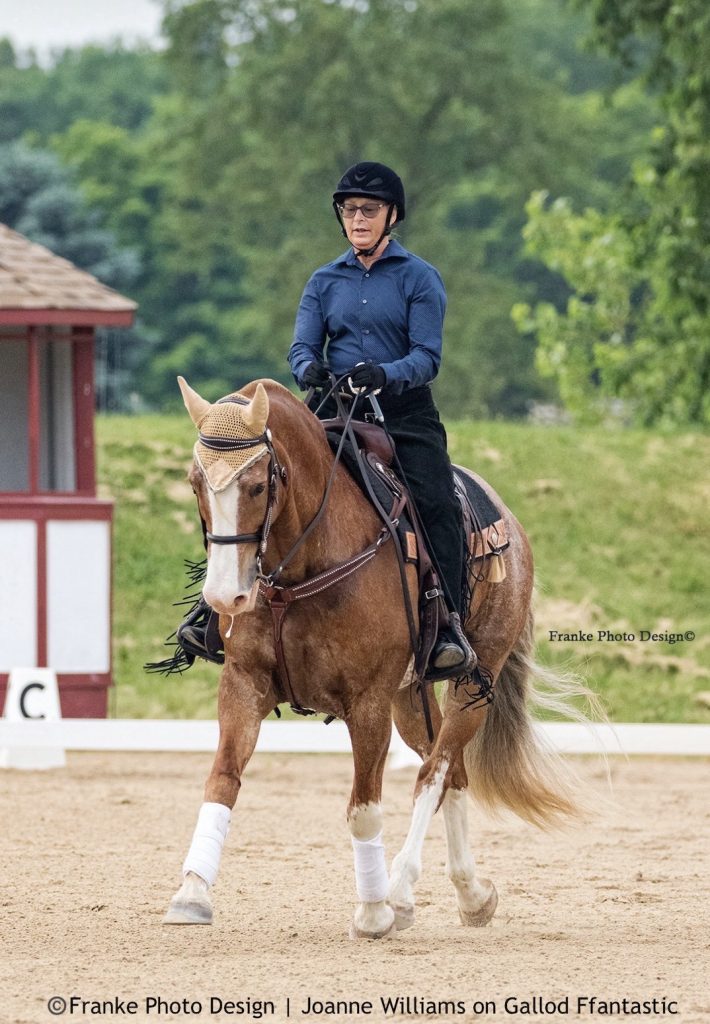
• Level 2: introduces collected jog and lope and lengthening of stride which continues through Level 5.
• There will be a new Level 6 in 2027 which will expand the training of the horse and rider.
For additional information, equipment rules, tests and the show calendar, check out the Western Dressage Association of America (if in the United States)
Westerndressageassociation.org
I hope you will join us on our journey.
Social Media: