Western dressage is somewhat of an oxymoron. How can you ride dressage using a Western saddle? Western dressage only became a recognizable and organized ‘discipline’ less than 20 years ago, although western horsemen had been incorporating classical dressage principles for many decades. Western dressage is essentially dressage training and competition performed in a Western tack and riding tradition. It combines the principles of classical dressage—balance, rhythm, relaxation, straightness, impulsion, and collection—with the way a well-trained Western horse is expected to move and respond. In 2010 the Western Dressage Association of America (WDAA) was founded to make western dressage an organized discipline rather than simply an approach used by individual trainers.
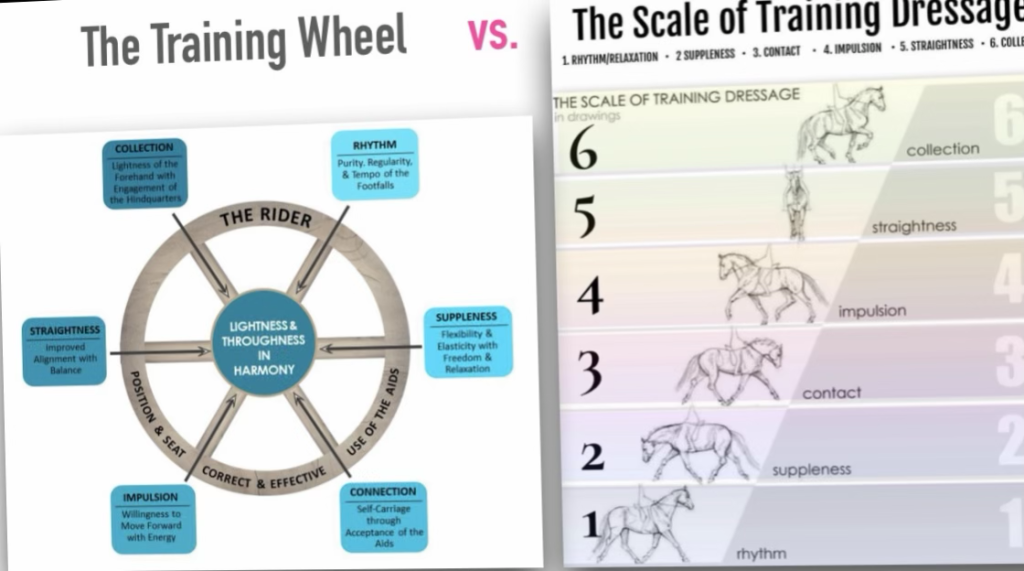
The training principles are very similar to traditional dressage, but the presentation and some of the movements reflect Western riding. The horse generally works in a Western saddle and Western bridle, although equipment rules depend on the organization and level.
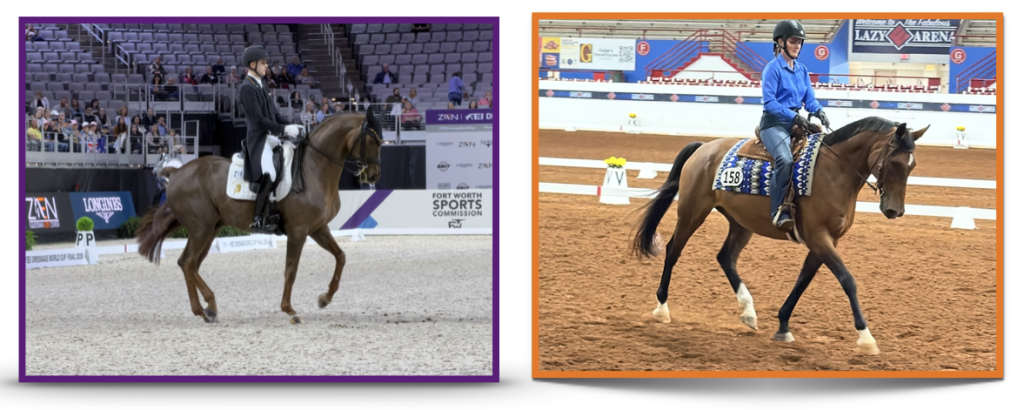
One interesting difference is the terminology and quality expected of the gaits as supported with the proper tack and saddle:
– a clear, four-beat walk with relaxation and purpose
– a jog, which replaces the traditional dressage trot. It should be a controlled, balanced two-beat gait.
– A lope, which corresponds to the canter. It should remain a clear three-beat gait.
At higher levels, the horse is expected to develop considerably more collection and carrying power.
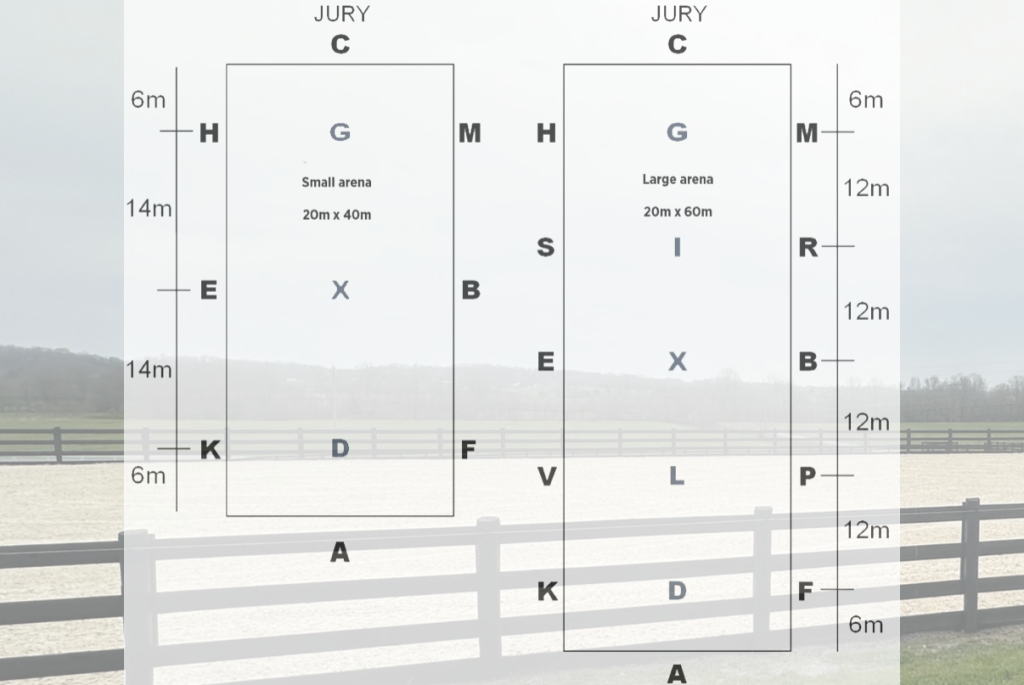
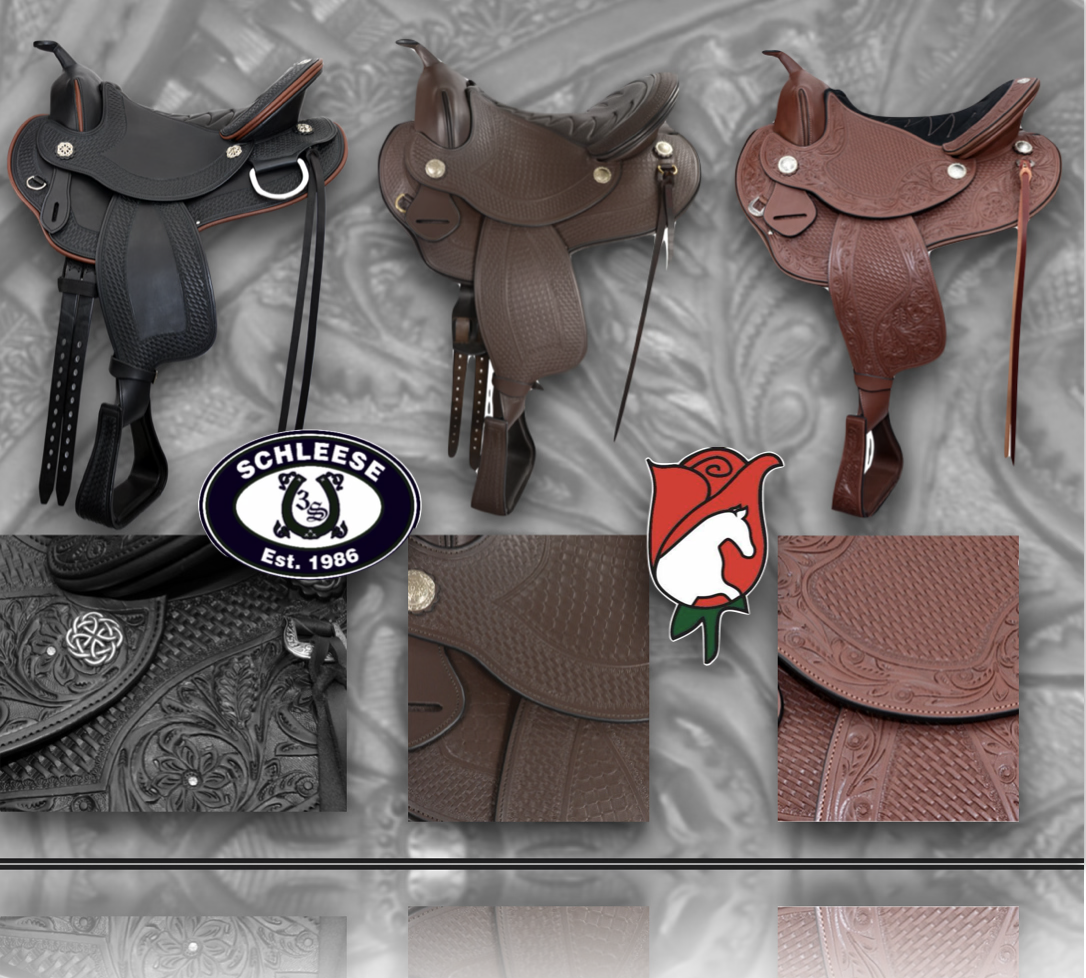
Like classical dressage, Western dressage uses tests performed in an arena. The judge evaluates the horse and rider on individual movements and also gives collective marks. Although the horse may be wearing a Western saddle, the training can become quite sophisticated and classically dressage-oriented. A Western dressage saddle can look like a dressage saddle from the rider’s perspective while its tree, rigging, and weight distribution can create a very different biomechanical environment for the horse. We have made these ‘hybrid’ saddles for years – the top and the tree work like classical English dressage saddles for the rider, while the bottom of the saddle is like the working Western saddle providing comfort and movement for the horse as required.
The key point is that the saddle itself does not create collection. Collection comes from the horse progressively developing the strength, coordination, balance, and carrying capacity to shift more of the load toward the hindquarters while maintaining a supple, elevated thoracic spine. But the saddle can either allow that process or make it considerably more difficult.
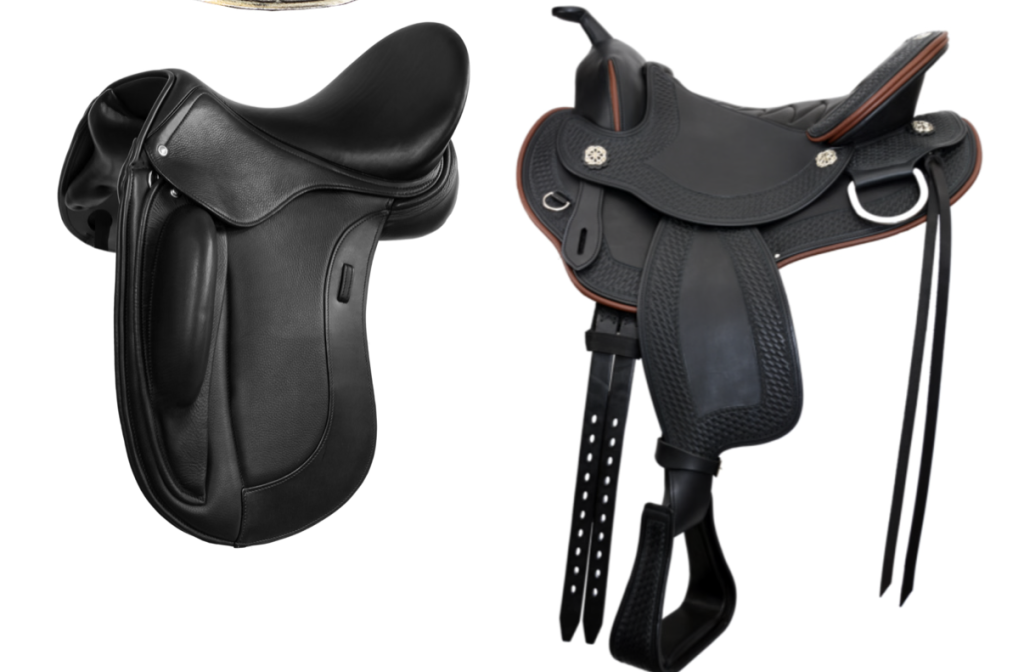
The biggest difference is in the tree. A conventional English dressage saddle generally has:
· a relatively narrow waist
· comparatively narrow, shaped panels
· a tree designed to follow the horse’s back
· relatively concentrated but carefully distributed bearing surfaces
· substantial freedom around the horse’s spine
· a deep, central seat intended to place the rider close to the horse’s centre of balance.
The panels are extremely important. They are essentially the interface between the rigid tree and the horse’s back, and a well-fitted dressage saddle allows the horse’s thoracic sling, back musculature and rib cage to move without being excessively restricted.
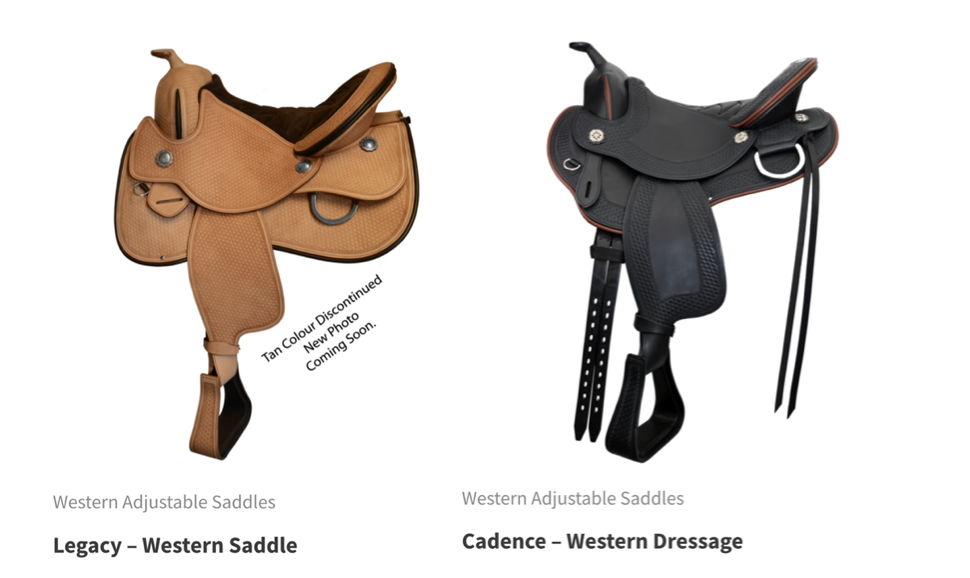
A traditional Western tree (in shown on the left) is fundamentally different. The tree generally has:
· longer bars
· a relatively broad weight-bearing area
· a wider structural footprint
· a pommel/fork and cantle
· a horn
· substantial structural rigidity
· a different relationship between the rider’s weight and the horse’s back.
The long bars are designed partly around weight distribution and stability over long periods of riding, rather than putting the rider in the very close, vertically aligned position associated with classical dressage. While this doesn’t mean a Western tree is ‘bad’ for dressage, it means that tree geometry becomes particularly important if the objective is advanced collection.
This is where the saddle becomes very interesting. If the saddle restricts the horse’s ability to elevate the thorax or move the scapulae, the horse may still appear collected to the rider while actually becoming more compressed through the back—and this is a critical distinction!
The position of the tree relative to the scapula is one of the most important differences between Western and English saddles. The horse’s scapula has to rotate backward and forward as the foreleg moves. In collection, particularly at the higher levels, the freedom of the shoulder becomes increasingly important.
Schleese®️Obrigado Dressage Saddle
An English dressage saddle normally has a relatively short, defined panel and a forward-cut flap. The tree and panel are designed so that the saddle can sit relatively close to the horse while leaving appropriate freedom for the shoulder. A traditional Western saddle has much longer bars. If those bars extend too far forward, or if the tree is too wide/narrow or incorrectly shaped, they can interfere with the horse’s thoracic and scapular movement.
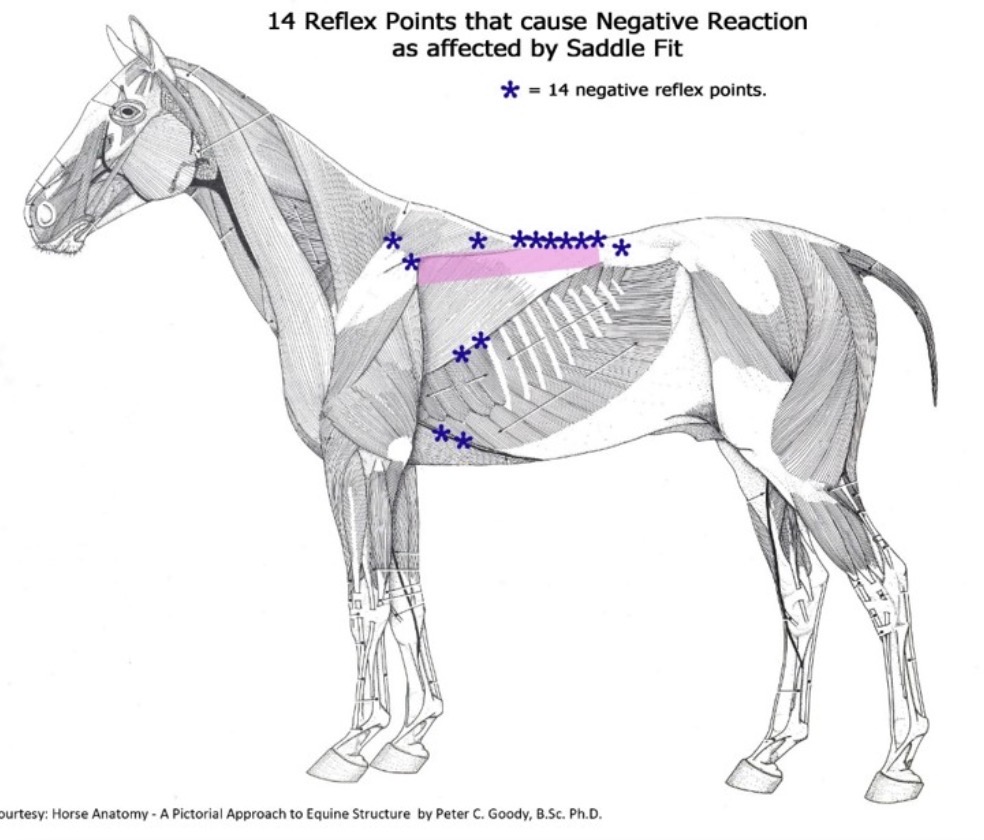

As we have often said when discussing properly fitting saddles, you need to ensure the saddle fits statically and dynamically. Fit in a static standing position is not the same thing as biomechanical fit during collection.
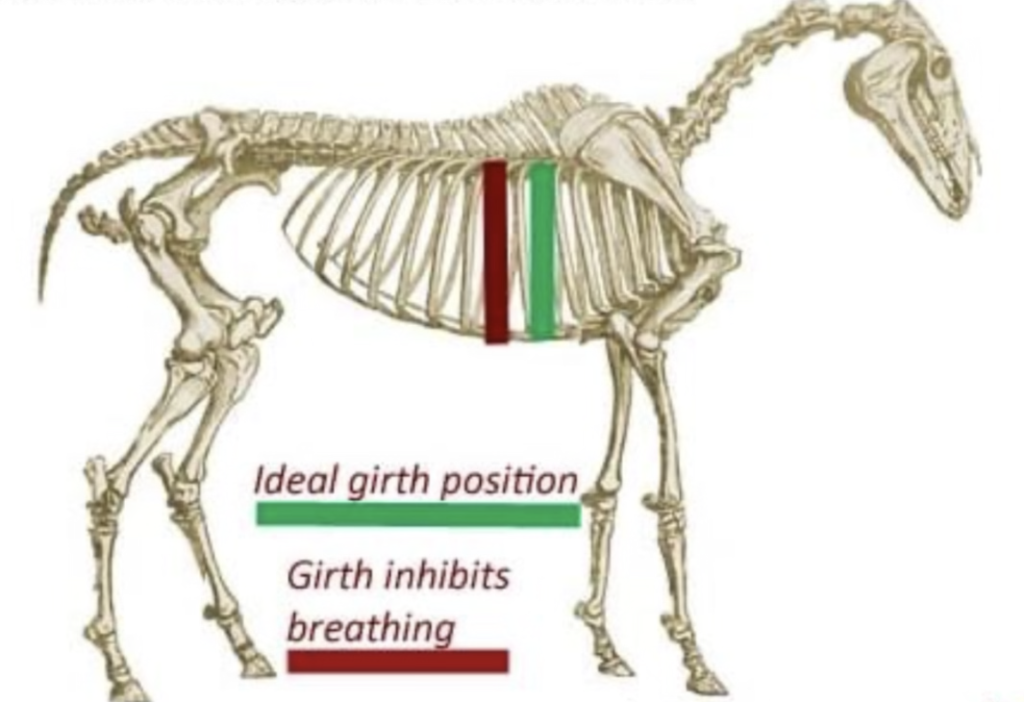
Rigging is extremely important, and this is an area where Western saddles can differ dramatically, as the rigging determines where the cinch (girth) positions the saddle and the location of the cinch can change how the saddle fits during motion. Of course, for dressage work, you generally want the saddle to remain stable without being pulled excessively forward or backward.
Rider position is perhaps even more important. A traditional Western saddle tends to place the rider in a position that is deep, secure, supported by a large cantle, and stabilized by the stirrup position. An English dressage saddle encourages the rider to achieve the classic shoulder/hips/heel straight line with the pelvis positioned to allow the rider to follow the horse’s movement. Remember that “deep seat” does not necessarily mean “correct dressage position.” A very deep Western seat can actually lock the rider’s pelvis if the saddle’s balance and geometry don’t permit the pelvis to move appropriately, which matters enormously in collection.
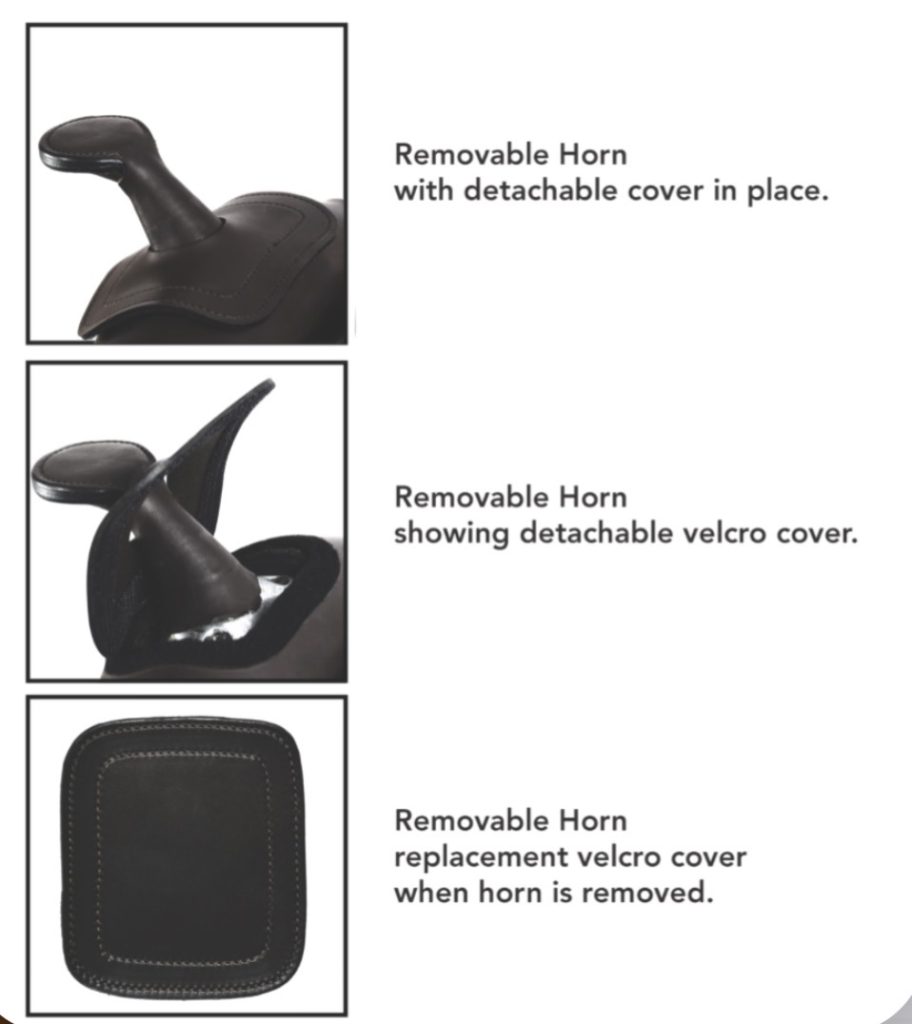
The horn also changes things more than people realize, since the whole geometry associated with a horned Western saddle can affect the rider’s posture, as does the stirrup position. If the stirrup is too far forward the end result is that the pelvis will rotate backwards. And if it is too far behind, the rider braces and the pelvis loses the ability to move at all.
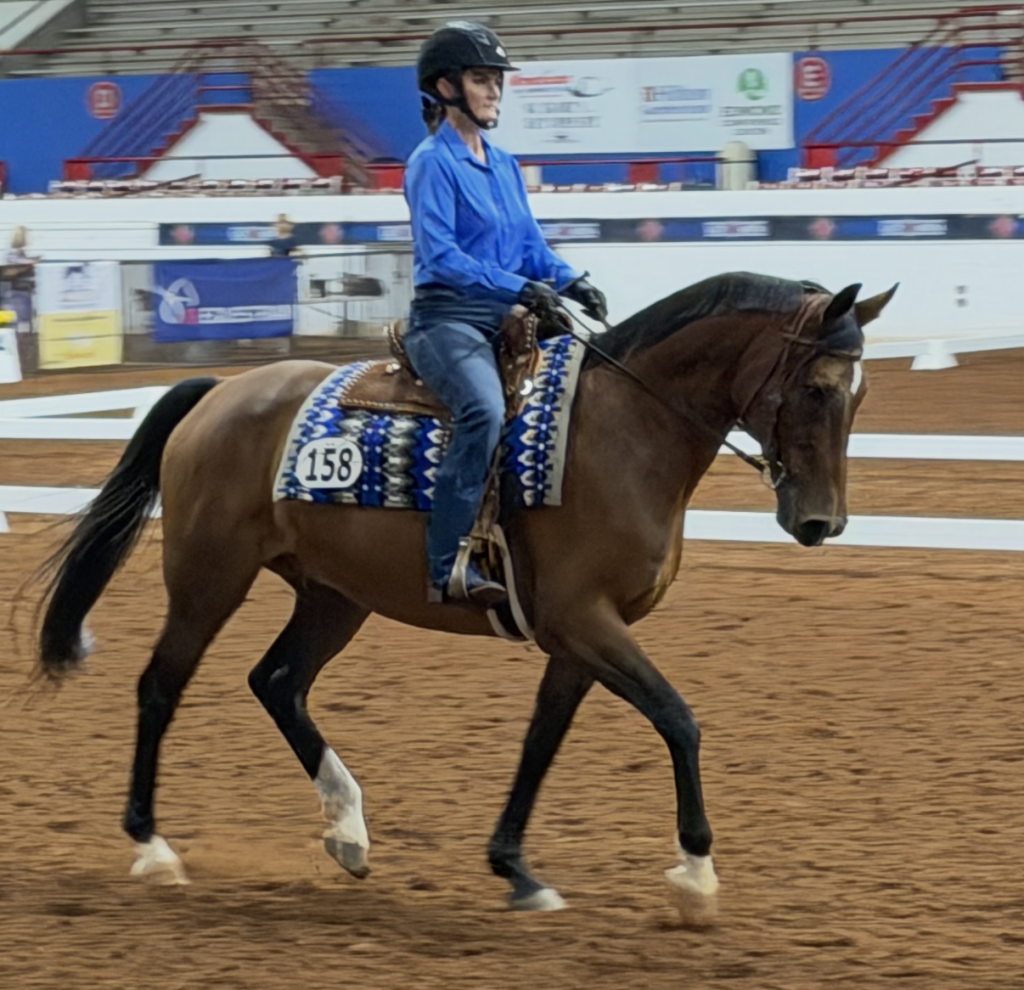
A well-designed Western dressage saddle therefore needs to allow the rider to have a neutral, vertically aligned leg without having to fight the saddle, so this is one of the areas where a purpose-built Western dressage saddle can be substantially different from a conventional ranch or pleasure saddle.
One crucial element to consider is that the tree must accommodate the horse’s changing back conformation. As the horse matures and becomes stronger, the shape of the back can change considerably. When the thorax lifts between the scapulae, the relationship between the spine, ribs and musculature changes.
The problem occurs when a Western saddle which has been constructed and intended for a different job is used for advanced dressage without considering the accompanying biomechanics.
For comparison, here are some basic charts, outlining the differences between the saddles:
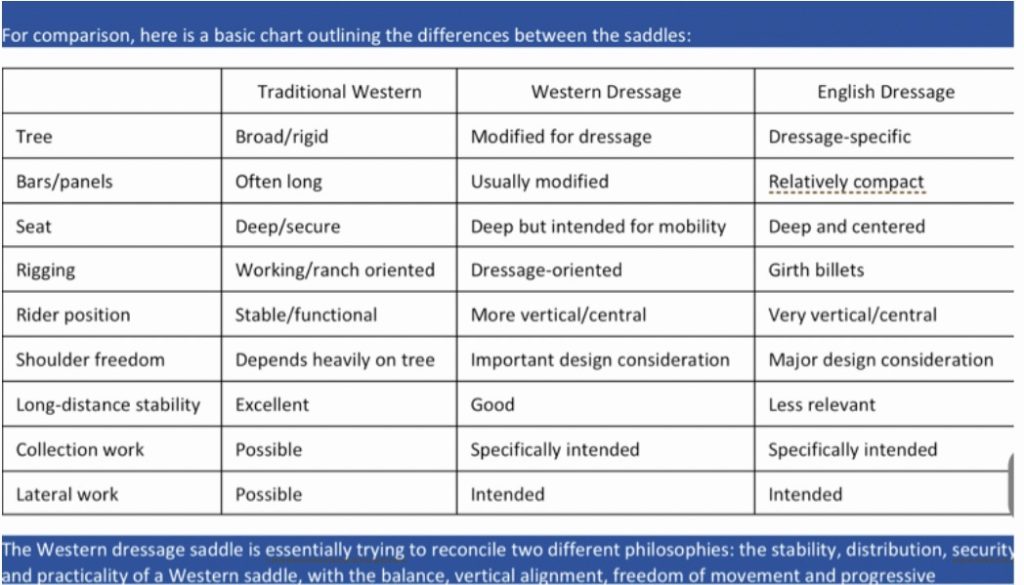
The western dressage saddle is essentially trying to reconcile two different philosophies: the stability, distribution, security and practicality of a Western saddle, with the balance, vertical alignment, freedom of movement and progressive collection of an English dressage saddle.
Copyright 2026 All Rights Reserved
Schleese Saddlery & Saddlefit4Life®️
©2026 Saddlefit 4 Life™ All Rights Reserved
For more information about Jochen Schleese and Schleese Saddlery Ltd. please go to:
🌐https://saddlefit4lifeacademy.com/
TO ASK QUESTIONS OR COMMENT ON THIS ARTICLE, PLEASE USE THE FORM BELOW
For more information about Jochen Schleese and Schleese Saddlery Ltd. please go to:
🌐 https://saddlefit4lifeacademy.com/
Schleese SaddlerySaddleFit4Life International