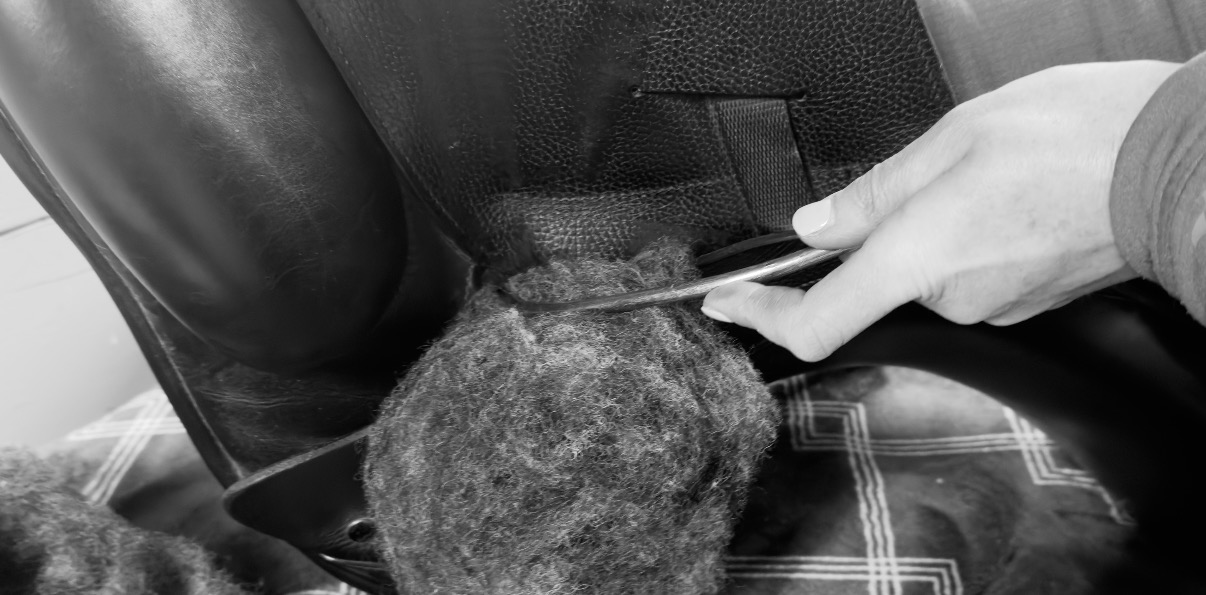
Horses can carry about one and a half pounds per square inch of their back, so the greater the space available, the easier it is for the horse to carry your weight. Flocked saddles generally have a larger footprint on the horse and are a benefit to the overall health of your horse. Flocked saddles are extremely adjustable – the actual shape of the panel against the horse will mold and contour to the horse’s back in a way that pads or shims can’t.
A saddle reflock can give your saddle a refresh. It can help balance the pommel and cantle, or it can create wither clearance, and it can compensate for asymmetrical features in the horse. Its compressive properties can support a horse with a less than perfectly developed back, and its absorbent properties can dissipate heat from your horse’s body.
It is important to keep your leather clean and well nourished, because often saddles that have very hard leather are mistaken for saddles that are in desperate need of reflocks. In your saddle’s lifetime, you should only drop the back panels up to three times, so it’s important to not confuse your saddle fitter when they drop the panels to reveal quality flock with subquality leather.
How do you know when it’s time to reflock your saddle? At a minimum, the Society of Master Saddlers (SMS) suggests a complete reflock every three to four years. Most flock by this time likely has a hard and lumpy feeling and no ability to compress further. The stiffness usually means the flock has become dirty inside the panel. During a complete reflock, a qualified Saddle Fitter will take your saddle, drop the panels, pull out all the old lumpy and dirty wool andreplace it with clean, fresh and absorbent wool.
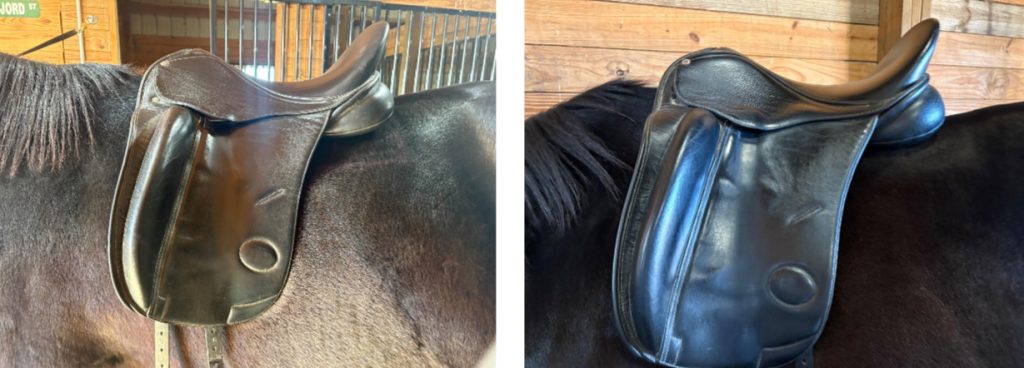
When should you have your saddle flocked tweaked on-site? The SMS suggests you evaluate your saddle in the field every six months. Your saddle fitter can evaluate the balance of your saddle to determine where flock may need to be added or taken away. Flock generally compresses over time and can be refreshed to add more depth to the panel. Oftentimes, your horse’s unique body shape will move the flock into less desirable areas, and your saddle fitter will need to correct any asymmetry in the panels. In only a few circumstances you’re able to flock asymmetrically: on horses that are too old and won’t develop different muscle patterns at a late stage in life, or for a horse that may not tolerate shims and pads, or a horse that had a major injury which has caused severe muscle atrophy.
What kind of flock should you expect for your saddle? Back in the old days, saddles would be flocked with anything from horse hair to carpet pile, but in this modern day we use either synthetic or authentic wool. Synthetic wool is usually seen as a more economical material used during saddle construction or when cost is a factor in reflocking. The disadvantage of synthetic wool is that it doesn’t dissipate heat as easily as real wool, making it a hotter experience for the horse and rider. Synthetic wool will get lumpier quicker than real wool so you would need to reflock more often.
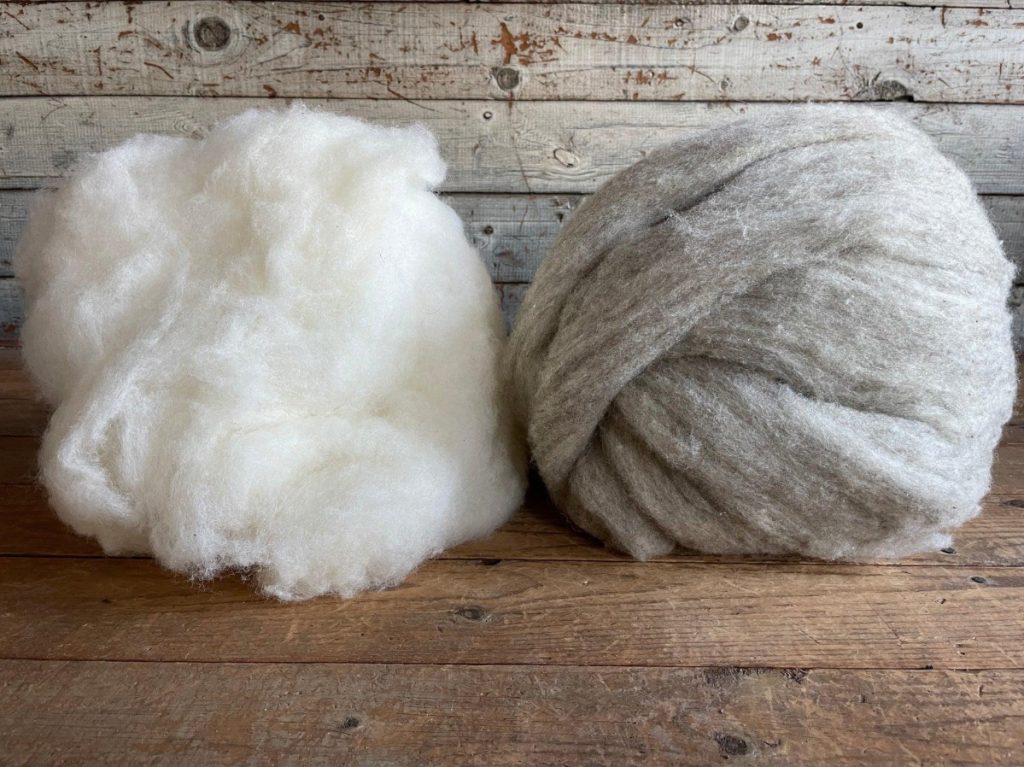
Left: Long Fiber White Wool | Right: Jacob’s Wool.
The two main real wools used in saddle flocking are Long Fiber White Wool and Jacobs Wool. Long fiber white wool comes from several varieties of sheep including Romney Marsh and Leicester sheep. Long fiber white wool tends to be finer than Jacob’s wool, making it softer but also making it compress easier and more quickly. Jacob’s wool comes from the Jacob sheep variety and is more coarse than the white wool, giving it a firm base and a resilience to bounce back and compress less. Additionally, it picks up less dirt which allows for more time between reflocks.
SHARE YOUR QUESTIONS AND COMMENTS IN THE FORUM BELOW.