
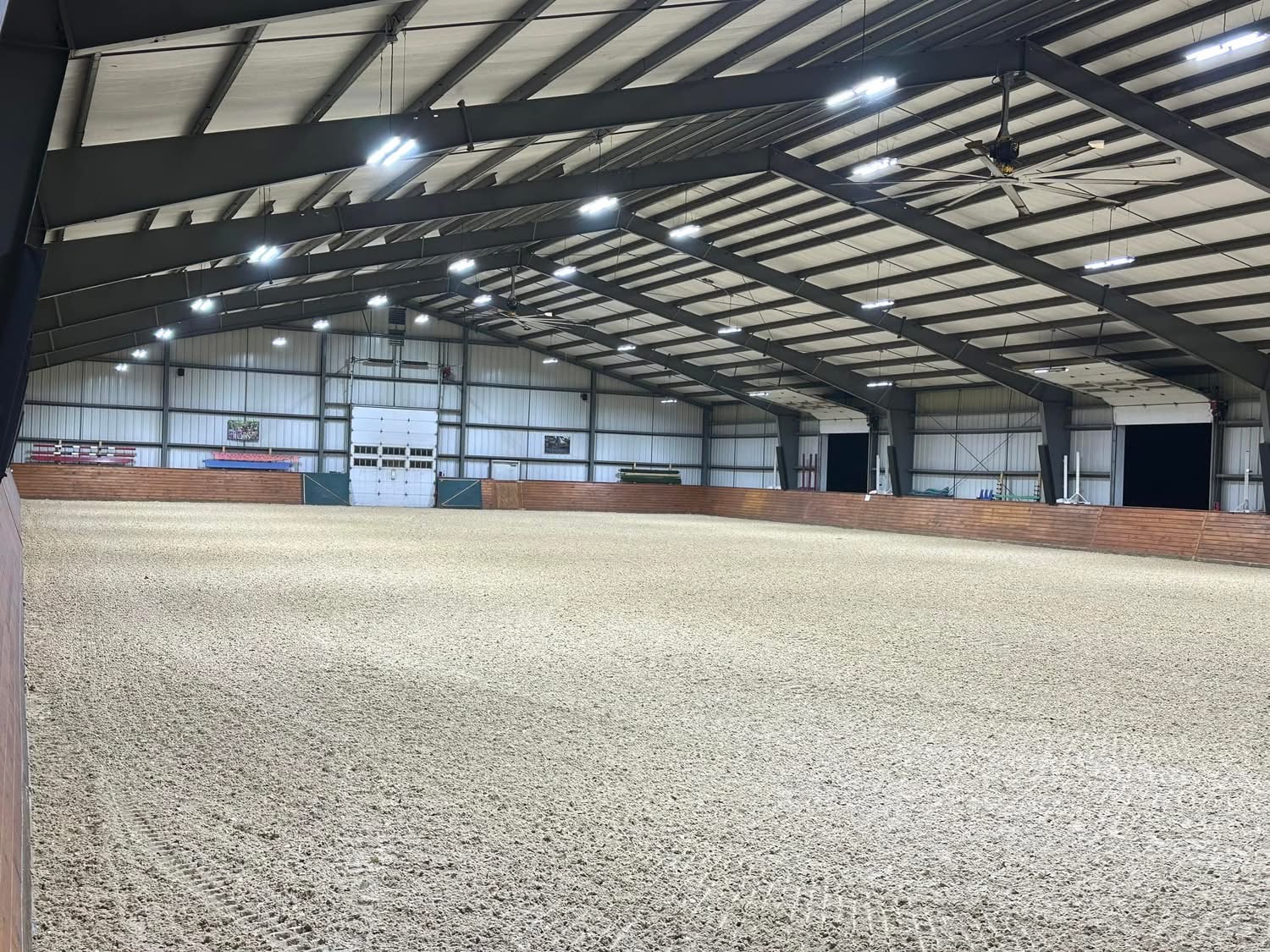
When people think about arena construction, most of the attention goes to the footing, the base, and drainage beneath the surface. The perimeter is often treated as an afterthought.
It shouldn’t be.
A properly designed kickboard is not just a safety feature or a finished edge. It is part of the arena’s retainment and drainage system. Its job is to keep the footing where it belongs, protect the edge of the riding surface, and allow excess water to escape in a controlled way.
That sounds simple, but the details matter.
Arena footing is always moving. Hoof traffic, grooming equipment, and normal maintenance gradually push material toward the rail. Without a proper retainment system, footing migrates beneath or beyond the fence line, the outside track becomes thinner, and the riding profile begins to change.
A good kickboard system helps prevent that migration while still allowing the arena to drain.
The challenge is that a solid perimeter board can also trap water. If water reaches the edge of the arena and has nowhere to go, the kickboard effectively becomes a dam. That can create excess moisture along the rail, soften the edge, and eventually affect the footing and base.
Our design is intended to do both jobs at once: retain the footing and provide a controlled outlet for water.

HOW WE BUILD THE RETAINING SYSTEM
We use a full 2x board at the bottom of the perimeter as the footing retainer. The board is installed at the correct elevation relative to the finished footing profile so that it contains the riding surface without becoming an unnecessary obstruction.
Behind that board, we install a strip of permeable geotextile fabric. The fabric extends beneath the footing and is stapled to the rail or kickboard assembly.
The permeability of the fabric is important. Its purpose is not to create a waterproof barrier. It allows water to pass while helping keep footing particles from migrating out of the arena.
We then install drainage openings through the kickboard.
These openings function much like small flood gates around the perimeter.
Under normal conditions, the footing remains contained behind the board and permeable fabric. During heavier rainfall or periods when water reaches the edge faster than it can dissipate through the profile, the openings provide a controlled escape route.
Instead of allowing water to build against the board, the drainage holes allow it to leave the arena.
Outside those openings, we place clean drainage stone.
THE STONE SERVES TWO IMPORTANT PURPOSES

First, it breaks up the velocity of the water as it exits the kickboard. Water leaving through a concentrated opening can carry surprising energy. If it is allowed to discharge directly onto soil, it can erode the outside edge of the arena or create channels. The clean stone spreads and slows that flow.
Second, the stone provides support to the outside of the kickboard.
As horses repeatedly travel around the rail, the footing on the inside becomes compacted and exerts pressure against the board. Without support on the opposite side, that pressure can gradually bow or warp the kickboard outward.
The clean stone helps brace the board and resist that movement.
That means the stone is not simply drainage material. It is also part of the structural support for the perimeter.
WHY THE DETAILS MATTER

The kickboard, permeable fabric, drainage holes, and clean stone all work together.
The board retains the footing.
The fabric allows water through while controlling material loss.
The drainage holes provide relief when water reaches the perimeter in volume.
And the clean stone reduces water velocity while helping support the kickboard against the pressure created by compacted footing.
Remove any one of those pieces and the system becomes less effective.
That is why we do not consider the kickboard an isolated part of the fence. It is connected directly to the design of the riding surface and drainage system.
THE PERIMETER SHOULD BE DESIGNED, NOT ADDED LATER
One of the most common mistakes in arena construction is building the arena first and deciding how to contain the footing afterward.
By that point, the elevations are already established, the base may stop in the wrong location, and the drainage path may terminate against the fence.
The retainment system should be part of the original design.
We generally extend the structural base beyond the finished riding area so the edge of the arena remains supported. The kickboard is then installed in relationship to the finished footing elevation and intended drainage path.
This gives the perimeter a stable foundation and prevents the outer edge from becoming the weak point in an otherwise well-built arena.
SMALL DETAILS MAKE A LONG-TERM DIFFERENCE
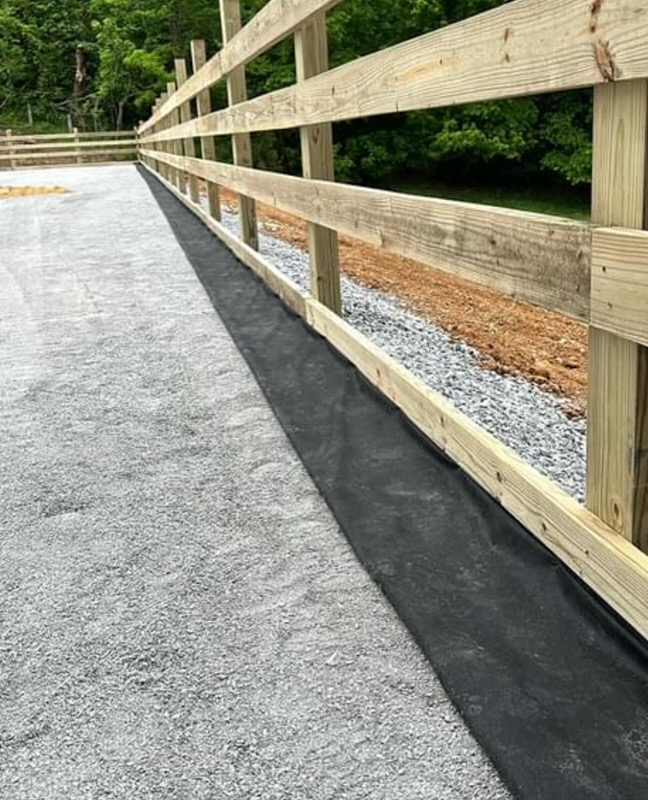
A kickboard is a simple-looking component, but it performs several jobs at once.
It retains the footing.
It helps preserve consistent footing depth around the rail.
It provides a controlled outlet during heavy water movement.
It works with permeable geotextile to limit material loss.
And, with properly placed clean stone, it resists erosion and helps keep the board from warping under pressure from the riding surface.
These details are easy to overlook because, once the arena is finished, most of the system is barely noticeable. That is usually a sign that it was done correctly.
The goal is not to build a kickboard people notice. The goal is to build a perimeter that quietly protects the arena for years.
TO ASK QUESTIONS OR COMMENT ON THIS ARTICLE, PLEASE COMMENT IN THE FORUM BELOW
Join our Equestrian Footing Design and Planning Facebook Group: https://www.facebook.com/groups/1093425374971972