
When buying a horse all Dressage Classicists always say that a great Walk and Canter are the two most naturally important gaits to look for. A great trot can be developed more easily with time.
Many times horses may be referred to as “Heavy/Dull to the Leg/Not Forward Enough/Needs to Be Ridden With Spurs/etc.” This is not true. A horse doesn’t run around in the field as any of those categories. It is simply poorly trained, or misunderstood. From here on out, I will refer to these horses as “Dull” as in “Dull to the Aids,” for consistancy sake.
Re-schooling a “Dull” horse is best done at the walk, which takes a considerable amount of time, patience, and careful consideration. Lightness is established by starting with the simplest of the walk work put forth to the horse by the rider. To ride a walk to its fullest potential in a light, quiet way is ever so important. The walk is the horse’s most natural, dependable gait, so riders must be cautious how they go about developing it under saddle.
The walk is a natural four-beat gait, which a heavy handed rider, or a rider with too strong of leg or spur aids can very easily ruin—and once ruined, it’s extremely hard to reestablish a clean, pure, willingly forward walk; or any gait for that matter.
I’ve ridden countless horses in my life, but one sticks out the most in terms of coming to me with a “ruined walk.” This horse had been ridden front-to-back, by a trainer with a harsh hand contact to the bit, as well as with roweled spurs and two whips—just to get him to go. His walk, and all other gaits, were ruined because of this. He simply had “shut down” and refused to go. I believe the trainer believed the horse was, in her mind, “lazy,” when in fact, the horse had just had to shut down, not only physically, but emotionally. He was a Friesian imported from Holland, and literally had no “go” aids left.
I refused to accept that he “couldn’t” go forward. Rather, he just lost the desire to do so…He simply no longer WANTED to listen to a riders aids. He had been crammed into a frame, which broke his spirit, and therefore his willingness to listen.
My approach was the same as with any horse I had ridden in my past, but he was an extreme case, to say the least. My training plan started at the mounting block, and remained solely at the mounting block for a month and a half.

As I mounted, without spurs, a single bridle with a 3-piece loose ring snaffle, and a Fleck®️dressage whip with a frayed lash. I had no spurs, no heavy use of leg, no tapping, or flicking with the whip—just deep breaths, quietness, and a tickle of the whip’s lash against his side, with no leg aid at all, nor ANY contact with the bit. I mounted, sat still, quietly, and just let him accept my weight at first. Then dismounted with big pats and let him know that giving me the privilege of being on his back was all I asked. After all, horses don’t HAVE TO do what we want, it is not a matter of “making them bend to our wills.” They are living beings, with wills of their own, and we must remind ourselves that, to be their partner, is an honour, not a demand!
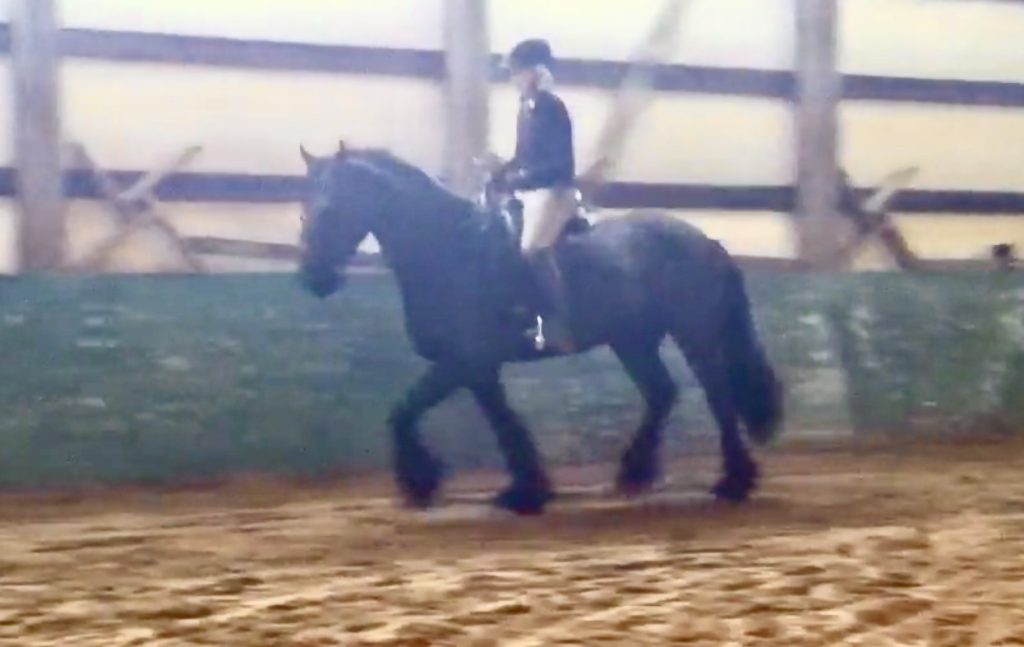
After a week and a half of just getting on and off with no aids applied, I started to lightly use the frayed lash of my whip, once mounted, to literally “tickle” his side, which got a forward reaction. I made sure that I was just holding the reins at the buckle. This allowed 100% head, mouth, and neck freedom to do as he pleased. I KNOW that my seat was strong enough to act as, “God,” so there was no need to grab the reins when he walked forward. Every time he walked forward from the tickle of the lash, there were huge pats, and many “good boy’s!” He associated the lightest of possible aiding from a simple tickle with a POSITIVE pat and praise.
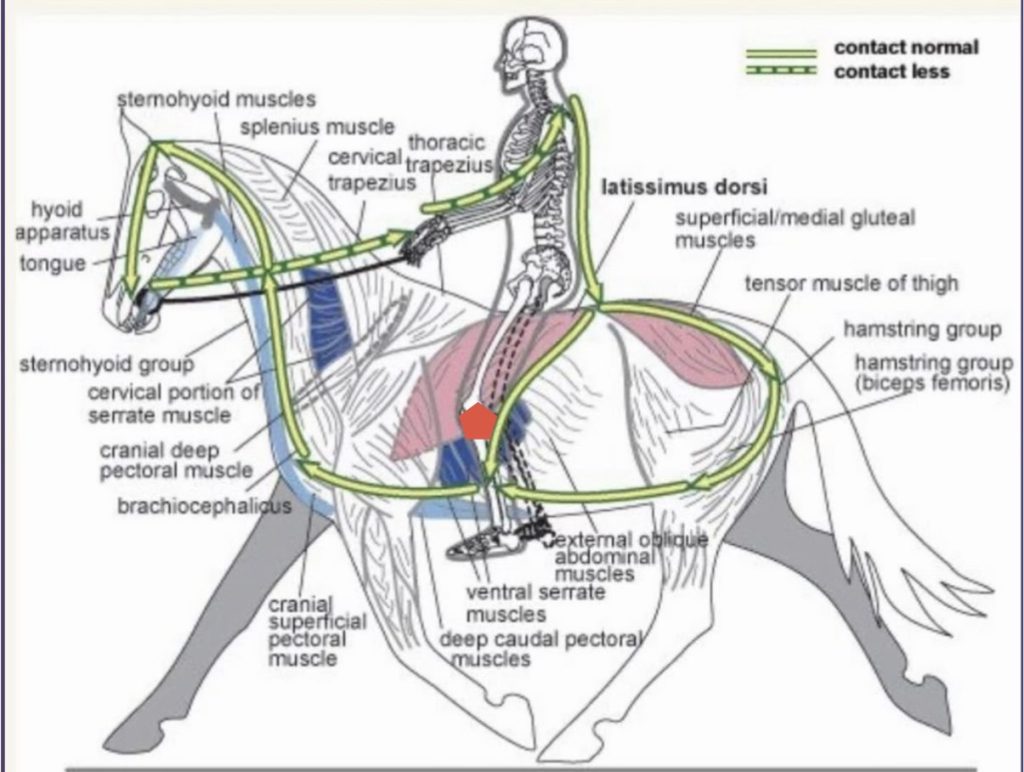
In the next few weeks, still practicing walk beginning at the mounting block—from the whip’s lash’s tickle and no rein contact, I gently added the slightest pressure from the upper/inner 2” of my boot. A simple “on-off” (as I say “get in quickly and get out even quicker than that”) with the whip’s lash together got him used to a light leg aid to go forward. Same praise and pats. He was proud of himself and walked off without force into a long, stretched out back and neck frame. We continued many 15-20 minute halt-walk-halt transitions, in order to get confidence and willingness. If he got stuck, we went back to just the whip’s lash tickling his side.
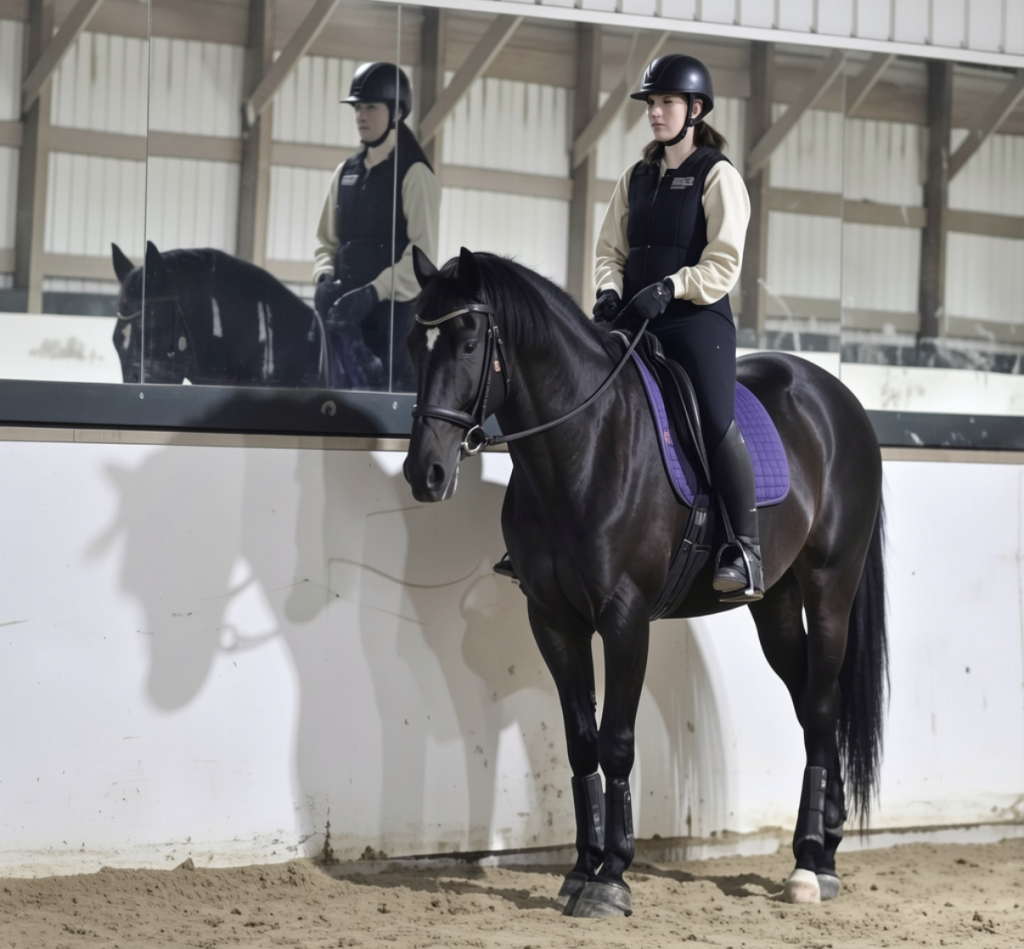
Another week or so went on, and we practiced halting in “submission.” I was using both legs, stretched through the groin with no tension in my thighs or calves. By pulling my heel out, away from the horse, all the way up to the great trochanter (the bone that rotates in the hip socket), and holding my leg in position, having my femur rotated inward with only my hamstrings holding my leg in position, I maintained a seat deep, I used my upper 2” of my upper, inner calf, (the top 2” of my boot, where the stirrup leather lies) & my whip’s lash to ask him, in halt—while holding my seat and core still—to lift his abs and back to meet my seat before allowing him to take a stride forward into walk).
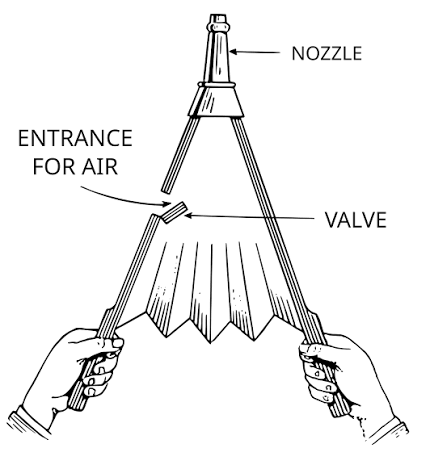
In a way, my leg acted as bellows, puffing the “air” (aka:”energy”)from my upper calf on-off-on-off to let him know I wanted SOMETHING, like getting a fire started with a small bellows but I wasn’t asking for walk (according to my seat). He thought about what I was asking (*not demanding), and I felt his abs, and then his back lifting underneath me. At this point, most horses also would have lifted in their shoulder, but I gave him the benefit of the doubt and accepted that he was only comfortable giving up his abs and back. Once that happened, I could release my seat from the “halt” position, and allowed him to walk forward into my totally loose rein—again with lots of praise, as I know what I had asked, he was not familiar with, and he figured it out for the most part. He showed me that he was willing to TRY, to think things through with me asking, but not demanding. This is how I introduced a LIGHT leg aid to a horse that wouldn’t even go a month or so before. It took a very conscious effort NOT to involve my lower calf or heel, as he associated that sort of leg aid with being “forced,” and would immediately shut down.
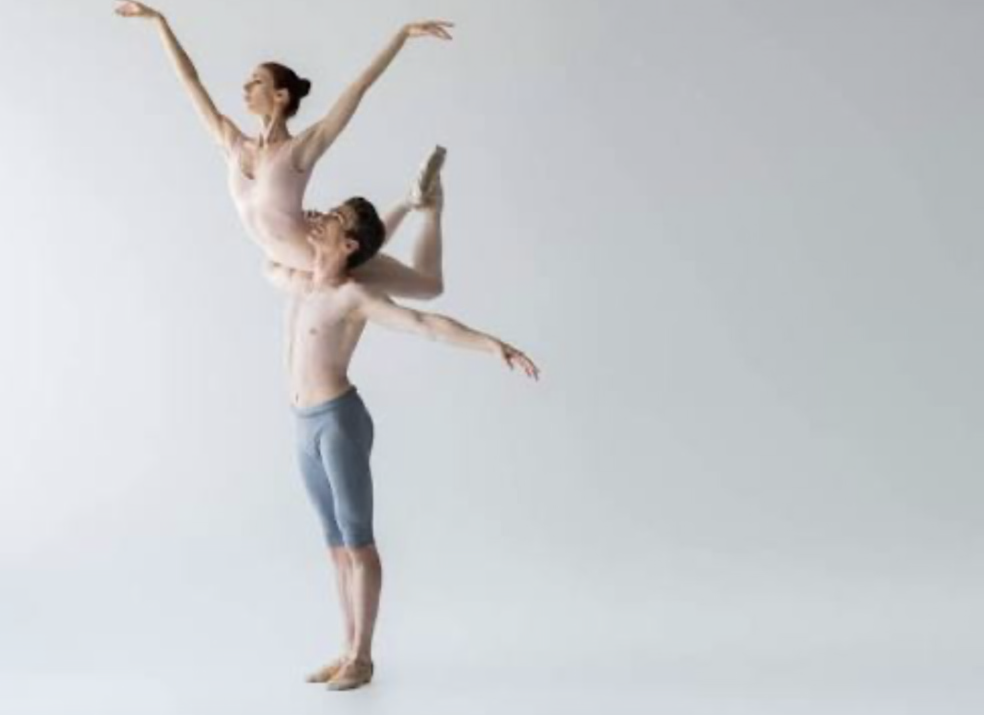
My pelvis became his pelvis. Where I weighted a particular seat bone, I knew he would have to balance both himself and me. Our center of gravity was one. Much like a male ballerina lifting a female ballerina—the female has to be “held together” in full control of her body in order for her partner to be able to lift and balance her with ease. If a rider isn’t in control of his/her own body, able to hold multiple positions, the horse ends up being thrown off balance, like trying to carry dead weight, or a sleeping person. It is up to us to help them find their balance. If a horse seems “dull,” or “sluggish to the aids,” they’re probably over-aiding. It does no good to yell at a deaf person—they won’t hear you, but will notice you’re yelling. Instead, a “dull” horse must be ridden so lightly, and retrained to respond to very minute aids. They WILL appreciate it, and learn to listen to a sensitive, soft, balanced rider. That type of horse must be restarted with such minimal aids, whereas a “hotter” horse needs more “hand holding.”
In other words, a “hot” horse needs a rider to calm them with a leg that’s gently on consistently. They WANT the rider to be the “boss,” in order to feel at ease—someone to rely on for safety. They are the complete opposite of a horse that’s “dull to the aids.”
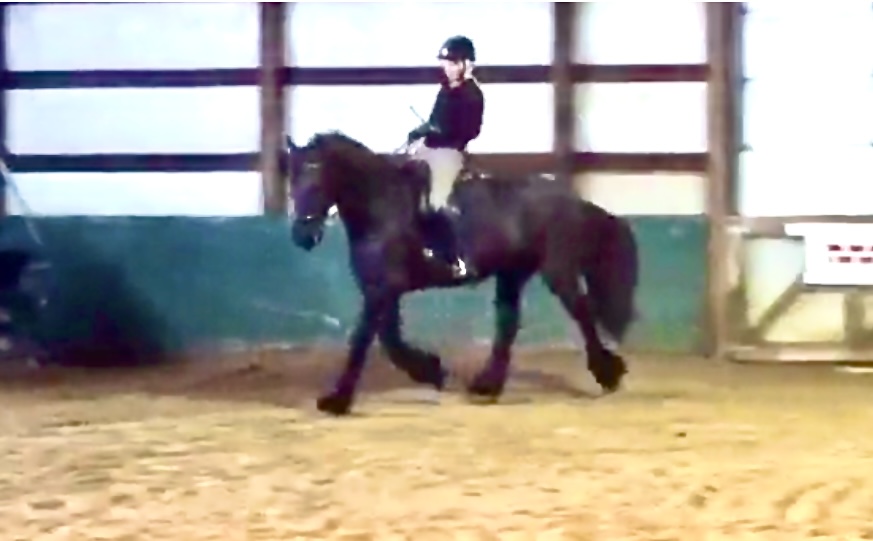
With a secure, independent seat, quiet legs, softer aiding, in time, that once “dull” horse will become light as a feather, if the proper amount of training is put in. All of this training has nothing to do with a firm rein contact, as the horse must feel able to stretch INTO the contact, whatever length the reins are. To ride “at the buckle” to test your leg and seat/weight aids, with your torso or “cabinet” acting as the horse’s shoulders, the horse will learn to turn off of an weighted inside seat bone, and inside shoulder back, directing the horse’s shoulders and forehand to where your shoulders are facing, as the inside upper 2” of your boot softly moving the barrel of the horse AWAY from the inside hind, to allow it to come forward & under the horse’s center of gravity. If the tickle of a whip’s last is needed to reinforce leg, allow that to be the temporary aid that supports your leg.
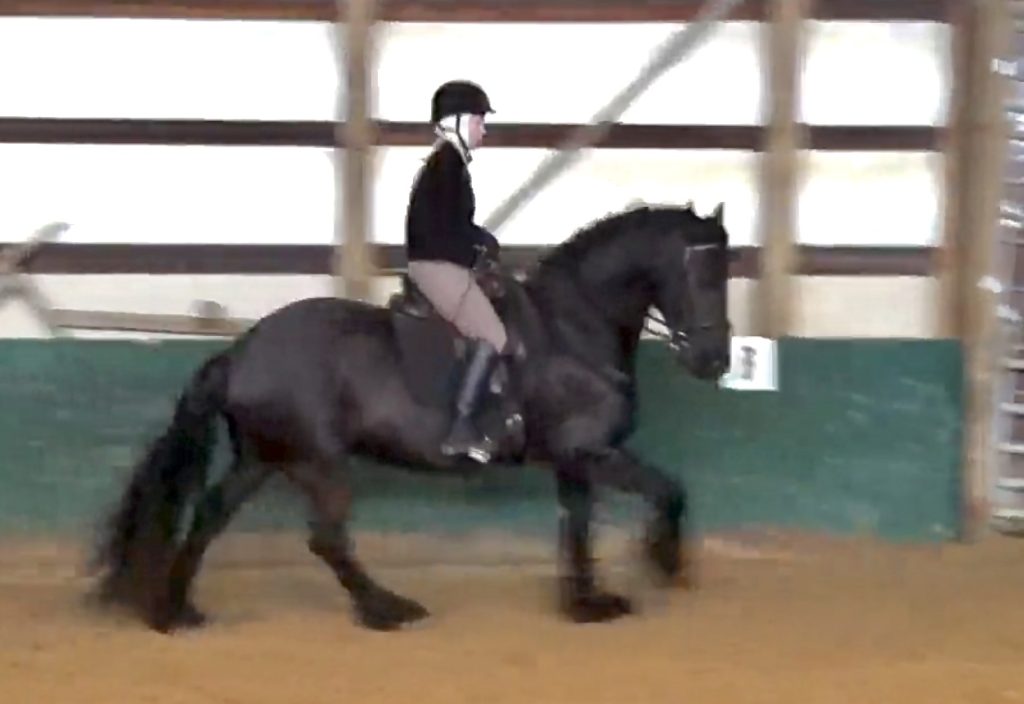
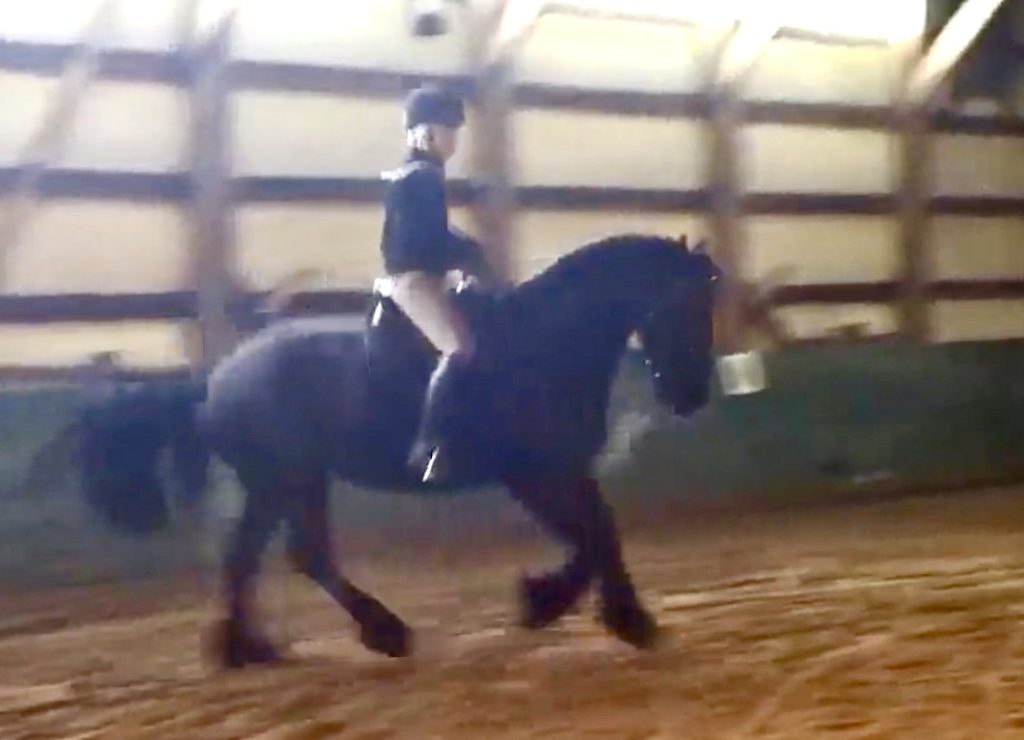
Once you can bend the horse from the inside aids, the outside aids very gently support the horse’s body from over bending. In a way, with the lower leg back, and very softly supporting the bend, the outside rein aid can be added to make sure the shoulder & neck don’t over bend. They complete the ♻️of energy from back, abs, hind end, through the shoulders, which lift up, and the horse reaches forwards to meet the bit. From there, the reins must be soft, not holding the horse back or in a “frame.”
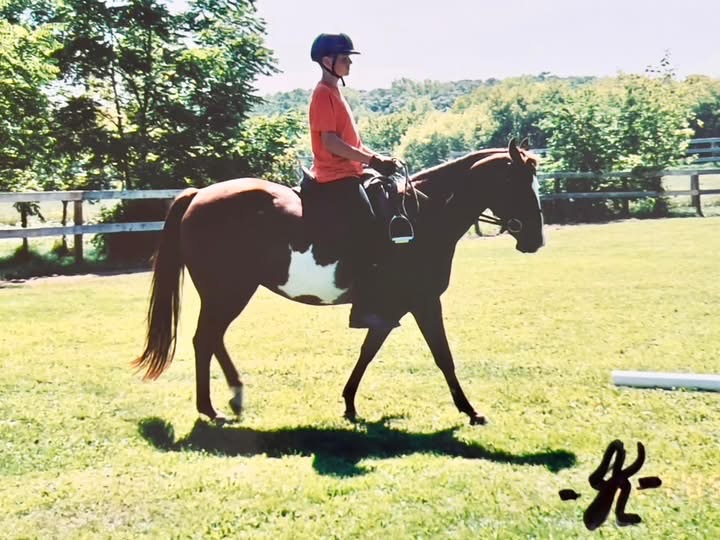
The reins are a PRIVILEGE for us to have. They are connected to the horse’s most sensitive part of the body—the mouth. The rider’s fingers should be gently closed, but ever so sensitive. The rider’s hands hold a ONE WAY PHONE LINE from the horse’s mouth—the reins belong TO THE HORSE, not the rider. Not until the highest levels. Until then, the bottom of the ring finger holding the rein must FEEL and RECOGNIZE tension, relaxation, chewing, licking. If you can’t feel those things, your contact is too heavy. The reins DON’T BELONG TO YOU…remember that.
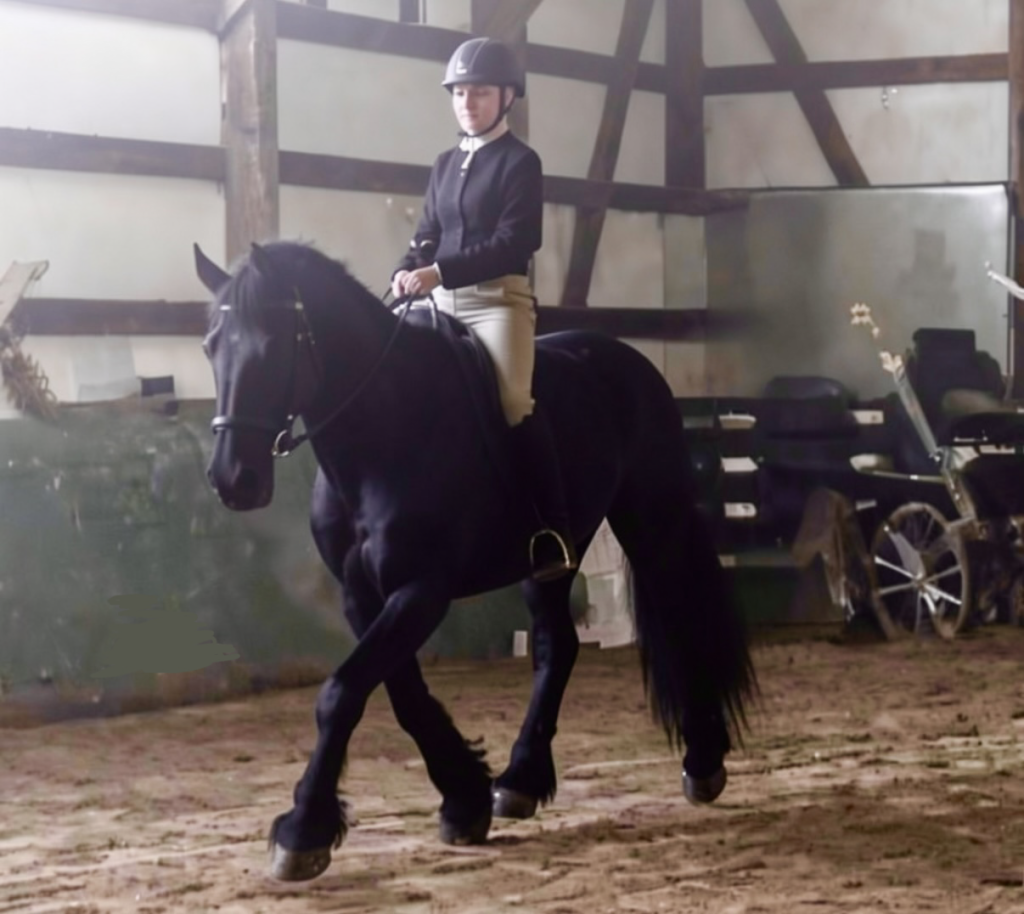
By doing all of these things, a rider can take a horse that has “shut down” and make it light and sensitive. And those are the most fun horses to ride!
Facebook posting of 4 months into Isaak’s training: https://www.facebook.com/share/v/14tybnMgzNa/?mibextid=wwXIfr
TO ASK QUESTIONS OR COMMENT ON THIS ARTICLE, PLEASE USE THE FORUM BELOW